Introduction: Why do navel oranges need "thinning spring shoots and removing summer shoots"
Scientifically "thinning spring shoots and removing summer shoots" on navel orange trees in the year before they come into production or after they have come into production is an important measure for retaining fruit and increasing yield. However, because many fruit growers do not know how to use it or apply it improperly, they not only fail to achieve the expected goal of a bumper harvest, but instead end up with small navel orange tree canopies, few branches and leaves, and low yields. The following is "thinning spring shoots...
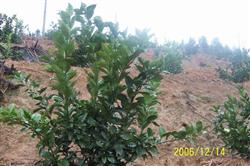
Scientifically "thinning spring shoots and removing summer shoots" on navel orange trees in the year before they come into production or after they have come into production is an important measure for retaining fruit and increasing yield. However, because many fruit growers do not know how to use it or apply it improperly, they not only fail to achieve the expected goal of a bumper harvest, but instead end up with small navel orange tree canopies, few branches and leaves, and low yields. The scientific operation method of "thinning spring shoots and removing summer shoots" is introduced below for fruit growers' reference.
1. Thinning spring shoots. Properly thinning spring shoots on fruiting navel orange trees can play a role in preserving flowers and fruit and promoting production. On adult fruiting navel orange trees, the amount of spring shoots is small and they are important fruiting mother branches for the second year and base branches for the current year's autumn shoot growth, so the amount of spring shoot thinning should be light; generally, only late shoots need to be removed. For young navel orange trees that have just begun to bear fruit, which are in the stage of transition from vegetative growth to reproductive growth, spring shoots should be thinned heavily to promote the growth of enough autumn shoots as fruiting mother branches for the next year. Specific thinning methods: First, the amount thinned should suit the tree; generally, thinning 40-60% of spring shoots is enough. Second, spring shoot vegetative branches on branches with many flower and fruit branches should be thinned heavily, by 1/3-1/5, and some poor-quality and excess flower branches should also be thinned to help stabilize flowers and fruit; spring shoot vegetative branches on branches with few flower and fruit branches should be thinned lightly or not at all, and can be pinched at 2-3 leaves to reduce competition for nutrients and promote fruit development. Third, spring shoots on branches with no flowers and no fruit are generally not thinned or are thinned little, to ensure enough branches as fruiting mother branches for the coming year or base branches for autumn shoot growth, which is beneficial for flowering and fruiting the next year. Fourth, for vigorous trees, spring shoots should be thinned more, and vigorous branches should be thinned; for weak trees, spring shoots should be thinned less or not at all, and weak branches should be thinned; for moderately vigorous trees, spring shoots should mainly have weak branches thinned, maintaining a balance between vegetative growth and reproductive growth of the tree.
2. Removing summer shoots. On young and mature trees that have come into production, excessive summer shoot growth causes a conflict between shoots and fruit in competing for nutrients, resulting in severe second physiological fruit drop and greatly affecting yield improvement, so summer shoots must be removed in time. The specific method is: summer shoots in relatively empty parts inside the canopy or in parts where the canopy needs to be expanded may be retained, only needing to be pinched at 6-8 leaves to promote branching and fill out the canopy; all other summer shoots should be completely removed when they grow to 2-3 cm long, removing them once every 5-7 days until the time for releasing autumn shoots
3. Grasp supporting measures. Thinning spring shoots and removing summer shoots on navel oranges must also be accompanied by two supporting measures: First, strengthen foliar fertilization. During the spring shoot growth period and flowering period, spray a mixed fertilizer solution of "0.2% boric acid or borax + 0.3% monopotassium phosphate + 0.3% urea", spraying once every 7-10 days for 2-3 consecutive sprays, to promote spring shoot maturity and preserve flowers and fruit. Second, attach importance to summer pruning. After most spring shoots and summer shoots are thinned or removed from fruiting trees, the number of branches and leaves and the fruiting mother branches for the next year or the base branches for the current year's autumn shoot growth are reduced, so a summer pruning should be carried out in time to promote the growth of robust and abundant autumn shoot fruiting mother branches and ensure a bumper harvest the next year. The pruning period is generally in mid-to-late July, and the pruning amount should suit the tree vigor. Three to five days before pruning, apply a heavy application of nitrogen-phosphorus-potassium compound fertilizer once to promote neat and robust autumn shoot growth, and at the same time, control the damage of citrus leafminer and aphids.
Click to get more navel orange cultivation techniques
Click to get more fruit cultivation techniques