-
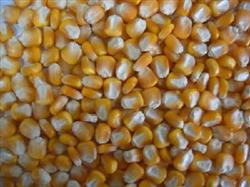
How should spring corn seeds be treated before drought-resistant sowing?
Before sowing, select and sun-dry the seeds. Choose uniform, consistent seeds and sun them for three days on a sunny day to improve germination vigor, disease resistance, and seedling uniformity. Conduct a germination test before sowing. The purity of the selected seeds should be no less than 96%, the cleanliness no less than 98%, and the germination rate no less than. Seed coating. Use a drought-resistant compound seed coating agent on...
-
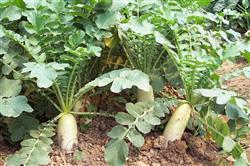
Key Technical Points for Spring Sowing and Cultivation Management of Carrots
The growing temperature range for radishes is 6 to 25°C. Among the winter-spring radish varieties currently in wider use are Korean New White Jade Spring, White Light Spring White Jade, and others. For the soil, choose a sandy loam that is loose in texture, fertile, and well aerated. Before sowing, apply sufficient fully decomposed organic fertilizer and compound fertilizer; generally apply 45,000 to... of organic fertilizer per hectare.
-
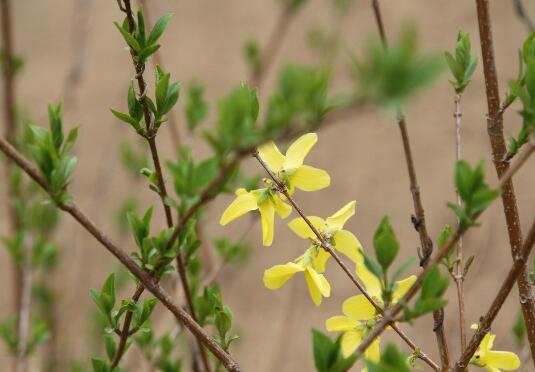
Forsythia spring sowing method and planting techniques: seedlings emerge in 8-9 days
Among the propagation methods for forsythia, sowing is a fairly commonly used one. This method has been tested countless times, so the survival rate is relatively high. Of course, the prerequisite is that you must master the correct sowing method. So how do you sow forsythia? What are the planting techniques for forsythia?
-

How does scarlet sage propagate? Both spring and autumn sowing work
Scarlet sage can be seen in many places in daily life, and many flower lovers also keep it at home for ornamental purposes. One reason is that scarlet sage has many uses and is also very easy to propagate, so how do you propagate scarlet sage with a high survival rate? Below we will look at the two most commonly used propagation methods for scarlet sage
-
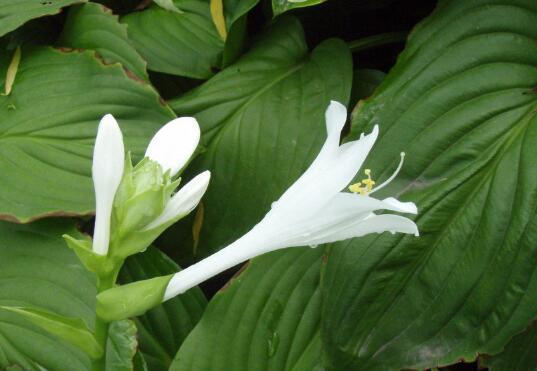
How to propagate hostas by sowing seeds? Spring sowing has a high survival rate
Among the propagation methods for hostas, sowing seeds is a fairly commonly used method, but if you want successful propagation, the method matters a great deal. As for how to propagate hostas by sowing seeds, the editor below will walk you through it.
-
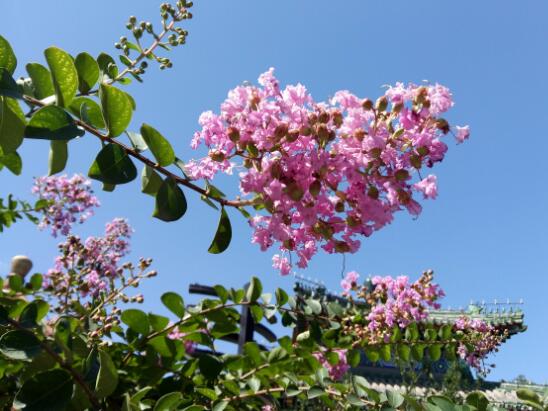
How to plant crape myrtle seeds? The best time is spring sowing in loose soil
The crape myrtle is a flower with a relatively long history in China. As time has passed, it can now be seen in countries all over the world, and many people around the world grow it. As more and more people grow it, the question of how crape myrtle is propagated has also drawn people's attention.
-

Detailed Techniques for Spring Sowing and Seedling Cultivation of Chinese Parasol Tree (Part Two)
Seedling Management 1. Loosening Soil and Weeding After sowing, dicotyledonous weeds such as field pepperweed, Japanese hop, and amaranth will proliferate in large numbers. They can be removed manually or sprayed with 2,4-D at 1/1000. When weeding, follow the principle of "remove small, remove early, remove completely," with a soil loosening depth of 2 to 3 cm. 2. Fertilization and Irrigation Fertilize when seedlings reach 3 to 5 cm in height, applying 8 to 10 kg of compound fertilizer per mu, combined with irrigation; thereafter water according to soil moisture conditions. 3. Pest and Disease Control During the seedling stage of Chinese parasol tree, attention should be paid to the prevention of damping-off disease. Through measures such as early sowing, high-ridge seedling cultivation,
-
Detailed Explanation of Spring Sowing and Seedling-Raising Methods for Chinese Parasol Tree
The Chinese parasol tree (Firmiana simplex) is a deciduous tree of the genus Firmiana in the family Sterculiaceae, with a straight trunk and bright green bark. It is an excellent street tree species and has been widely used in urban and rural greening in recent years. Through several years of practice, the author has worked out a set of techniques for spring sowing and seedling raising of the Chinese parasol tree, presented as follows: Sowing time: in the Beijing plain area, sowing can be carried out from late March to early April after the soil thaws in spring. Soil preparation: before sowing, plow the soil deeply to 30 cm, remove weeds, tree roots and other debris, then carry out ridging or bed making and soil disinfection. Ridging and bed making: the Chinese parasol tree should be raised using high beds, wide ridges or containers, especially on loam and clay soils that easily become compacted. On sandy loam, low beds or flat beds can be used for seedling raising.
-
Detailed Explanation of Key Technical Points for Spring Sowing of Cotton
Determine the density according to variety, soil fertility and planting method, and plant at a reasonable density to achieve full emergence from a single sowing. Generally, for single-cropping spring cotton varieties, the density should be kept at about 3,500 plants per mu, with a row spacing of 1 m and a plant spacing of 19 cm; for semi-spring varieties, the density should generally be kept at about 4,500 plants per mu, with row spacing and plant spacing of 15 cm; for summer cotton varieties, on plots with good fertilizer and water conditions, the density should be kept at about 6,500 plants per mu; on plots with average soil fertility, it should be kept at about 7,500 plants per mu; and on dry, barren, low-yield plots, it should be kept at about 8,000-10,000 plants per mu.
-
Key Technical Points for Spring Soybean Sowing in a Year of Severe Drought in Northeast China
Current drought situation in Northeast China and technical guidance for spring soybean sowing: I. Precipitation and temperature conditions last winter and this spring. In the autumn and winter of last year, the drought in Northeast China was severe, precipitation was lower than normal, and soil moisture was insufficient. From January to October 2007, the average precipitation in Heilongjiang Province was 402 mm, 20% less than the same period in previous years. In addition, this year's widespread "dry sealing of the soil" at the onset of winter was not conducive to soil moisture conservation. Since the beginning of winter, precipitation in southern Qiqihar, most of Daqing, the Hegang area, and some counties and cities in Jiamusi has been more than 90% less than the same period in previous years; other areas have had 10% to 90% less. In January 2008, the average precipitation across Heilongjiang Province was only 0.1 mm, 97% less than the same period in previous years, with most of the Songnen Plain and the western Sanjiang Plain receiving no precipitation at all for the entire month. After entering February, precipitation in various places continued to remain low. Snow depth across Heilongjiang Province also dropped significantly. Compared with the same period in previous years, snow depth in most areas of the province was about 25 cm less. In 2008, the area of cultivated land affected by drought before sowing in Heilongjiang Province may reach 50 million mu. In addition, the continuous warm winter was extremely favorable for soybean pathogens and pest eggs to survive the winter safely, and soybean diseases and insect pests may occur more heavily this year. The spring drought situation in Inner Mongolia is similar to that in western Heilongjiang Province.
条件筛选