How to plant crape myrtle seeds? The best time is spring sowing in loose soil
The crape myrtle is a flower with a relatively long history in China. As time has passed, it can now be seen in countries all over the world, and many people around the world grow it. As more and more people grow it, the question of how crape myrtle is propagated has also drawn people's attention. In fact, the most common method is propagation by seed, so how do you plant crape myrtle seeds? Below, the editor will walk you through it.
I. How to plant crape myrtle seeds
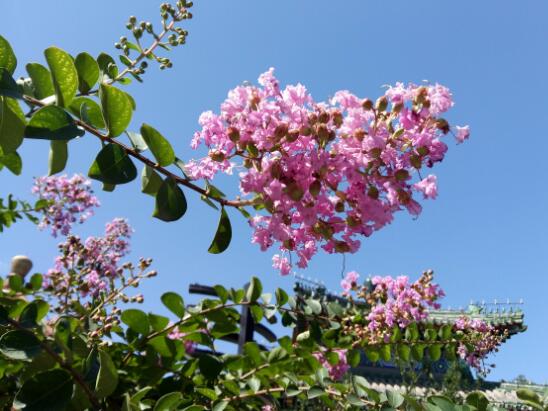
As for how to plant crape myrtle seeds, it is simple to describe and also difficult to describe; it mainly depends on whether you have mastered the correct method. If you have mastered the correct method, planting is relatively simple. If the method is wrong, it is very likely that you will outsmart yourself, causing the crape myrtle to fail to survive. The correct seed propagation method is given below for everyone to learn about.
1. Seed treatment
When propagating crape myrtle by seed, the fruit is generally used. The fruit of the crape myrtle usually matures around November to December each year. At this time we can pick its fruit. Before propagation, the seeds first need pre-treatment. First we need to remove the peel of the fruit, then place it in a cool, dry place to dry naturally. After drying, store it in a container, and by the following spring it can be sown.
2. Soil selection
When it comes to how to plant crape myrtle seeds, the method is actually very simple; the main thing to pay attention to is soil selection. As long as you choose the right soil, the survival rate after planting is still very high. As for the seeds, we can choose relatively loose sandy soil; this kind of soil has good drainage and is more conducive to the crape myrtle absorbing nutrients.
3. Sowing method
Before sowing, we should first press flat the selected potting soil, then evenly scatter the seeds on the soil surface. When scattering, the row spacing should be slightly larger. After sowing, cover with about 2 cm of soil and then water. When watering, we can choose a spray bottle, so that watering is more even. Generally, water until the soil is moist. After everything is done, they usually sprout in about 10 days.
II. Follow-up management
1. Fertilizing
After sowing is completed, we need to carry out follow-up management. During the seedling stage, the crape myrtle is relatively fragile, so at this time we need to fertilize it. Before fertilizing, remember to dilute the fertilizer first, so that the seedlings can absorb it better. As for the specific fertilizing method, you can refer to the article on how to fertilize crape myrtle; the editor will not go into too much detail here.
2. Watering
Water is an indispensable nutrient in the growth process of the crape myrtle. In spring, we can choose to water whenever the soil looks dry, but by summer the frequency of watering needs to be increased, because summer temperatures are higher and water evaporates relatively quickly, so basically it needs to be watered every day.
How crape myrtle is propagated: grafting, sowing, and cuttings methods
How crape myrtle is propagated: there are many propagation methods for crape myrtle, including grafting, cuttings, layering, and sowing. Below is a summary of 5 propagation methods for crape myrtle to help flower lovers propagate crape myrtle better.
How crape myrtle is propagated 1. Grafting propagation methodFor crape myrtle grafting, the time can preferably be chosen from late February to early March each year.
First, select robustly developed seedling plants as rootstock for grafting, and the cleft grafting method can be used when grafting. On the outer part of the top of the rootstock, make a vertical cut about 5-8 cm deep, then take a scion about 5-8 cm long with 2 buds retained and cut it into a wedge shape, then align the cambium and insert it into the cleft of the rootstock; then wrap the entire scion branch with plastic film, leaving only the bud tip exposed.
Grafting allows branches of different colors to be grafted in layers onto the same rootstock to form a “one tree, many colors” effect.
2. Softwood cutting methodFor crape myrtle softwood cuttings, the time can preferably be from July to August each year, because this is the period of vigorous growth for the crape myrtle's new branches, and the survival rate is high.
Select semi-lignified branches for the cuttings, trim them to a length of 8-10 cm, and keep 2-3 leaves at the upper end. The cutting depth is about 3-4 cm. Then water thoroughly and place in a cool, ventilated place for care. Generally, softwood cuttings can take root in about 20 days.
3. Hardwood cutting methodFor crape myrtle hardwood cuttings, the time can preferably be from mid-to-late March to early April each year, before the crape myrtle branches sprout.
For the cuttings, one-year-old robust branches can be selected, trimmed to about 15 cm long, then inserted into a well-drained, loose sandy loam seedbed, with the cutting depth preferably such that the topmost bud of the cutting is exposed. After cutting is completed, water thoroughly, and cover with plastic film to keep warm and moist, then place in a cool, ventilated place for care.
4. Layering propagation methodFor crape myrtle layering, the time can generally be during the crape myrtle's growing season, and preferably from March to April each spring.
The air layering method can be used. For the branch, select a robust 1-2 year old branch, and use a small knife to peel a ring of bark about 1.5 cm wide, with the depth preferably reaching the xylem. At the same time, about 3 cm above the wound, apply diluted rooting powder solution.
After the powder solution dries, put a cylindrical plastic bag over the cut wound, fill it with loose garden soil, water it, then tie both ends of the bag. Check again after a month, paying attention to keeping the soil in the bag moist. Once roots grow, it can be cut off for planting.
5. Seed propagation methodFor crape myrtle sowing, the time can be March to April. If sowing outdoors in open ground, flower lovers can evenly scatter the seeds onto a leveled seedbed. Scatter about 2-3 seeds every 3-4 cm. After sowing, cover with about 2 cm of fine soil. About 10 to 14 days after sowing, most of the seeds sprout and emerge. After emergence, keep the soil moist. After the seedlings grow 2 pairs of true leaves,
you can give the seedlings enough growing space and nutrient area. Flower lovers can choose to thin the seedlings in the nursery after rain, keeping the air circulating between the seedlings and the light sufficient.
How to grow crape myrtle: divided into sowing and cutting propagation
Introduction to crape myrtle
Crape myrtle, also known as: itch flower, itch tree, purple gold flower, purple orchid flower, mosquito flower, western water willow, hundred-day red, barkless tree. Latin name: Lagerstroemia indica L. A deciduous shrub or small tree of the Lythraceae family, Lagerstroemia genus, up to 7 m tall; bark smooth, gray or grayish brown; branches and trunk mostly twisted, twigs slender; leaves alternate or sometimes opposite, papery, elliptic, broadly oblong or obovate, green to yellow when young, purplish black when mature or dry, dehiscing along the septum; seeds winged, about 8 mm long. Flowering period June-September, fruiting period September-December. The crape myrtle has a graceful tree posture, a smooth and clean trunk, and brilliant flower colors; when it blooms it coincides with the summer and autumn season when few flowers bloom, and its flowering period is long, hence the name “hundred-day red.” It also has the praise “in midsummer the green covers the eyes, this flower reddens the whole hall.” It is an excellent material for bonsai for viewing flowers, trunks, and roots; the roots, bark, leaves, and flowers can all be used as medicine.
The crape myrtle's branches and trunk are mostly twisted, and the twigs are slender, with 4 ridges, slightly wing-shaped. Leaves alternate or sometimes opposite, papery, elliptic, broadly oblong or obovate, 2.5-7 cm long, 1.5-4 cm wide, apex shortly pointed or blunt, sometimes slightly concave, base broadly cuneate or nearly rounded, hairless or with slight pubescence along the midvein beneath, lateral veins 3-7 pairs, small veins inconspicuous; sessile or with a very short petiole. The crape myrtle prefers a warm, humid climate, likes light, is slightly shade-tolerant, likes fertilizer, and especially likes deep, fertile sandy loam. It grows well in places with slight moisture, is also drought-tolerant, and dislikes waterlogging. It should not be planted in low, wet places with a high groundwater table. It likes warmth by nature and can resist cold, with strong sprouting ability. The crape myrtle also has a relatively strong ability to resist pollution, with relatively strong resistance to sulfur dioxide, hydrogen fluoride, and chlorine gas.
How to grow crape myrtle
The planting methods of crape myrtle are divided into sowing and cutting propagation, among which the cutting method is better. Compared with sowing, cuttings have a higher survival rate, the plants bloom earlier, the adult plants form faster, and the production of nursery stock is also higher.
I. Sowing propagation
The seed propagation method of crape myrtle can yield a large number of robust and uniform seedlings at one time. The sowing process includes seed collection, land preparation and bed making, seed germination treatment, sowing time, and sowing method.
1. Seed collection:
The crape myrtle's flowering period is June-September, with a relatively long flowering period. Flowers and fruits coexist, and fruiting occurs in sequence. From September to November, when the capsules turn from green to brown and a few begin to slightly split, pick the fruit clusters, collect the already mature capsules at the base of the fruit clusters, remove the peel, dry the seeds in the sun, and place them in a container for storage. The storage location must be ventilated and dry, and the storage time lasts until March of the following year.
2. Land preparation and bed making
The crape myrtle has relatively strong adaptability to the environment, is tolerant of drought and cold, and is not strict about soil, but grows best when planted in deep, fertile, loose soil with slightly acidic to acidic sandy soil. First loosen the soil of the seedbed, and prepare the sowing furrows at a width of 20-25 cm and a depth of about 2-3 cm.
3. Seed germination treatment
In order to make the seeds germinate uniformly and sprout quickly, the seeds should be treated for germination before sowing. First, the seeds should be disinfected. The commonly used method is to soak them in 0.2% potassium permanganate for 1-2 days, then rinse them multiple times with clean water to remove residual potassium permanganate. After rinsing clean, place the seeds in warm water at about 45-50 degrees C and soak for 2-3 days. After soaking, remove the seeds and dry them slightly.
4. Sowing time and method:
Crape myrtle is generally sown in March-April. Sow outdoors in open ground, evenly scatter the seeds onto a leveled seedbed. Scatter about 2-3 seeds every 3-4 cm. After sowing, cover with about 2 cm of fine soil. After about 10-14 days, most of the seeds sprout and emerge. After emergence, keep the soil moist. After the seedlings grow 2 pairs of true leaves, to ensure the seedlings have enough growing space and nutrient area, you can choose to thin the seedlings in the nursery after rain, so that the air between the seedlings circulates and the sunlight is sufficient. Strengthen management during the growing period. From June to July, apply light fertilizer 2-3 times. In summer, prevent drought and water frequently to keep the nursery moist, but remember not to overwater. In winter of that year, the seedling height can reach 50-70 cm. Plants with good growth can bloom in the same year. After leaf drop in winter, promptly prune side branches and flowering branches. Transplant in early spring of the following year.
II. Cutting propagation
Crape myrtle cutting propagation can be divided into softwood cuttings and hardwood cuttings.
1. Softwood cuttings: Softwood cuttings are generally carried out from July to August, when new branches grow vigorously and are most energetic, so the survival rate of cuttings at this time is high. Select semi-lignified branches and cut them into cuttings about 10 cm long, keeping 2-3 leaves at the upper end of the branch. The cutting depth is about 8 cm. After inserting, water thoroughly. To keep warm and moist, cover the seedbed with a layer of plastic film, and build a shade net for shading. Generally, they can take root in about 15-20 days. Remove the film, keep the shade net, and water appropriately during the growing period. In the same year, the branches can reach 70 cm, with a high survival rate.
2. Hardwood cuttings: Hardwood cuttings are generally carried out from late March to early April before the branches sprout. On a mother plant with good growth, select thick one-year-old branches, cut them into branches 10-15 cm long, and the cutting depth is about 8-13 cm. After inserting, water thoroughly. To keep warm and moist, cover the seedbed with a layer of plastic film. When the seedlings grow 15-20 cm, the film can be lifted, and a shade net can be built. Water appropriately during the growing period. In the same year, the branches can grow to about 80 cm.
In addition, crape myrtle can also be planted by layering, division, and grafting.
Layering: Layering propagation can be carried out throughout the entire growing season of the crape myrtle, and is preferably done in March-April of spring.
Division: In early spring of March, separate the suckers sprouting from the base of the crape myrtle from the mother plant, plant them separately, and water them sufficiently to survive.
Grafting: Each spring before the crape myrtle branches sprout, select a thick seedling plant as the rootstock. First make a vertical cut on the outer part of the top of the rootstock (3-4 cm deep), and the cleft must be cut down from the center of the tree; then take a scion 5-8 cm long with 2-3 buds, and cut both sides of its base into a 3-4 cm wedge shape. The outer side of the scion should be slightly thicker than the inner side. Place the slightly thicker side of the scion facing outward and insert it into the cleft of the rootstock, aligning the cambium, then wrap the entire scion branch completely with plastic film, leaving the bud tip exposed. This method can graft branches of different colors in layers on the same rootstock, forming one tree with many colors. Remove the film 2-3 months after grafting. At this time the scion top can reach 50-80 cm in length. The branch tip should be cut short in time to avoid being broken by wind, and thick branches can be cultivated. The survival rate of this cultivation method reaches over 98%.
Care and management of crape myrtle
Crape myrtle cultivation and management are extensive, but dead branches and diseased and pest-infested branches should be cut off in time and burned. In order to extend the flowering period, crape myrtle [2] should have the branches that have already flowered pruned in time, so that they sprout again and grow the next round of flower branches. In order to thicken the trunk, a large number of flower branches can be pruned to concentrate nutrients for cultivating the trunk. Practice has proved that with proper management, the crape myrtle can be made to bloom multiple times in one year through multiple prunings, for as long as 100-120 days.
Strengthen light: The crape myrtle likes sunlight, and during the growing season it must be placed in a sunny spot outdoors.
Water in a timely manner: In spring and winter, keep the potting soil moist. In summer and autumn, water once every morning and evening. During drought and high temperatures, the number of waterings can be appropriately increased each day. Water with river water, well water, rainwater, or tap water that has been stored for 2 to 3 days.
Fertilize regularly: Over-fertilizing potted crape myrtle can easily cause excessive growth of branches and leaves. If it lacks fertilizer, the branches become thin and weak, the leaf color turns yellow, the overall growth vigor of the plant weakens, and it blooms little or not at all. Therefore, fertilize regularly. In the peak growing seasons of spring and summer, more fertilizer is needed; after autumn begins, apply less; in winter during the dormant period, it can be omitted. Do not fertilize on rainy days or at noon during high summer temperatures. The fertilization concentration should follow the principle of “light fertilizer applied frequently.” Apply once every 10 days from the Beginning of Spring to the Beginning of Autumn, apply once every half month after the Beginning of Autumn, and stop fertilizing after the Beginning of Winter. [6]
Prune reasonably: The crape myrtle is tolerant of pruning, has strong branching ability, and has a large amount of new shoot growth. Therefore, after flowering, remove the spent flowers, which can extend the flowering period. Prune away excessive growth branches, overlapping branches, crossing branches, radiating branches, and diseased branches at any time to avoid consuming nutrients.
Repot in time: Repot potted crape myrtle and replace the potting soil every 2 to 3 years, using a culture soil mixed from 5 parts loose mountain soil, 3 parts garden soil, and 2 parts fine river sand. When repotting, organic fertilizers such as bone meal and soybean cake meal can be used as base fertilizer, but the fertilizer must not come into direct contact with the root system, so as not to damage the roots and affect plant growth.
Geographical distribution of crape myrtle
It grows or is cultivated in Guangdong, Guangxi, Hunan, Fujian, Jiangxi, Zhejiang, Jiangsu, Hubei, Henan, Hebei, Shandong, Anhui, Shaanxi, Sichuan, Yunnan, Guizhou, and Jilin in China. It is native to Asia and widely planted in tropical regions.