How does scarlet sage propagate? Both spring and autumn sowing work
Scarlet sage can be seen in many places in daily life, and many flower lovers also keep it at home for ornamental purposes. One reason is that scarlet sage has many uses and is also very easy to propagate, so how do you propagate scarlet sage with a high survival rate? Below we will look at the two most commonly used propagation methods for scarlet sage.
How does scarlet sage propagate
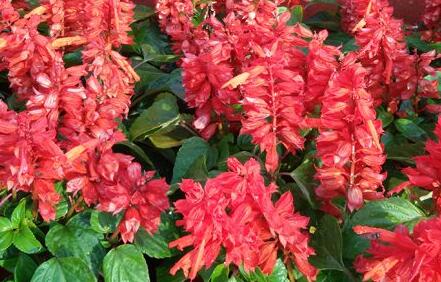
Scarlet sage is commonly propagated by two methods: sowing and cuttings. Sowing can be divided into spring sowing or autumn sowing, and can propagate a large number of scarlet sage at one time. Cuttings are mainly used for pot cultivation, are simple to perform, and root quickly, allowing propagation without affecting the growth and flowering of the mother plant.
Propagation methods of scarlet sage
I. Scarlet sage propagation by sowing
1. When to sow scarlet sage
It can be sown in spring or autumn. Spring sowing is generally done in early March, and after sowing it can bloom in September-October. Autumn sowing is done in August, and after sowing, with proper care, it blooms in May of the following year. Because autumn sowing requires careful maintenance in winter, spring sowing is a good choice for ordinary flower lovers.
2. Sowing method
(1) Using the sowing method is how scarlet sage propagates? Before sowing, prepare the potting soil first, apply a small amount of base fertilizer into the soil, then water thoroughly and leave it for 1-2 days to ensure the soil is fairly fertile and moist, which is beneficial for rooting after sowing.
(2) Evenly scatter the seeds on the soil, then cover with 1-2 cm of soil. Since it was already watered thoroughly, the soil will be fairly moist, so no watering is needed after sowing. Place it in a semi-shaded spot, cover with plastic film to keep it warm and moist, and that is enough.
(3) Keep the soil moist. If it is too dry, water from the bottom of the pot. Generally it will germinate in 8-10 days, but you need to wait until it grows seedlings before appropriately supplementing fertilizer. After that, manage it normally according to scarlet sage care techniques. Usually it takes about 100 days from sowing to flowering.
II. Scarlet sage propagation by cuttings
1. Timing
The timing is generally chosen in March-May or September-October, and it can be done together with pruning. For example, when pinching the top, the removed young shoots can be used as cuttings, which can reduce care steps.
2. Method
Cut a branch about 12-15 cm long from a healthy plant, place it in a cool place to dry naturally, then insert the branch into the potting soil. Generally insert 1-2 branches per flower pot, then water thoroughly and keep the temperature at about 20 degrees. If it is too dry, spray water appropriately. It will sprout in about 1 week, then move it into sunlight for care.
Scarlet sage Salvia splendens Ker-Gawler Scarlet sage guide: how to grow scarlet sage / how to propagate scarlet sage
Scarlet sage profileScarlet sage Salvia splendens Ker-Gawler
Scarlet sage cultivation methods and precautions Scarlet sage introduction
Scarlet sage, also known as firecracker red, is a plant in the Lamiaceae family, genus Salvia. Scarlet sage has long inflorescences, bright red color, a long flowering period, and strong adaptability, and is the most commonly cultivated herbaceous flower in Chinese cities and gardens. In recent years, foreign countries have made new developments in the application of ornamental plants in the genus Salvia. Many new cultivars of red-flowered sage (Salvia coccinea) and pink-calyx sage (scarlet sage blue) have been bred. China has also introduced them and carried out small-scale production, and they have already achieved good results in urban landscape arrangements.
The flower language of scarlet sage
The flower language of scarlet sage is family love, and it represents a heart in love.
The dietary therapy or medicinal value of scarlet sage
The medical information and health dietary therapy information on Huahua Network is for reference only and cannot be used as a basis for diagnosis or medical treatment. For any health problem, consult professional medical personnel, and for the treatment of any disease, please follow doctor's orders.
Ultimate flower-protecting mission: love yourself, start from reality, and strictly follow doctor's orders. For illness, do not be careless, do not delay, do not give up hope, face it bravely, use love to warm the silent world, and use your heart to care for the flower field within.
The medicinal part of scarlet sage is the whole plant, which can be harvested throughout the growing period, used fresh or dried in the shade for later use.
Nature, flavor, and effects
Effects: sweet, neutral.
Clear heat, cool blood, reduce swelling.
The effects and functions of scarlet sage
Indoor pot cultivation, flowerbed flower, ornamental flower type, flowerbed, flower border, pot cultivation
Cultivation techniques of scarlet sage
The planting distance for scarlet sage is about 40 cm, and fertile, loose soil rich in humus or sandy soil is suitable. During its peak growing season, it can be top-dressed 1 to 2 times with phosphorus-containing liquid fertilizer to promote abundant flowering. Scarlet sage usually does not like too much water, otherwise yellowing leaves and leaf drop easily occur, resulting in large but sparse plants with few flowers. During the growing period, pinch and shape it regularly to control plant height and branching. This promotes long, thick inflorescences and neat flowering.
Spring-sown plants bloom abundantly from September to October. Old plants overwintered in a greenhouse also flower from May to June, but not as abundantly as in summer and autumn. Although branches and leaves grow vigorously in hot summer, flowers are sparse. Scarlet sage has a relatively late flowering period. If seeds are to be collected, sow in early March in a greenhouse or hotbed, which can slightly advance the flowering period and help set seed well. Scarlet sage seeds fall easily, or often cannot fully mature due to autumn coolness, so it is commonly changed to pot cultivation and then moved to a greenhouse to overwinter, and in the second year new branches are cut for cuttings, which root very easily. In a hotbed above 15°C, cuttings can be taken at any time. Cuttings take about 10 to 20 days to root, and can be divided and planted after 30 days. Cutting seedlings reach flowering faster than seedling-grown plants, and plant height is also easier to control. Later cuttings produce shorter plants; although growth vigor is weaker, it has little effect on the flowering period, and they still bloom abundantly and are more convenient for arrangement. For seed collection purposes, it is best to use seedling-grown plants. For scarlet sage used for National Day, take cuttings in early July. At this time the weather is hot, so attention should be paid to shading, and in rainy periods attention should be paid to rain protection and drainage.
When scarlet sage seedlings have 3 to 4 pairs of true leaves, pinch them so that each plant has at least 4 side branches, and move them to the flowerbed when flower color has already appeared at the branch tips. If phosphorus fertilizer is applied before flowering, flowering is even better. The calyx of scarlet sage fades over time but does not fall. When used for ornamental arrangement, spent flowers need to be removed at any time to keep the flowers abundant and the color vivid
Cultivation methods of scarlet sage
Mainly by seed propagation, and also by cutting propagation. Sowing can be done from spring March to early June (in the Shanghai area from late February to early March). After sowing, there is no need to cover with soil, and the temperature should be kept at about 20°C. It will germinate in about 12d. Cutting propagation can be done in summer and autumn (flower color varies greatly, so it can be sown earlier, flower colors separated, and then propagated by cuttings).
[Seed propagation] Generally sow from March to June. The seeds are relatively large, with 260-280 seeds per gram. The suitable germination temperature is 21-23°C, and germination occurs 15-18 days after sowing. If sowing in autumn, indoor tray sowing can be used, and the room temperature must be above 21°C for fast and uniform germination. Below 20°C, germination vigor decreases noticeably. In addition, scarlet sage is a light-loving seed, so no soil cover is needed after sowing. Lightweight vermiculite can be scattered around the seeds, which neither affects light transmission nor helps retain moisture, and can increase the germination rate and uniformity. The germination rate generally reaches 85%-90%.
[Cutting propagation] May-August is preferable. Choose thick, substantial branches, 10 cm long, insert them into sterilized leaf mold soil, keep the cutting medium at 20°C, and they can root 10 days after insertion and be transplanted after 20 days.
Landscape uses of scarlet sage
It is commonly used as the main material for flowerbeds and flower borders, and in northern regions it is often used for pot cultivation and ornamental display.
Scarlet sage is also very commonly cultivated internationally, especially in European and American countries and Japan. Although it is not ranked by output value, companies such as Goldsmith Seeds in the United States, Famen in Italy, Bodger in France, and Floranova in the United Kingdom sell considerable scarlet sage seeds every year. At the same time, new cultivars are constantly coming onto the market, especially dwarf pot cultivars, which are updated extremely quickly. Therefore, the appearance of scarlet sage has changed greatly.
Although the cultivation history of scarlet sage in China is not long, it is the most common and most used in urban environmental arrangements. Every year during grand festivals, scarlet sage still plays the leading role, with an estimated 500,000 to 1,000,000 pots in large cities and 50,000 to 100,000 pots in small and medium-sized cities. However, in terms of cultivar application, red is dominant and old cultivars are dominant. White, purple, and pink are rarely used. It was not until the 1990s that dwarf cultivars entered China, and because of their rich colors, the status of scarlet sage was strengthened. At the same time, foreign countries have made new developments in the application of ornamental plants in the genus Salvia. Many new cultivars of red-flowered sage (Salvia coccinea) and pink-calyx sage (scarlet sage blue) have been bred. China has also introduced them and carried out small-scale production, and they have already achieved good results in urban landscape arrangements.
Disease control of scarlet sage
Fungal infection
[Black spot disease]:
It mainly attacks leaves, petioles, and young shoots. When the leaves first become diseased, small purple-brown to brown spots appear on the upper surface, and after expanding they are mostly round or irregular dark brown lesions. Pesticides such as carbendazim, thiophanate-methyl, and daconil can be sprayed.
[Powdery mildew]: It attacks young leaves, with white powdery material appearing on both sides. Early symptoms are not obvious. After the white powdery layer appears for 3--5 days, the leaves become water-soaked, gradually lose green and turn yellow, and in severe cases cause leaf drop. Spraying carbendazim or triadimefon at the onset stage is sufficient, but Guoguang Yingna has the best effect.
[Leaf blight]: It mostly invades from leaf tips or leaf margins, initially as small yellow spots, then rapidly expands inward into irregular large lesions. In severe cases, 2/3 of the whole leaf blights, the diseased part loses green and turns yellow, and then brown, dries, and falls off. In addition to strengthening fertilizer and water management, control of the above diseases should include cutting off diseased branches and leaves in winter, clearing fallen leaves on the ground, and reducing initial infection sources. At onset, integrated control should be adopted, and fungicides such as carbendazim and thiophanate-methyl should be sprayed.
Diseases should mainly be prevented. During high temperature, high humidity, or rainy seasons, spray fungicides regularly. When seedlings enter the dormant stage, spray lime sulfur mixture for comprehensive sterilization to ensure healthy growth of seedlings. When seedlings are strong, they themselves resist a certain degree of disease invasion.
Pest control
1. Slug moths
Mainly the larvae of the yellow slug moth, brown-edged green slug moth, beautiful brown slug moth, mulberry brown slug moth, and flat slug moth, which feed heavily on leaves in hot seasons. Control method: once found, immediately spray with 90% trichlorfon crystal at 800 times dilution, or spray with 2.5% fenvalerate EC at 1500 times dilution.
2. Scale insects
Mainly white scale, Japanese wax scale, red wax scale, brown soft scale, cottony cushion scale, chaff scale, and snake-eye scale, etc. Their damage is characterized by piercing and sucking the sap of young stems and young leaves of scarlet sage, causing poor plant growth, mainly induced by high temperature and high humidity, poor ventilation, and insufficient light. Control method: during the peak hatching period of nymphs, spray with 25% buprofezin wettable powder at 2000 times dilution.
3. Aphids
Mainly scarlet sage tube aphid, green peach aphid, etc. They pierce and suck the sap of young and tender organs of the plant, damaging young stems, young leaves, flower buds, etc., seriously affecting plant growth and flowering.
Control method: promptly spray with 10% imidacloprid wettable powder at 2000 times dilution.
4. Rose three-section sawfly
Mostly in the larval stage, dozens or more than a hundred gather in groups to cause damage, and in a short time can eat all the young leaves of the plant, leaving only a few main veins, seriously harming the normal growth and development of the plant.
Control method: for a small number of potted plants, when they first appear, pick the leaves on which large numbers of larvae gather and crush them to death. If they appear in large numbers, spray with 75% phoxim EC at 4000 times dilution.
5. Carmine spider mite
It can occur 10 to 15 generations a year. Adult mites, young mites, and nymphs gather on the underside of leaves to pierce and suck and cause damage. Eggs are mostly laid on both sides of the leaf veins on the underside or under clustered fine silk webs. Each female mite can lay 50 to 150 eggs, up to 500 at most. Completing one generation takes only 10 to 13 days at 23°C to 25°C, and about 7 to 8 days at 28°C. It breaks out severely in hot, dry seasons, often causing large numbers of dense small white spots on the upper surface of leaves, with the underside turning yellow and occasionally with blighted spots. Control method: once found, promptly spray with 25% biphenthrin wettable powder at 2000 times dilution.
6. Scarab beetles
Mainly the copper-green scarab, black velvet scarab, white-spotted flower scarab, and small green flower scarab, etc. Adults often gnaw on new leaves, young shoots, and flower buds, seriously affecting plant growth and flowering. Control method: take advantage of the adults' death-feigning behavior and shake them off in the evening to capture and kill them. Take advantage of the adults' phototaxis and use black light traps to lure and kill them. When adults are feeding and causing damage, spray with 50% malathion EC at 1000 times dilution. In addition, there are also damages by tiger moths, noctuid moths, inchworms, bagworms, leafhoppers, stink bugs, etc. Corresponding control measures can be taken according to the damage characteristics of different pest species.
Ecological habits of scarlet sage
Scarlet sage prefers a warm, humid environment with ample sunlight, fears cold, and avoids dry heat. The suitable growing temperature is 20-25 degrees. Below 5 degrees, the leaves gradually turn yellow and fall off. Scarlet sage has strong adaptability, but grows well in loose, fertile, well-drained soil. For potted scarlet sage, sufficient base fertilizer should be applied in the pot, and it should not be watered too much in the early growth stage. Watering once every two days is enough to avoid yellowing and falling of leaves. Once it enters the vigorous growth period, the amount of watering can be appropriately increased, and top-dressing can begin, applied twice a month, which can make the flowers bloom abundantly and prolong the flowering period. When the seedlings have 4 leaves, begin pinching to promote more branching. Generally it can be pinched 3-4 times. In addition to the self-sowing propagation ability mentioned above, scarlet sage can also be propagated by artificial sowing and cuttings. Sowing can be done in March-April, and when the seedlings are 5-10 cm tall, they are transplanted and planted out. Cuttings can be taken whenever the temperature is above 15 degrees. Choose slightly hardened, healthy branches, cut them into segments about 6 cm long, and insert half their depth into the cutting bed. New roots can sprout in half a month. It can also be propagated by root division from old plants. For potted scarlet sage, attention should be paid to air circulation at the placement site, and fertilizer and water management should be appropriate, otherwise the plants may develop rot or be attacked by aphids, red spiders, etc. If pests are found, spray with 40% dimethoate at 1500 times dilution for control.
Morphological characteristics of scarlet sage
Scarlet sage, herbaceous. Stems about 80 cm tall, smooth. Leaves ovate or ovate-rounded, 4 to 8 cm long, 2.5 to 6.5 cm wide, apex acuminate, base rounded, hairless on both sides. Verticillasters with 2 to 6 flowers, densely forming a terminal false raceme, bracts ovate-rounded; calyx bell-shaped, 11 to 22 mm long, crimson, upper lip entire, lower lip 2-lobed, teeth ovate, apex acute; corolla red, corolla tube extending beyond the calyx, about 3.5 to 5 cm long, outside with red pubescence, without a hair ring inside the tube; stamens and style extending beyond the corolla. Nutlets ovate, with 3 ridges, smooth. Flowering period July to October. Native to Brazil. Commonly cultivated in parks in Shanghai and Nanjing for ornamental purposes.
Distribution areas of scarlet sage
|North China|Northeast China|East China|South China|Northwest China|Central China|Southwest China
Propagation methods of scarlet sage
Mainly by seed propagation, and also by cutting propagation. Sowing can be done from spring March to early June (in the Shanghai area from late February to early March). After sowing, there is no need to cover with soil, and the temperature should be kept at about 20°C. It will germinate in about 12d. Cutting propagation can be done in summer and autumn (flower color varies greatly, so it can be sown earlier, flower colors separated, and then propagated by cuttings).
[Seed propagation] Generally sow from March to June. The seeds are relatively large, with 260-280 seeds per gram. The suitable germination temperature is 21-23°C, and germination occurs 15-18 days after sowing. If sowing in autumn, indoor tray sowing can be used, and the room temperature must be above 21°C for fast and uniform germination. Below 20°C, germination vigor decreases noticeably. In addition, scarlet sage is a light-loving seed, so no soil cover is needed after sowing. Lightweight vermiculite can be scattered around the seeds, which neither affects light transmission nor helps retain moisture, and can increase the germination rate and uniformity. The germination rate generally reaches 85%-90%.
[Cutting propagation] May-August is preferable. Choose thick, substantial branches, 10 cm long, insert them into sterilized leaf mold soil, keep the cutting medium at 20°C, and they can root 10 days after insertion and be transplanted after 20 days.
Scarlet sage pictures
Cultivation methods of scarlet sage
Cultivation methods of scarlet sage
Scarlet sage, also known as firecracker red, cracker red, wall-bottom red, etc. Lamiaceae herb. Native to Brazil. Morphological characteristics: plant height 25〜50cn^ stem four-angled. Leaves alternate, heart-shaped or ovate. Flowers terminal, raceme, corolla tube long, mostly bright red.
There are many cultivated cultivars of scarlet sage. The red series is usually called scarlet sage; the purple series is called scarlet sage purple; the white series is called scarlet sage white. Also, because plant height differs, it is often divided into 3 types: tall, medium, and dwarf.
Growth habits: it likes a warm, humid climate and ample sunlight, and avoids direct scorching sun in summer. It is not tolerant of drought or freezing. It is not strict about soil and requires sufficient fertilizer and water. Flowering period May〜October.
Propagation methods
(1) Sowing method: the suitable temperature for sowing is 15〜211. Usually the spring sowing period is March〜June, and the autumn sowing period is September〜October. When raising a small number of seedlings, pot sowing is often used; when raising a large number of seedlings, bed sowing is often used. Mix seeds that have been soaked for 16〜20 h with soil or sand, then evenly scatter them on the soil surface, press lightly, cover with a small amount of soil, water thoroughly, and cover with transparent plastic film to retain moisture. After most seeds germinate, remove the plastic film and promptly spray water with a fine-hole pot to prevent drought and sprout regression. Scarlet sage seeds like light, so after sowing the soil cover must never be too thick, or the seeds can be pressed onto the soil surface without covering with soil.
Cutting method: cuttings are often taken in early summer from June〜July or in autumn from September〜October. If the temperature is too high, cuttings easily rot and die; if the temperature is too low, they do not easily root. Cuttings should be chosen from fully grown young branches, remove 1〜2 pairs of leaves at the base, and cut off l/3~l/2 of the leaf surface at the top to reduce water evaporation from the cuttings after insertion. The first watering can be slightly more, and afterward it is better to spray frequently and irrigate sparingly; too much water easily causes the cuttings to rot and die.
Cultivation and care: loam soil that is loose, fertile, and rich in humus is suitable. Usually when sown or cutting seedlings grow 4〜6 true leaves, they are transplanted or potted. Generally, pot cultivation mostly uses dwarf or medium types, while ground planting mostly uses medium or tall types. For pot cultivation, one plant per pot, commonly using small to medium pots with a diameter of 10~12 cm; for ground planting, the plant spacing is 25〜40 cn^ —scariet sage prefers fertilizer and water. Generally, when potting, a small amount of decomposed organic fertilizer or compound fertilizer can first be mixed in, and afterward a top-dressing mainly of nitrogen fertilizer is applied once every half month. In the early stage of flower bud formation, more phosphorus and potassium fertilizer should be applied. If only nitrogen fertilizer such as urea is applied, excessive vegetative growth without flower bud formation will occur. Do not water at noon in summer, otherwise root rot is very likely. To make the plant full, scarlet sage also needs shaping and pruning, repeated pinching, removal of weak branches, and stopping pinching 30 days before the expected flowering time so it blooms on schedule. After flowering, spent flowers also need to be cut off at any time to keep it blooming continuously.
Pest and disease control
Red spider: mostly breaks out heavily in hot, dry seasons. Control method: in autumn and winter, clear dead branches, fallen leaves, and miscellaneous insects in the nursery to reduce the number of overwintering mites; during occurrence, spray with 40% dicofol at 1,000〜1,500 times dilution or 40“dimethoate at 1,200〜1,500 times dilution. When spraying, attention should be paid to spraying both the front and back of leaves.
Aphids: this pest occurs relatively little. When damaging, young leaves appear shrunken. In severe cases, spray with 40 dimethoate at 1,500 times dilution.
Common cutworm: larvae damage leaves and flowers. When occurring in small numbers, they eat the damaged parts into irregular notches; in severe cases, they can eat all the leaves. Control method: for home flower growing, hand-picking can be used. If occurrence is severe, spray with 50“fenitrothion at 1,000 times dilution or 40^omethoate at 1,200 times dilution, etc.
Black spot disease: mostly damages seedlings in patches during the seedling-raising period. In the early stage of disease, diseased plants should be removed, and diluted carbendazim or chlorothalonil should be sprayed, then sprayed again every 7〜10 days. A large outbreak is possible during rainy, high-temperature periods, so timely control is needed.
6. Horticultural uses: scarlet sage has bright red flowers, a full plant shape, a very long flowering period, and strong adaptability, and is most suitable for flowerbed arrangement. Potted flowers are commonly used for hall, balcony, or terrace arrangement.