-

Growing vegetables without spraying pesticides: homemade insecticides work better, and you can eat with peace of mind.
Anyone who has grown vegetables knows that as long as you grow vegetables, there will be all kinds of pests. Among leafy vegetables, the cabbage caterpillar (Pieris rapae) does the most serious damage; among solanaceous and fruiting vegetables, the whitefly (Trialeurodes vaporariorum) troubles many vegetable growers; and chives...
-
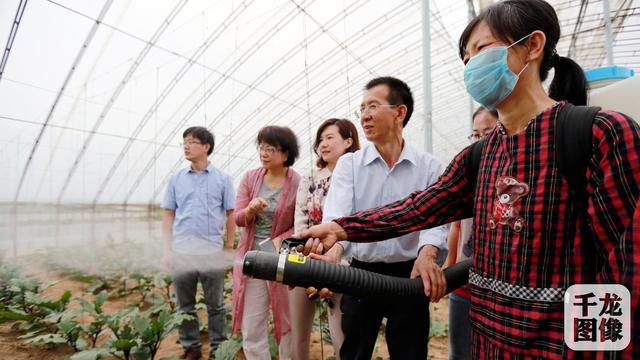
With this foolproof sprayer, greenhouse spraying takes just 5 minutes per greenhouse
"Foolproof" sprayer finishes a greenhouse in 5 minutes
-
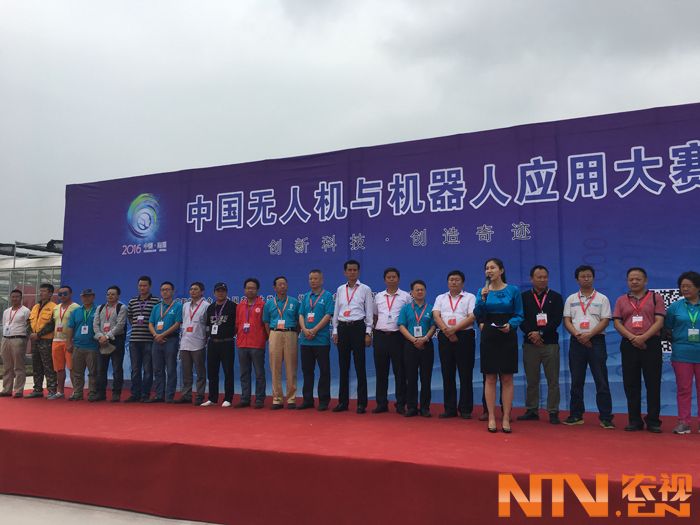
Want to save 10 yuan per mu on spraying? Understanding this one point is enough
Understand this one point, and save 10 yuan per mu on spraying
-
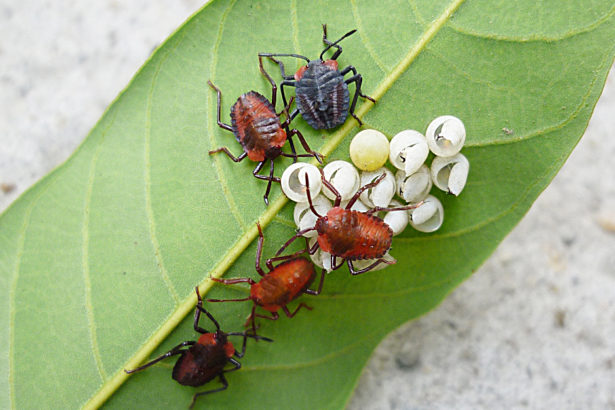
It's the perfect time to tackle the lychee stink bug! Spraying pesticide after egg-laying is too late; releasing Anastatus wasps in spring to remove egg masses is the most effective
It's the perfect time to tackle the lychee stink bug! Spraying pesticide after egg-laying is too late; releasing Anastatus wasps in spring to remove egg masses is the most effective
-

What are the precautions for spraying foliar fertilizer on rice?
Timing: Generally, spraying at the late booting, initial heading, grain-filling and full heading stages of early rice is most suitable, and spraying once per mu takes over an hour. If spraying fertilizer coincides with the heading and flowering stage, it should be done in the morning before the flowers open and after 4 p.m. Preparing liquid fertilizer: Various quick-acting nitrogen, phosphorus and potassium fertilizers, monopotassium phosphate, triacontanol, borax, silkworm droppings and human and livestock urine can all be used as foliar fertilizer. The amount used per mu is small, but they must first be processed into liquid fertilizer. Quick-acting chemical fertilizers should be dissolved in 5-10 times their amount of water the day before spraying to prevent burning the rice leaves from over-spraying. Human and livestock urine should first be left
-
The Correct Method for Spraying Nano Magnetic Energy Liquid on Soybeans
This year, driven by the market, farmers across our province have shown exceptionally high enthusiasm for planting soybeans, adopting high-yield practical cultivation techniques and increasing their inputs, achieving uniform, complete and vigorous seedlings, laying a solid foundation for a large-scale bumper harvest. Recently, many farmer friends have called to ask how Nongwang Nano Magnetic Energy Liquid should be sprayed. Here is a brief introduction: 1. Foliar spraying: What does Nongwang Nano Magnetic Energy Liquid do? Nano Magnetic Energy Liquid is a non-chemical product, a magnetic liquid prepared using the method of magnetic drug bioengineering.
-
Spraying cotton with seven liquids can increase yield by 100 jin
According to many years of trials by our local agricultural science institute and cotton-grower science households, spraying the following nutrient liquids mixed with pesticide during pest control at different growth stages of cotton can effectively increase yield by 20%-30%. The methods are described below: 1. Chicken manure liquid: take 3 kg of fermented dry chicken manure, 2. add 7.5 kg of water, 3. soak for 30 hours, 4. then boil for 2-5, 3 hours, 6. filter out the residue, 7. then ferment again, 8. until white mold appears on the liquid surface, 9. filter out the white mold, 10. add 50 kg of water, 11. spray evenly on 1 mu of cotton field. 12. Rabbit manure liquid:
-
Spraying cotton with fertilizer boosts yield and reduces pests and diseases
Spraying nitrogen fertilizer: Urea has the effect of destroying insect chitin. When cotton aphids (especially summer aphids) occur, mix urea, laundry detergent and water in a ratio of 4:1:400 to prepare a "wash-urea mixture" and spray it, which has a clear killing effect. Spraying phosphorus fertilizer: During the adult occurrence period of cotton bollworm, using 1%-2% superphosphate leachate as a foliar spray fertilizer can convert oxalic acid into calcium oxalate and cause it to lose its attraction to cotton bollworm. The residual effect of each phosphorus spray is generally 2-3 days. Spraying potassium fertilizer: Use 10 kg of plant ash, add 50 kg of water, soak
-
High-efficiency cultivation technique for oyster mushrooms without spraying water for humidification
The narrow-shed no-spray high-efficiency cultivation method for oyster mushrooms combines the advantages of the soil-burial cultivation method and the mushroom-wall cultivation method, making the cultivation and management of oyster mushrooms simpler, with excellent quality and high yield. The method is: after harvesting the first flush of mushrooms, remove the mushroom blocks from their bags and build a mushroom wall around the four earthen walls of the shed. The outer ends of the wall are bonded block-to-block with sealing mud, the interior of the wall is entirely filled with nutrient soil, and a water trough is built on top of the wall for replenishing water and nutrients. The advantages of this method are mainly five: (1) Before building the mushroom wall, first let the blocks produce one flush of mushrooms; the wall built from already-shrunk blocks does not deform, does not dry-crack,
-
Spraying oyster mushrooms with cooled boiled water can significantly increase yield
Spraying cooled boiled water at different stages of oyster mushroom fruiting can increase the biological conversion rate by 33%, and oyster mushrooms sprayed with cooled boiled water flush faster, fruit evenly, and have thick, plump caps. After the oyster mushroom mycelium has fully colonized, remove the plastic film and spray the mushroom bed and the surrounding walls once with cooled boiled water so that the relative air humidity reaches 80-85%; when coral-like primordia appear in large numbers, as the fruiting bodies gradually grow, spray cooled boiled water 3-5 times a day to raise the air humidity to 95%. When spraying, use a fine mist; do not irrigate heavily, so that standing water does not cause mushroom death
条件筛选