-
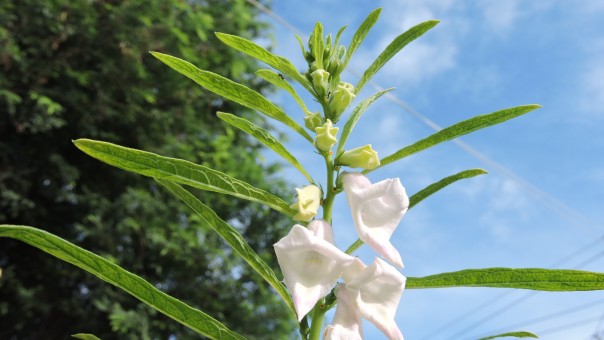
When Does Sesame Bloom? Planting Methods and Per-Mu Income Introduction
Sesame, also known as zhima or hu ma, is a common oilseed crop in China, rich in vitamins, various trace elements and protein. Regular consumption can help nourish the blood and regulate cholesterol, which is why many people enjoy eating it
-
Sesame Cultivation Precautions and Nutritional Value Explained
Sesame Cultivation Precautions Sesame Nutritional Value
-
Growing Tips and Eating Methods for White Sesame
Growing Tips for White Sesame and How to Eat White Sesame
-
-

What to Do About Sesame Lodging? Cause Analysis and Control Measures
Causes of Sesame Lodging and Control Measures
-

Sesame production keeps rising steadily, with 5 types of intelligent equipment lending a hand
5 types of intelligent equipment help sesame production "rise steadily"
-
Introduction to the black sesame variety Liaoyin Black Sesame No. 1
Liaoyin Black Sesame No. 1 (Ji 9014) is a superior new black sesame variety for both medicinal and culinary use, carefully bred and selected by the Crop Research Institute of the Liaoning Academy of Agricultural Sciences from 7 introduced candidate varieties. It offers the advantages of high quality, high yield, disease resistance, early maturity and wide adaptability, and is well favored by producers, distributors and consumers. It has passed expert appraisal and has been registered and filed with the Liaoning Provincial Seed Administration Bureau.
-
Key Production Techniques for Green Agricultural Product Sesame
1. Base selection: Within the surrounding area (within 2000 m) of the green agricultural product sesame production base there are no pollution sources; the atmospheric environment conforms to the air quality of a green food base; the farmland irrigation water quality conforms to the irrigation water quality standards of a green food base; and the farmland soil quality conforms to the environmental standards of a green food base. 2. Variety selection: Liaozhi No. 1, Liaozhi No. 2, Batongbai, etc. 3. Main cultivation techniques 3.1 Crop rotation and stubble change, sowing early at the right time to capture soil moisture. According to research, the root system of sesame can secrete a substance, and this secreted substance remains in the soil after the sesame harvest. It can promote the reproductive activity of certain soil microorganisms, thereby accelerating the decomposition of organic matter in the soil, increasing soil nutrients and improving soil fertility. At the same time, these microorganisms are beneficial to cereal crops but unfavorable to soybeans and sesame. If soybeans are planted after sesame or sesame is continuously cropped, the disease will be severe, especially in years with more rainfall, when the incidence of disease in sesame is even heavier, reaching about 50% in some years. Therefore, continuous cropping is avoided.
-
Key Techniques for High-Yield Cultivation of Dense-Capsule Sesame
Dense-capsule sesame Yizhi No. 1 is one of the higher-yielding types of sesame today. It is drought-tolerant and lodging-resistant, with extremely dense capsules, 3 to 7 capsules per leaf, layer upon layer so thick that the stems are hidden from view. The seeds are pure white, with an oil content of over 55%. The growth period is 110 days for spring sowing and 85 to 90 days for summer sowing. It yields 100 kg to 150 kg of sesame per 667 sq m, and up to 220 kg per 667 sq m in high-yield fields. 1. Land preparation and fertilization: Before plowing, apply 1000 kg of farmyard manure, 40 kg of superphosphate, and 10 kg of potassium sulfate or potassium chloride per 667 sq m
-
How to control field bindweed in sesame fields? Oxadiazon can control it
Liu Bengui from Shou County, Anhui Province, called to say that in recent years field bindweed has been severe in local sesame fields, and common herbicides cannot control it; he does not know which herbicide should be used to control this weed. According to relevant information, for chemical weed control in sesame fields, before sowing sesame, use 80-100 ml of 48% trifluralin emulsifiable concentrate per mu, or 50-70 g of 70% prometryn wettable powder, add water and spray evenly on the soil surface, then immediately incorporate into the soil to a depth of 3-5 cm; this can control annual grass weeds and some broadleaf
条件筛选