-

Weed control in summer sesame fields: master three stages and use the right herbicides to prevent weed infestation
The seedling stage of summer sesame coincides with high temperatures and frequent rain, making weed infestation likely. This article explains the dosage and methods for three stages: soil-closing treatment after sowing but before emergence, non-selective paraquat weed control before emergence, and selective quizalofop-p-ethyl weed control after emergence, helping you effectively control grass weeds.
-
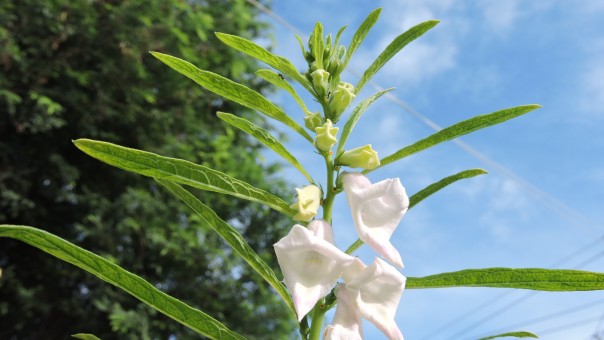
When Does Sesame Bloom? Planting Methods and Per-Mu Income Introduction
Sesame, also known as zhima or hu ma, is a common oilseed crop in China, rich in vitamins, various trace elements and protein. Regular consumption can help nourish the blood and regulate cholesterol, which is why many people enjoy eating it
-
Introduction to the black sesame variety Liaoyin Black Sesame No. 1
Liaoyin Black Sesame No. 1 (Ji 9014) is a superior new black sesame variety for both medicinal and culinary use, carefully bred and selected by the Crop Research Institute of the Liaoning Academy of Agricultural Sciences from 7 introduced candidate varieties. It offers the advantages of high quality, high yield, disease resistance, early maturity and wide adaptability, and is well favored by producers, distributors and consumers. It has passed expert appraisal and has been registered and filed with the Liaoning Provincial Seed Administration Bureau.
-
Key Production Techniques for Green Agricultural Product Sesame
1. Base selection: Within the surrounding area (within 2000 m) of the green agricultural product sesame production base there are no pollution sources; the atmospheric environment conforms to the air quality of a green food base; the farmland irrigation water quality conforms to the irrigation water quality standards of a green food base; and the farmland soil quality conforms to the environmental standards of a green food base. 2. Variety selection: Liaozhi No. 1, Liaozhi No. 2, Batongbai, etc. 3. Main cultivation techniques 3.1 Crop rotation and stubble change, sowing early at the right time to capture soil moisture. According to research, the root system of sesame can secrete a substance, and this secreted substance remains in the soil after the sesame harvest. It can promote the reproductive activity of certain soil microorganisms, thereby accelerating the decomposition of organic matter in the soil, increasing soil nutrients and improving soil fertility. At the same time, these microorganisms are beneficial to cereal crops but unfavorable to soybeans and sesame. If soybeans are planted after sesame or sesame is continuously cropped, the disease will be severe, especially in years with more rainfall, when the incidence of disease in sesame is even heavier, reaching about 50% in some years. Therefore, continuous cropping is avoided.
-
Key Techniques for High-Yield Cultivation of Dense-Capsule Sesame
Dense-capsule sesame Yizhi No. 1 is one of the higher-yielding types of sesame today. It is drought-tolerant and lodging-resistant, with extremely dense capsules, 3 to 7 capsules per leaf, layer upon layer so thick that the stems are hidden from view. The seeds are pure white, with an oil content of over 55%. The growth period is 110 days for spring sowing and 85 to 90 days for summer sowing. It yields 100 kg to 150 kg of sesame per 667 sq m, and up to 220 kg per 667 sq m in high-yield fields. 1. Land preparation and fertilization: Before plowing, apply 1000 kg of farmyard manure, 40 kg of superphosphate, and 10 kg of potassium sulfate or potassium chloride per 667 sq m
-
How to control field bindweed in sesame fields? Oxadiazon can control it
Liu Bengui from Shou County, Anhui Province, called to say that in recent years field bindweed has been severe in local sesame fields, and common herbicides cannot control it; he does not know which herbicide should be used to control this weed. According to relevant information, for chemical weed control in sesame fields, before sowing sesame, use 80-100 ml of 48% trifluralin emulsifiable concentrate per mu, or 50-70 g of 70% prometryn wettable powder, add water and spray evenly on the soil surface, then immediately incorporate into the soil to a depth of 3-5 cm; this can control annual grass weeds and some broadleaf
-
How to Ensure Full Seedling Emergence in Summer-Sown Sesame? Key Technical Points Explained
Ensuring full seedling emergence from a single sowing of summer sesame is an important measure for increasing summer sesame yields per unit area. However, during the summer sesame sowing period, temperatures are high and the weather is changeable. If drought occurs, seedlings are easily "baked to death," causing severe gaps in the stand; if heavy rain occurs, seedlings are easily "smothered to death," also causing gaps in the stand. It is recommended to use the double-layer sowing method to achieve full seedling emergence from a single sowing of summer sesame. For mechanized sowing, sow 0.7 kg per mu using a 24-row seeder, of which 12 rows sow at a deep layer with a depth of 3-4 cm, and the other 12 rows sow at a shallow layer with a depth of 0.2 cm, with two passes of compaction before and after sowing. For manual sowing, first
-
What are the processing methods for Renshou sesame cake?
Renshou sesame cake is one of the traditional famous specialty products of the Leshan area in Sichuan. Its characteristics: the cake texture is fine and tender, soft and melting in the mouth, sweet and fragrant with a refreshing taste, and it has a unique flavor. Ingredients formula: sesame powder 7.5 kg, stirred sugar 34.25 kg, cake powder 3.25 kg, cooked flour 5 kg, bean powder 0.25 kg. Production method: 1. Making sesame powder: choose plump sesame seeds, wash them with clean water, remove impurities and sand, take them out and drain the water, then put them in the wok and roast. Roast over low heat until they turn grain-yellow, then take them out, spread them out to cool
-
Timely Early Sowing Measures and High-Yield Cultivation Techniques for Summer Sesame
The main sesame-producing areas in China mostly practice summer sowing, and for a long time yields have been low and unstable. This is certainly related to frequent disasters, but the more important reason is late sowing, a short growth period for sesame, and inadequate and irrational use of climatic resources. To solve this problem, in recent years we have carried out careful research on how to sow summer sesame earlier and on supporting cultivation techniques, and have preliminarily summarized a set of high-yield cultivation techniques. 1 Analysis of the reasons for increased yield from early sowing of sesame 1.1 Full use of climatic resources The main sesame-producing areas in China, including Henan
-
Taiwan engineers cultivate sesame nutrient rice via genetic engineering
Researchers at the Graduate Institute of Biotechnology of National Chung Hsing University in Taiwan, China, used genetic engineering technology to improve the nutritional value of rice, successfully breeding sesame nutrient rice. The researchers inserted the gene for sesame 2S albumin into the Tainung 67 rice line, cultivating a new rice variety containing sesame 2S albumin, which they named sesame nutrient rice. Sesame nutrient rice mainly increases the methionine content in rice protein, making the amino acid composition of rice protein better match human needs and enhancing its nutritional value. Generally speaking, plant proteins are lower
条件筛选