-
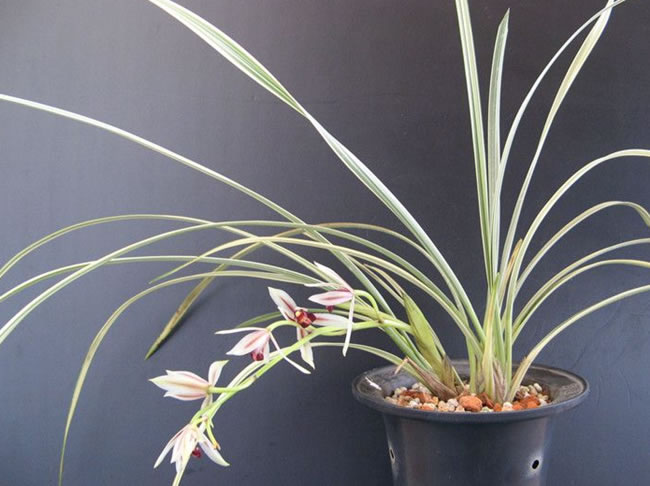
What causes black roots in orchids?
Recently it has been found that some sellers intentionally or unintentionally sell Komatsunishiki as other orchid varieties. Komatsunishiki is not a Chunlan, Chunjian, Songchun, Jiuhua Lan (Huilan), Lianban Lan, or Douban Lan - none of them. Some honest sellers sell it on the foreign orchid side! 'Komatsunishiki' is called (Ezuka Lan) or (Kanchou...
-
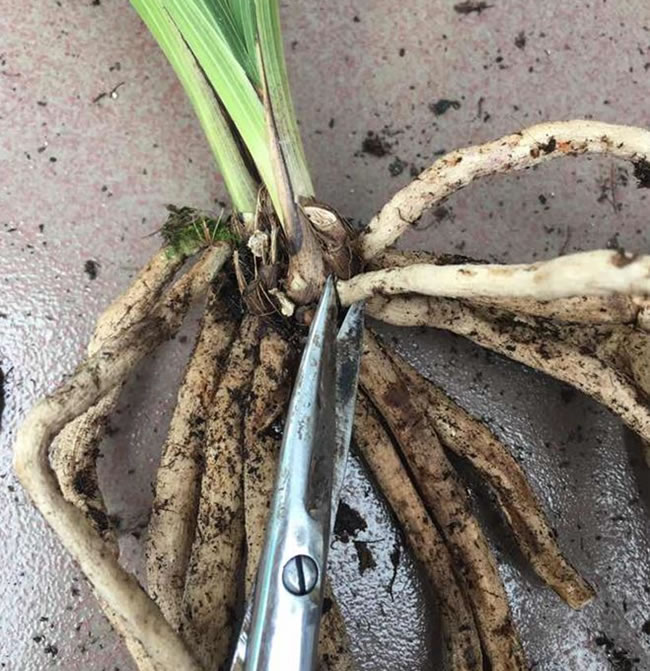
Why Cymbidium faberi Has Too Many Roots and Doesn't Sprout, and How to Fix It
Yifeng: When we repot and divide plants, we can thin out excessive roots, otherwise they seriously affect sprouting. Take these two groups of plants as an example: one group has 19 roots, the other has 11 roots. If you don't trim some roots, the single-growth-point group very likely won't sprout and will slowly age and die, and the mother-and-child growth group will also have new shoots affected because of too many roots...
-

What are the precautions for fertilizing orchids at the roots?
The technique of fertilizing orchids is both simple and complex, and the following points usually need attention: 1. Different orchid species need different amounts of fertilizer. For example, Cymbidium faberi needs a large amount of fertilizer, while Cymbidium goeringii needs only half as much as Cymbidium faberi. 2. Different growing media require different fertilizers. For example, hard materials such as volcanic stone and Sendai soil, because they themselves...
-
How should hollow roots on orchids be dealt with?
Hollow roots on orchids are quite common. This article starts with how to deal with hollow orchid roots, then moves on to the causes of hollow orchid roots, as well as prevention methods, so that orchid growers can avoid detours in their future orchid care. I have seen many online articles that only discuss the causes of hollow orchid roots without saying what to do about them...
-
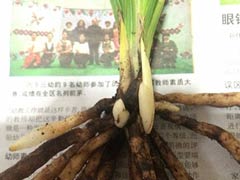
How Can You Tell if Orchid Roots Are Healthy? An Illustrated Guide to Judging
Quite a few orchid growers want to know what makes orchid roots healthy. It happens that a fellow orchid grower has put together an article based on their own experience, and with the pictures in the article, growers can fairly easily judge what healthy orchid roots look like. The grower looked at root photos of Liumei and Old Shanghai, because the peak season for introducing new plants is approaching...
-
What to Do When Orchid Roots Rot? Teach You the Correct Way to Handle It
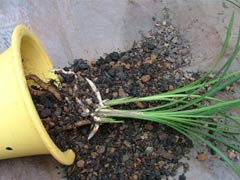
Orchid root rot means there is a problem with your orchid care. If even one factor - environment, planting method, watering, fertilizing, spraying - fails to meet the orchid's needs, and the tips of new shoot leaves begin to wither or black spots appear on the leaves, it means the orchid has started to become diseased and its roots are rotting. If you do not find the cause and improve it...
-
How to judge the quality of orchids when introducing them by their roots
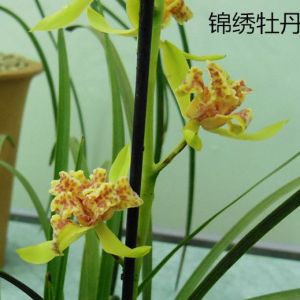
A gold award-winning variety at the Jiangsu Jingjiang Cymbidium faberi exhibition.
-

Why Are Orchid Roots Turning Black? Causes and Solutions
There are many situations in which orchid roots turn black, and it is not possible to determine the cause from one single aspect. Flower lovers can refer to the information below to make a judgment....
-
What causes empty roots in orchids? Cause analysis and solutions
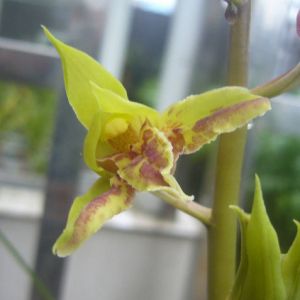
A new red-flowered Cymbidium (Hui orchid) variety with petaloid side lobes, from Guilin, Guangxi. Guilin produces Cymbidium, but good flowers rarely appear there, so producing this butterfly form is truly rare and commendable.
-
What causes empty roots in orchids?
There are many causes of empty roots. Besides water, they can also be caused by insect bites or fungi. If the central strand in the middle of the root is black, it is an empty root caused by pathogenic bacteria. If the strand is a normal off-white color, and the empty root has no standing water and smells of the distinctive fresh fragrance of orchid roots, then it is caused by vigorous root fungi, and this is a normal phenomenon...
条件筛选