-
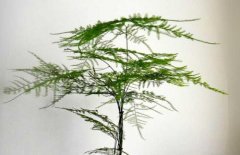
How to grow and care for asparagus fern (Asparagus setaceus), and can it grow roots in water?
The asparagus fern is a popular potted plant that many people are growing now. If you want to grow an asparagus fern, do you know how to care for it? What are the precautions for growing asparagus fern? Can asparagus fern grow roots in water? How to grow asparagus fern. Temperature: asparagus fern is sensitive to cold, and its usual growing temperature is
-
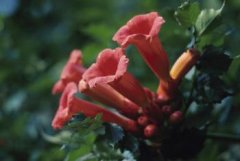
Reasons for Trumpet Vine Flower Death and the Medicinal Value of Trumpet Vine Roots
Trumpet vine, also known as trumpet creeper, usually grows aggressively. It spreads and climbs over various structures, in some cases reaching up to 35 feet. Although trumpet vine is very hardy, resistant to most pests and diseases, and not picky about water or soil
-
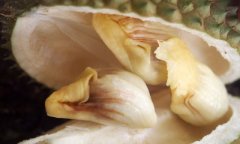
What are the flavor characteristics of the Turtle Durian, a durian variety that grows on the trunk and roots?
I was lucky enough to find the Turtle Durian twice in Borneo, because it is one of the rarest durian species. Many people do not consider it edible because it has a strong musky smell when ripe. The flavor is sweet and juicy, in stark contrast to the usually heavy durian
-

Symptoms and Control Methods of Crown Gall Disease in Fruit Trees
Crown gall disease in fruit trees is a very common disease. If it is not controlled in time, it may reduce yields and even cause the death of fruit trees. Therefore, fruit growers must do a good job of prevention and control. So what are the symptoms of crown gall disease in fruit trees? How should it be controlled? I. Main symptoms of crown gall disease
-
What Trees Can Persimmon Rootstock Be Grafted Onto? A Full Guide to Grafting Time and Methods
Persimmon rootstock generally refers to Diospyros lotus, also called black date, soft date, milk date, wild persimmon, etc. It is a fruit tree used both as medicine and food, and can be propagated by sowing or grafting. So what trees can persimmon rootstock be grafted onto? When to graft? How to graft? 1. What trees can persimmon rootstock be
-
How many years until Gisela 6 rootstock bears fruit?
Gisela is native to Germany and was introduced in the 1990s by Director Wang Jiaxi of the Shandong Institute of Pomology. This is a hybrid cherry dwarfing rootstock, known as the Gisela series, including Gisela 5, Gisela 6, Gisela 7, and Gisela 12. So, how many years until Gisela 6 bears fruit? 1. Gisela
-
How to control insects in the roots of fruit trees
Fruit trees are a common type of sapling in our country, but during cultivation, various pests and diseases can appear, and insects in the roots are one of them. So what should be done about insects in the roots of fruit trees? 1. What should be done about insects in the roots of fruit trees? Insects in the roots of fruit trees are mostly nematodes, and for every square
-
What to Do When Pests Appear on Clivia Roots? A Detailed Guide to Prevention and Control
Clivia is a type of orchid that produces beautiful flowers and is very popular among flower enthusiasts. Placed indoors, it not only enhances ornamental value but also purifies the air. However, during cultivation, pests on the roots can occur. So what should you do when pests appear on Clivia roots? 1. Clivia
-
How to grow Houttuynia cordata (fish mint): propagate from roots or from seeds?
Summary: Houttuynia cordata can be grown both from roots and from seeds, but root propagation grows faster. The best sowing time is around the Beginning of Spring (Lichun); in a flower pot, open furrows in the same direction for row planting, with a furrow depth of 8-10 cm, a width of 13-15 cm, and a row spacing of 20-25 cm
-
Key Technical Points and Operation Methods of Vegetable Grafting Explained
Abstract Top-insertion grafting method: Pull the bamboo skewer inserted in the rootstock out, then insert the trimmed scion into the hole, with the scion cotyledons and rootstock cotyledons forming a "cross" shape. Approach grafting method: Insert the scion cut into the rootstock stem cut, the two cuts need to fit tightly together, then use a grafting clip ⟦4 <p class="cintro"><span>Abstract</span>Top-insertion grafting method: Pull the bamboo skewer inserted in the rootstock out, then insert the trimmed scion into the hole, with the scion cotyledons and rootstock cotyledons forming a "cross" shape. Approach grafting method: Insert the scion cut into the rootstock stem cut, the two cuts need to fit tightly together, then use a grafting clip to secure the joint. Cleft grafting method: Insert the trimmed scion into the cleft, keeping the rootstock and scion surfaces level, then use a grafting clip for securing.</p> <p></p> <p><strong>I. Vegetable Grafting Techniques</strong></p><p>1. Top-insertion grafting method</p><p>(1) Removing the rootstock growing point: A blade or bamboo skewer can be used to cut off the true leaves and growing point of the rootstock.</p><p>(2) Cutting the rootstock: A bamboo skewer with the same thickness as the scion hypocotyl and a wedge-shaped tip can be used, then insert it at a downward slant from the main vein of one cotyledon of the rootstock toward the other cotyledon to a depth of 1cm; generally, it is best if the outer epidermis is not pierced and the bamboo skewer is faintly visible.</p><p>(3) Cutting the scion: At 1-1.5cm below the cotyledon node, use a blade to cut it into a wedge-shaped face with a bevel length of 1cm.</p><p>(4) Grafting: Pull the bamboo skewer inserted in the rootstock out, then insert the trimmed scion into the hole, with the scion cotyledons and rootstock cotyledons forming a “cross” shape.</p><p></p><p>2. Approach grafting method</p><p>(1) Removing the rootstock growing point: A blade or bamboo skewer can be used to cut off the true leaves and growing point of the rootstock.</p><p>(2) Cutting the rootstock: At 0.5-1cm below the cotyledons, use a blade to make a downward slanting cut, with the depth needing to reach 1/2 of the stem thickness.</p><p>(3) Cutting the scion: Make an upward slanting cut at the corresponding part of the scion, generally with the depth reaching 1/2 of the stem thickness, and the cut length the same as the rootstock cut.</p><p>(4) Grafting: Insert the scion cut into the rootstock stem cut, the two cuts need to fit tightly together, then use a grafting clip to secure the joint.</p><p>(5) Root cutting: After grafting, plant the rootstock and scion together into a nutrient pot, about 1cm apart, with the joint about 3cm from the soil surface; wait 7 days for the joint to heal, then cut off the scion root; generally after 10-15 days, the grafting clip can be removed.</p><p></p><p>3. Cleft grafting method</p><p>(1) Removing the rootstock growing point: A blade or bamboo skewer can be used to cut off the true leaves and growing point of the rootstock.</p><p>(2) Cutting the rootstock: From between the 2 cotyledons, split the young stem downward, with a length of 1-1.5cm.</p><p>(3) Cutting the scion: Cut the scion young stem into a wedge shape, with a cut surface length of 1-1.5cm.</p><p>(4) Grafting: Insert the trimmed scion into the cleft, keeping the rootstock and scion surfaces level, then use a grafting clip for securing.</p><p></p><p><strong>II. Suitable Grafting Time for Vegetables</strong></p><p>1. Cucurbits: When the cotyledons are fully expanded and when the true leaves appear, this is the suitable grafting period.</p><p>2. Eggplant: When the rootstock has grown 3-4 true leaves and the scion has grown 2-3 true leaves, grafting requires retaining 1 true leaf.</p><p>3. Tomato: When the rootstock has grown 4-5 true leaves and the scion has grown 2-3 true leaves, grafting requires retaining 1 true leaf.</p>
条件筛选