-
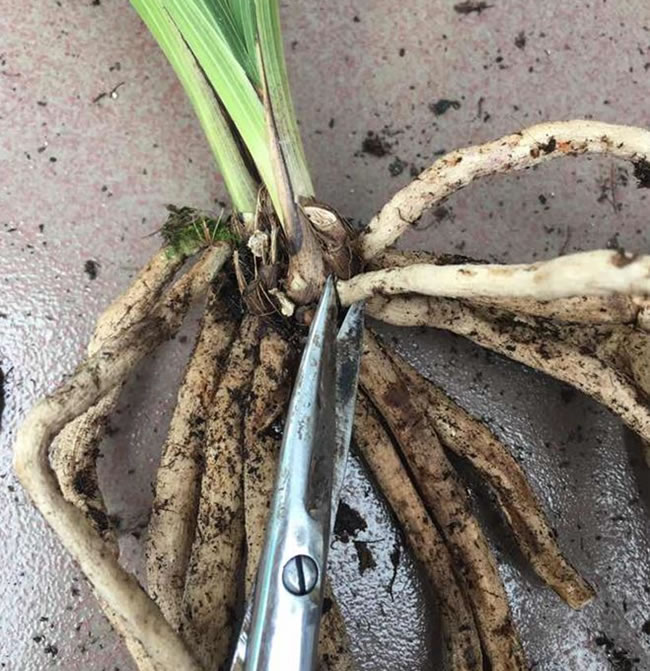
Why Cymbidium faberi Has Too Many Roots and Doesn't Sprout, and How to Fix It
Yifeng: When we repot and divide plants, we can thin out excessive roots, otherwise they seriously affect sprouting. Take these two groups of plants as an example: one group has 19 roots, the other has 11 roots. If you don't trim some roots, the single-growth-point group very likely won't sprout and will slowly age and die, and the mother-and-child growth group will also have new shoots affected because of too many roots...
-
What causes black roots in orchids?
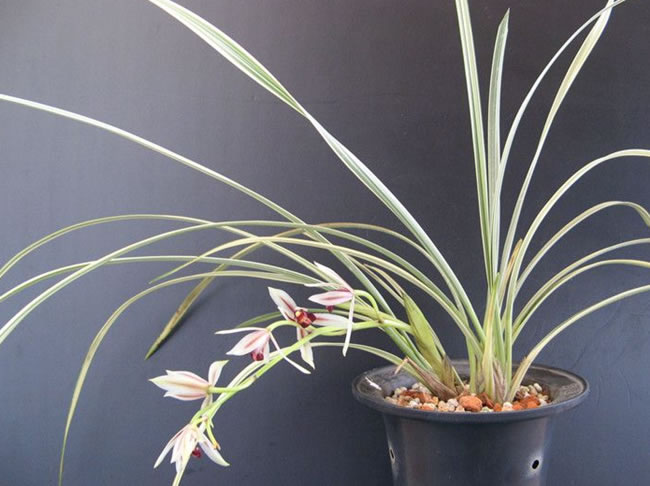
Recently it has been found that some sellers intentionally or unintentionally sell Komatsunishiki as other orchid varieties. Komatsunishiki is not a Chunlan, Chunjian, Songchun, Jiuhua Lan (Huilan), Lianban Lan, or Douban Lan - none of them. Some honest sellers sell it on the foreign orchid side! 'Komatsunishiki' is called (Ezuka Lan) or (Kanchou...
-

This easy-to-grow flower can be propagated from cuttings: cut 1 stem into 8 segments, and it roots as soon as it goes into the pot.
Since the Chinese New Year, temperatures have gradually risen, and flower lovers can no longer hold back their hands and are getting ready to take cuttings! Plants like snake plant (Sansevieria), pothos (Epipremnum aureum), and kalanchoe (Kalanchoe blossfeldiana) need no effort at all: just 1 stem, gently cut into 8 segments, tossed into a pot, and they live. Turning 1 pot into 100 pots is not a dream at all!
-

-
How do you trim the roots of lucky bamboo? A detailed guide to root trimming methods
Anyone who has kept lucky bamboo knows that when it is in a suitable growing environment, its roots grow fairly quickly. At this point, if the vase is too small to hold its roots, it needs to be replaced. If you do not want to replace it, you can trim the roots for it, so how should you trim them? Next, we will explain how to trim its roots.
-
-

How do you care for a China-root plant (Cinnamomum kotoense) so it grows lush? A full breakdown of care tips
Speaking of the China-root plant, I think most flower lovers are familiar with it. This is a decorative tree with an auspicious meaning, and many people are willing to keep one at home for good luck. Recently, a friend of the editor had a little problem with her China-root plant. She cared for it very carefully, yet it stayed listless the whole time. So how should you care for it to make it grow lush? Let me tell you below!
-

What to Do If a Guzmania (Guzmania lingulata) Has Root Rot? Cause Analysis and Treatment Methods
This is a plant in the Bromeliaceae family and also a highly ornamental plant species. It has beautiful and varied inflorescences, as well as bright and diverse flower colors, commonly including pink, bright red, golden yellow, and so on. Its place of origin is South America, that is, places near the tropics, and it was only later introduced into China, becoming one of the ornamental plants. However, if its roots rot, it will have a very adverse effect on it. So, what should we do?
-
-

How to grow thick roots on winter jasmine? Practical care methods shared
This plant gives people a good feeling. In ancient times, many poets also wrote poems about this flower. Its shape is very attractive, and it has especially many alternative names. It can be considered one of the most common plants in China. Because it itself has many characteristics, many people have now started growing this plant. We always want to grow plants better, and one method is about how to make its roots thick. Today let us talk about it in detail.
条件筛选