-

Do one small thing before watering flowers, and there will be no root rot and flowers will bloom nonstop
The one thing you can't do without when growing flowers is watering. Water well, and the flowers grow vigorously, don't rot at the roots, and bloom like crazy. Water poorly, and forget about blooming - it's not even easy to keep them alive. Today Huahua will talk to you about all things watering, so you can learn how to water and grow your flowers better and better!
-

Liu Dongqi: Organic isn't just about being free of toxins; pruning, root care, and sod culture have their finer points - grow trees with vitality
Liu Dongqi: Organic isn't just about being free of toxins; pruning, root care, and sod culture have their finer points - grow trees with vitality
-

Check the roots before repotting succulents - only when they live comfortably can they grow into a bursting pot
When repotting succulents, many flower lovers just dig a hole first and then bury the succulent, without looking at all at what shape the root system is. Succulent roots come in umbrella shapes, radish shapes and more. If you want your succulent to settle into its pot quickly, you first have to make the roots comfortable! So how do you choose the most suitable repotting method based on the shape of the roots?
-

5 kinds of flowers that will root right now from cuttings, so you never have to spend money buying them again
Many gardening friends say they don't know how to take cuttings, and every time they try, the cuttings don't survive. Huahua wants to say that growing flowers is a skill, and no one can guarantee success on the first try. In the right season, using the correct method, you'll gradually learn how to do it!
-

What to Do When Lucky Bamboo's Roots Turn Black? Causes and Solutions
Lucky bamboo (Dracaena sanderiana) is a plant widely loved by everyone, and it is believed that besides flower enthusiasts, some people who are not very familiar with plant cultivation also grow it. This is not only because it carries an auspicious meaning, but also because of its graceful form and extremely high ornamental value. During the process of growing it, if its roots turn black, it will greatly affect our enjoyment of it. What factors cause this?
-
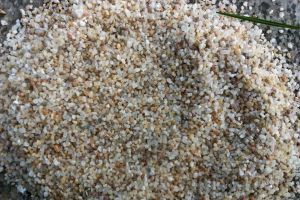
Sprinkle a handful of sand into the pot: no yellowing leaves, no root rot, roots sprouting like crazy, and even the little bugs stay away...
Gardeners who grow flowers often run into problems like compacted soil, or even little bugs burrowing into the soil. Don't worry. At times like this, all you need to do is grab a handful of sand and sprinkle it into the pot, and all your troubles are solved!
-

What to do when a purple-rooted lily (belladonna lily) has root rot? Learn the correct way to handle it
The purple-rooted lily is a perennial bulbous herbaceous plant. Because its bulb is purple and looks very similar to an orchid, it is called the purple-rooted lily, but it is also known as George lily; its flowering season runs from winter to the following spring, and its flowers are mostly red, very eye-catching when in bloom. Next, we will explain the causes of root rot encountered in daily cultivation and how to deal with it.
-
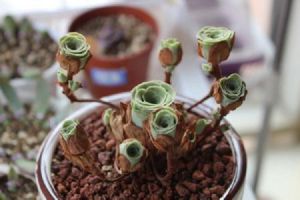
How to root Mountain Rose (Aeonium aureum)? Teach you the correct rooting method
Just hearing its name makes it very appealing. It looks very cute and is perfect for giving as a gift, and many people keep it at home. However, when growing it, improper handling may cause it to die, and at that point, trying to revive it is very difficult, and you can only replant it. We can use its side shoots to propagate it, so what should we do to help it grow roots? Is this easy for it, and are the chances of success high?
-

How to Identify Orchid Roots? A Few Practical Identification Methods
The roots of orchids in the genus Cymbidium are relatively thick and fleshy. Generally, there is no distinction between a main root and lateral roots. The internal structure of orchid roots is a typical monocotyledonous type. Its cortical cells are relatively well developed, and it has symbiotic fungi called root fungi. Those growing underground are called terrestrial roots, and those growing in the air are called aerial roots. Whether terrestrial roots or ae...
-
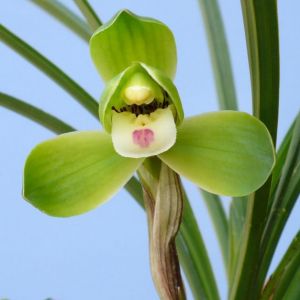
Cymbidium goeringii 'Xishenmei' details: How to grow roots well? With photos of its shortcomings
Also known as "Xichenmei", originally from Fenghua, Zhejiang, obtained by Rong Wenqing of Wuxi in 1911! Xishen is a plum-form narcissus-petal variety. When it first opens, the upper petals tend to open low, so it looks a bit dull; usually by the second day they spread out, and only then can its elegant posture be fully displayed. The stem of Xishen is not easy to stretch tall, the petals are rather thin and tend to curl back after being open a long time. To get a good flower form still requires some skill...
条件筛选