Air pollution deaths also uproot rural communities, Island Dust PM2.5 special exhibition
"Knowledge and understanding must be turned into action, otherwise it is just empty talk!" Academia Sinica academician Lee Yuan-tseh recently attended the opening ceremony of the "Island Dust - PM2.5 Vision Special Exhibition" at the National Museum of Natural Science, pointing out that the global problems of smog and carbon emissions are severe, time is pressing, and both the public and the government should act immediately.
Museum director Sun Wei-hsin stated that in the past the museum had hosted the "South Wind" photography exhibition, which, like this PM2.5 exhibition, went beyond presenting knowledge and was filled with a force of social critique. As a museum visited by three million people each year, the museum hopes the exhibition will not merely share scientific knowledge, but more importantly step into society and show concern for the people.
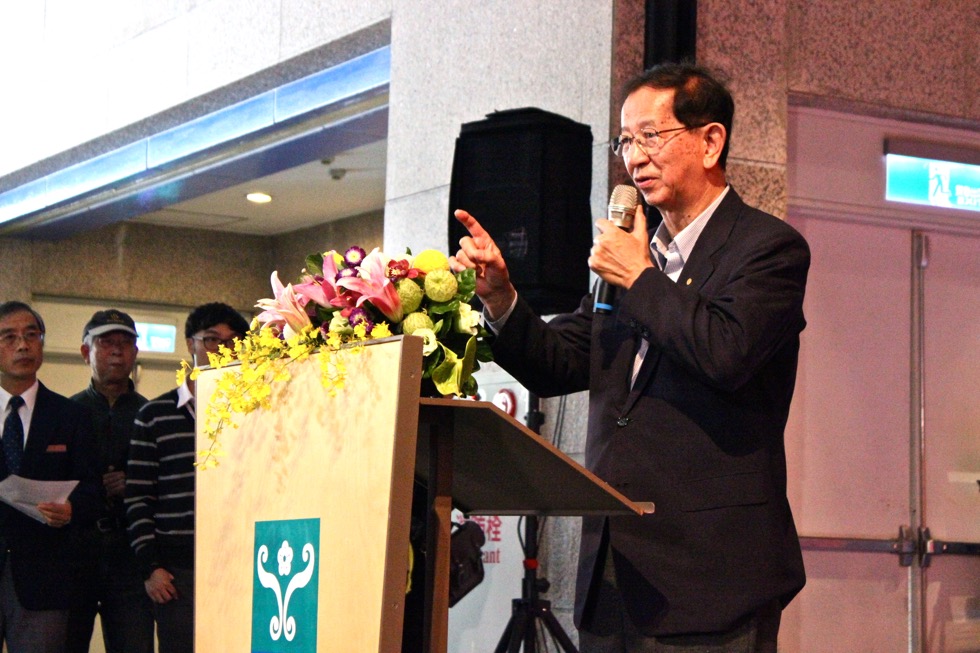


"Island Dust - PM2.5 Vision Special Exhibition"
◎ Time: January 11 - June 11
◎ Location: National Museum of Natural Science, Second Special Exhibition Room
http://cal.nmns.edu.tw/NMNS_Cal/Detail_Ann.aspx?ANID=12021
Note:
PM (particulate matter) refers to dust-like particles floating in the air; in Chinese it is called "suspended particulates." When its particle size is equal to or smaller than 2.5 micrometers (μm), it is called PM2.5 (fine suspended particulates). Because a diameter of 2.5 micrometers is extremely small, less than 1/28 of the diameter of a human hair, it can easily follow the air into the human body, accumulate in the lungs, or enter the alveoli capillaries and then travel throughout the body with the blood circulation.
PM2.5 in nature mostly comes from soil dust, sea salt spray, volcanic ash, and so on; these particles contain fewer harmful substances. But in urban or industrial areas, PM2.5 produced by human activities contains harmful substances.
The main pollutants produced by burning coal include primary PM2.5, sulfur dioxide, nitrogen oxides, and so on. Primary PM2.5 contains heavy metals such as mercury, arsenic, lead, cadmium, chromium, and nickel, as well as dioxin compounds. Sulfur dioxide and nitrogen oxides undergo complex reactions in the air and then form secondary PM2.5 such as sulfates and nitrates, causing adverse effects on our health. (The above information is provided by the National Museum of Natural Science.)
For more professional agricultural science and technology information, please scan the QR code to follow WeChat: NongXunNET

Please indicate the source when reprinting.