-
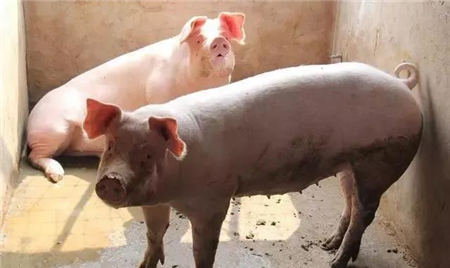
Sows always have difficult births, the root cause is right here
Why do sows always have difficult births? The root cause is right here!
-
Measures for Grassroots Animal Husbandry and Veterinary Staff to Do a Good Job in Animal Epidemic Prevention
A Brief Discussion of Measures for Doing a Good Job in Grassroots Animal Husbandry and Veterinary Animal Epidemic Prevention
-

New high-yield techniques for lotus root: straw-fed lotus cultivation and lotus-fish polyculture
In April 2006, the Yindu Industry, Trade, Science and Technology Ecological Park in Wenshang County, Shandong Province, was completed and put into operation. Using waterlogged, saline-alkali and barren land, through scientific methods and the implementation of multi-component composite three-dimensional development, a science and technology ecological park was built integrating vegetable and forage cultivation - livestock and poultry breeding - straw-fed lotus cultivation - fish farming in lotus ponds - fishing and leisure - dining and entertainment, and other functions into a circular economy development model, achieving remarkable economic and ecological benefits. In particular, the new corn straw-fed lotus cultivation technique promoted by the park can achieve a lotus root yield of up to 6000 kg per mu.
-
What are the control methods for the soybean root miner fly?
The soybean root miner fly belongs to the order Diptera, family Agromyzidae. Also known as the soybean root maggot, soybean root miner fly, etc., this insect is a monophagous pest that only damages soybean and wild soybean. It is distributed in Heilongjiang, Liaoning, Inner Mongolia, Shandong and Hebei, among other places. Damaged plants can suffer yield losses of more than 40% per plant compared with healthy plants. 1. Morphological characteristics (1) The adult is about 3 mm long, glossy black, with wings that are light purple with a metallic sheen. The compound eyes are bright red. (2) The egg is about 0.015 mm long and about 0.04 mm wide, kidney-shaped, white and translucent.
-
Pigs rooting at the pen and gnawing at soil are not just mischief; the reasons behind it need to be understood
Pigs rooting at the pen and gnawing at wood and soil are not just playing around; it is an abnormal phenomenon that affects the pigs' normal growth and development. The main causes are: first, growing-finishing piglets lack the mineral feed needed for growth; lactating sows and pregnant sows use their own mineral elements for the normal growth of suckling piglets and fetuses, and the minerals in the feed are hard to meet the demand. Second, the feeding is unreasonable: too little feed is given, the pigs do not eat their fill, and no water is provided with the feed. Third, sick pigs also show pen-rooting and gnawing at wood and soil. Prevention methods: first, pay attention to the feed mixing ratio and add mineral
-
What actually causes pigs to like rooting at their pens?
1. The pigs are not fed enough; 2. The pigs may be sick; 3. The pigs lack some kind of trace element. You can bring in some soil for them to root in, or let them outside to root in the soil freely, or you can put down some coal cinders for them to root in. It is best to feed them concentrated feed.
-
Analysis of the Causes of Tongue Root Rupture in Chickens and Methods of Prevention and Treatment
Many chicken farmers raise chickens with grain-based feed in economic forests and have achieved good economic benefits. However, because grain-based feed is severely deficient in vitamins, when the number of chickens raised is large and their range of activity is restricted, the flock, unable to get an adequate supply of green fodder, is often prone to tongue root rupture. Affected chickens show poor appetite, emaciation, and drooling; after opening the mouth, the tongue root is found to be ruptured, with no abnormalities seen in other organs. Affected chickens may account for about 15% of the flock. The treatment for this disease is: add poultry multivitamins to the chickens' daily ration and increase the supply of green fodder.
-
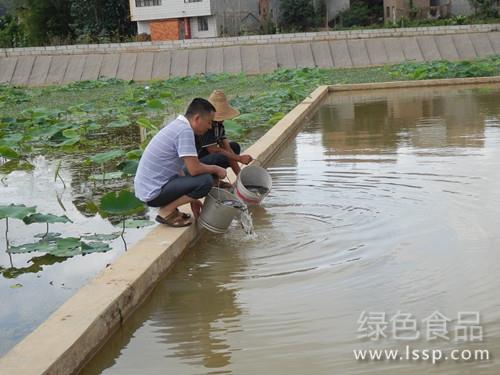
Key techniques for achieving high-yield lotus root and fish co-culture in lotus fields
Key techniques for achieving high-yield lotus root and fish co-culture in lotus fields
-
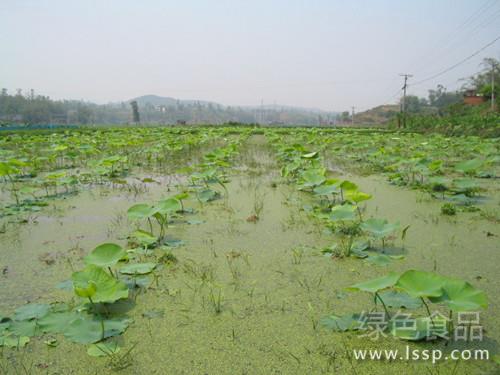
Provide bait, loosen the soil, and raise yellow catfish in pollution-free lotus root fields
Provide bait, loosen the soil, and raise yellow catfish in pollution-free lotus root fields
-
How to prevent and treat root rot in spider plants? A detailed guide to practical methods
Although spider plants are relatively easy-care foliage plants, some growers still end up with diseased spider plants. Root rot is a common disease of spider plants, and it may be unfamiliar to beginner growers, so this editor will give you a detailed introduction to the prevention and treatment methods for spider plant root rot.
条件筛选