-

Why are organic foods so expensive, and are they worth the price?
Are organic foods worth their high price?
-
Garlic prices are once again seesawing. What is the reason?
Why are garlic prices on a "roller coaster" again?
-
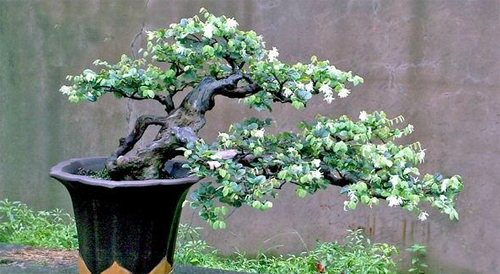
How to Grow a Chinese Fringe Flower (White-Flowered Loropetalum) Bonsai and Price Guide
I used to see white-flowered Chinese fringe flower (Loropetalum chinense) often by the roadside; it is extremely beautiful and very attractive, with flowers like tassels, and red as well. The white-flowered Chinese fringe flower can also be made into a bonsai. Let's take a look at how to grow a white-flowered Chinese fringe flower bonsai and how much it costs.
-
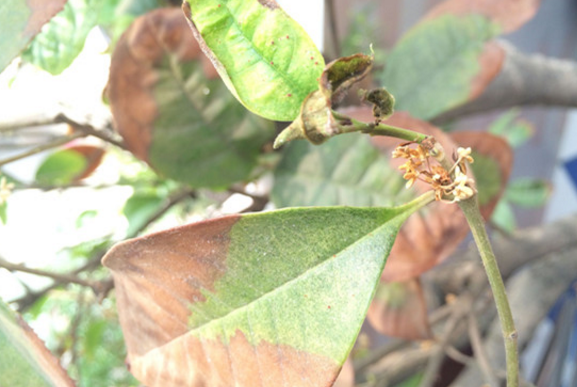
Reasons for Yellowing Osmanthus Leaves and the Price of a Single Tree
In August the osmanthus blooms and its fragrance fills the air, osmanthus blooming everywhere, and growing osmanthus at home brings good feng shui. Osmanthus is a plant with many uses, evergreen through all four seasons, and delightfully fragrant. But osmanthus also frequently runs into many problems, so let's take a look below at what those problems are. What causes osmanthus leaves to turn yellow? Soil that is too dry and watering that is not timely.
-
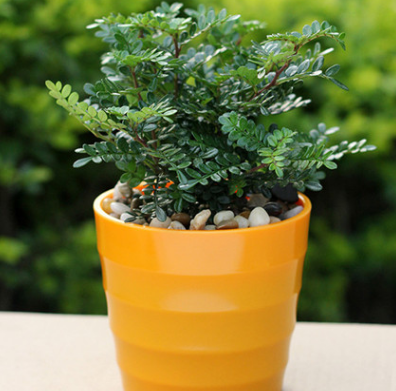
Qingxiangmu (Pistacia weinmannifolia) Bonsai: Making, Care Methods and Market Price Introduction
Qingxiangmu (Pistacia weinmannifolia) is small in appearance, and its fragrance, like its name, is fresh and pleasant. It is a woody plant with a beautiful shape and multiple benefits, often used for home decoration with a unique charm. How to make and care for a Qingxiangmu bonsai: after the Qingxiangmu plant to be trained is selected
-
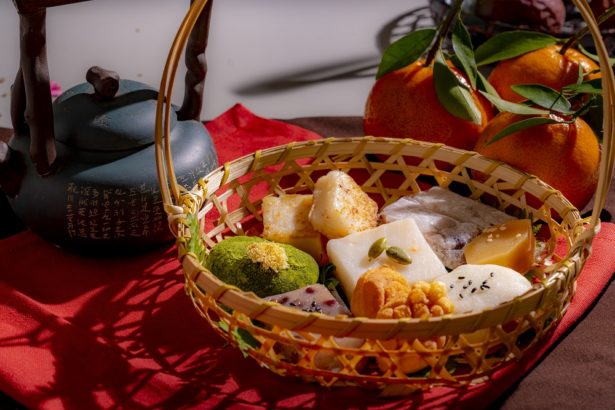
Stroll the Rice Cake Market and Feast on Festive Cooked Delicacies
Rice Cake Market | Hearty Bites of Festive Cooked Food
-
Key Technical Points for High-Yield Cultivation of Intercropped Indica and Glutinous Rice
Rice "indica-glutinous intercropping" refers to a configuration method for cultivating hybrid indica rice and glutinous rice, that is, selecting medium-stem hybrid indica rice and tall-stem glutinous rice varieties, and using the wide rows within the wide-narrow row arrangement of hybrid indica rice to plant additional single rows of glutinous rice at a certain band width, row ratio and width, forming a composite of hybrid indica rice and glutinous rice within the same field. Based on the principles of three-dimensional agriculture, it uses the characteristics of different rice varieties, different maturity periods and different plant heights for intercropping cultivation, so that temperature and light resources are utilized at multiple levels,
-
Identification and Control Methods for the White-backed Planthopper on Rice
Hosts include rice, wild rice, corn, barley, wheat, sugarcane, sorghum, barnyard grass, and Kentucky bluegrass. The damage characteristics are the same as those of the brown planthopper. Morphological features: The macropterous male is 3.2-3.8mm long, pale yellow, with dark brown spots. The top of the head protrudes forward; on the outer side of the lateral ridges of the pronotum and mesonotum, behind the compound eyes, there is a crescent-shaped dark brown spot; the lateral areas of the mesonotum are dark brown with a yellow longitudinal band in the middle; the forewings are semi-transparent with brownish halo spots at the tips; the wing veins, face, thorax, and ventral surface of the abdomen are dark brown. The macropterous female is 4-4
-
Detailed Explanation of Pollution-Free Control Techniques for Rice Pests and Diseases
I. Agricultural Control Agricultural control is the foundation for achieving pollution-free control of rice pests and diseases, and its basic principle is to create an environment that favors crop growth and development while disfavoring the breeding of pests and diseases. 1. Increase the application of organic fertilizers and gradually reduce the amount of chemical fertilizers used. In production, relying solely on chemical fertilizers (especially nitrogenous chemical fertilizers) while neglecting the cultivation, composting and use of organic fertilizers is one of the important reasons for the current severe occurrence of rice pests and diseases. Therefore, it is necessary to change concepts, attach importance to developing animal husbandry, planting green manure crops and composting various types of farmyard manure, and establish a new fertilization model based primarily on organic fertilizers and supplemented by chemical fertilizers. In order to increase the sources of organic fertilizer, it is required to plow and sow green manure or other crops in winter to prevent fields from overwintering fallow. Doing so can not only reduce the overwintering base of the striped stem borer (Chilo suppressalis) and sheath blight sclerotia, but also improve the soil. Organic fertilizer is a complete fertilizer and can comprehensively supply the various nutrient elements needed by crops, but it is also a slow-release fertilizer, and most of the nutrient elements it contains cannot be directly utilized by plants; they must first be decomposed by microorganisms into ammonium nitrogen and inorganic salts before they can be absorbed. The early stage of rice growth is precisely the key period when quick-acting fertilizers (especially nitrogen fertilizer) are needed. If the required nutrients cannot be guaranteed, it will inevitably affect normal tillering, resulting in failure to grow vigorously in the early stage and then delayed maturity with excessive vegetative growth in the later stage. Therefore, when increasing the application of organic fertilizer, attention must be paid to resolving the above contradiction between supply and demand in order to achieve safe nitrogen uptake by rice (that is, continuously and evenly supplying nitrogen fertilizer according to the needs of each growth stage, neither too much nor too little, so that rice grows steadily in the early and middle stages and does not senesce prematurely or grow excessively in the later stage). For example: when green manure is the main fertilizer source, first, the total application amount must be controlled, with about 1000 kg of fresh grass applied per 667 sq m, and not too much; second, when sowing green manure, green manure varieties with different degrees of decomposition difficulty must be mixed and sown; third, plowing must be carried out early at the appropriate time to promote the decomposition of green manure. When barnyard manure and cake fertilizer are the main fertilizer sources, efforts should be made to fully decompose them before application, they should be distributed evenly during application, and attention should be paid to intermittent irrigation after transplanting to promote the decomposition of organic fertilizer. Increasing the application of organic fertilizer does not exclude the use of chemical fertilizers; the two should be combined. At the beginning of tillering, apply 50 kg to 100 kg of silicon-manganese compound fertilizer per 667 sq m in a timely topdressing to promote early and rapid growth and steady development of the seedlings, laying a good foundation for pollution-free rice production.
-
What are the symptoms of viral diseases in rice?
Affected plants are stunted and the leaves become discolored, growth declines, and the leaf color turns orange to yellow. When indica rice is infected, the color is mostly orange or slightly reddish, so it is also called red leaf disease. Mottling appears on young leaves, and rust-colored spots appear on old leaves. At present, 11 kinds of rice viral diseases have been found in China (including two mycoplasma-like diseases), namely common dwarf disease, yellow leaf disease, stripe leaf blight, black-streaked dwarf disease, yellow wilt disease, grassy stunt disease, bunchy dwarf disease, ragged stunt disease, orange leaf disease, tungro disease, and tumor dwarf disease. In southern China, rice common dwarf disease and yellow leaf disease cause the most severe damage.
条件筛选