Reasons for Yellowing Osmanthus Leaves and the Price of a Single Tree
In August the osmanthus blooms and its fragrance fills the air, osmanthus blooming everywhere, and growing osmanthus at home brings good feng shui. Osmanthus is a plant with many uses, evergreen through all four seasons, and delightfully fragrant. But osmanthus also frequently runs into many problems, so let's take a look below at what those problems are.
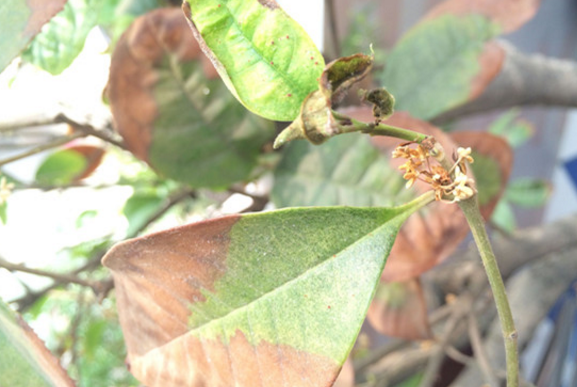
What causes osmanthus leaves to turn yellow
1. Soil that is too dry
When watering is not timely and the potting soil stays in a dry state for a long time, osmanthus often shows poor growth, weaker vigor, and yellowish leaf color. When caring for it at home, be sure to keep the potting soil moist and water in a timely manner.
2. Soil that is too wet
Osmanthus dislikes wetness and waterlogging. If it is watered too much and drainage is poor, this will cause root rot in osmanthus, with symptoms such as yellowing leaves, scorched edges, and leaf drop; in severe cases the branches and leaves wither, and it may even die.
3. Soil that is too alkaline
Osmanthus prefers acidic soil. When the soil is on the alkaline side, growth is poor and flowering is reduced. Leaf yellowing is also common.
What is the price of an osmanthus tree
August Osmanthus price list:
Product name Diameter Branching Tree height Crown width Unit price
August Osmanthus 6 cm 1.20 m 2.5—3.0 m 1.5—2.5 m 130 yuan
August Osmanthus 8 cm 1.20 m 3.0__4.0 m 2.0——3.0 m 520 yuan
August Osmanthus 10 cm 1.20 m 3.0—4.0 m 2.5—3.0 m 1100 yuan
August Osmanthus 12 cm 1.20 m 4.0—5.0 m 3.0----4.0 m 2500 yuan
August Osmanthus 15 cm 1.00 m 4.5---5.5 m 3.5---5.0 m 4800 yuan
August Osmanthus 25 cm 1.00 m 6.0---7.5 m 5.5---7.0 m 18000 yuan
August Osmanthus 30 cm 1.20 m 7.0---9.0 m 6.5---8.0 m 22000 yuan
August Osmanthus 16 cm Low branching 4.5---5.0 m 3.5—5.0 m 4600 yuan
August Osmanthus 18 cm Low branching 5.0---6.5 m 4.0—6.0 m 5600 yuan
August Osmanthus 20 cm Low branching 5.0---7.5 m 5.0---7.0 m 7600 yuan
August Osmanthus 22 cm Low branching 5.0---7.5 m 5.0—7.0 m 9000 yuan
August Osmanthus 25 cm Low branching 6.0---8.0 m 5.5—7.0 m 12000 yuan
August Osmanthus 28 cm Low branching 6.5---8.0 m 5.5—7.5 m 14000 yuan
August Osmanthus 30 cm Low branching 6.5---8.5 m 6.5—7.5 m 17000 yuan
Golden Osmanthus price list:
Height 150-180 cm, crown spread 40-50 cm, 10 yuan;
Height above 180 cm, crown spread 50-60 cm, 20 yuan;
Crown spread 60 cm, 12 yuan; crown spread 80 cm, 30 yuan;
Crown spread 100 cm, 40 yuan; crown spread 120 cm, 50 yuan;
Crown spread 150 cm, 100 yuan; crown spread 180 cm, 180 yuan;
Crown spread 200 cm, 250 yuan; crown spread 230 cm, 300 yuan;
Crown spread 250 cm, 450 yuan; crown spread 270 cm, 650 yuan;
Crown spread 300 cm, 1000 yuan.
Dan Gui (orange osmanthus) price list:
Single-trunk ground diameter (measured 20 cm above ground level) 2 cm, 20 yuan; 3 cm, 55 yuan; 4 cm, 150 yuan; 5 cm, 500 yuan; 6 cm, 900 yuan.
Four-Season Osmanthus price list:
Four-Season Osmanthus height 180-220 cm, crown spread 120 cm, 25 yuan;
Crown spread 150 cm, 50 yuan; crown spread 170 cm, 100 yuan;
Crown spread 200 cm, 180 yuan; crown spread 230 cm, 230 yuan;
Crown spread 250 cm, 350 yuan; crown spread 300 cm, 900 yuan.
The price of an osmanthus tree depends on the tree form and the osmanthus variety. Generally speaking, Dan Gui is the most expensive, followed in order by Golden Osmanthus, Silver Osmanthus, and Four-Season Osmanthus, and so on. Of course there are many other osmanthus tree varieties as well. Prices for osmanthus trees vary quite a bit between different regions, and transport conditions can also affect the price of osmanthus trees.
The above prices are all online reference prices; for actual prices, please rely on the actual situation.
Reasons for Yellowing Money Tree Leaves and the Uses and Benefits of the Money Tree
Many people grow money trees, but few grow them well, because many people still do not know much about the money tree and do not know what the money tree is good for; during the growing process, yellowing money tree leaves can also appear. Today we will introduce the reasons for yellowing money tree leaves, as well as the uses and benefits of the money tree.
Reasons for yellowing money tree leaves
1. Overwatering: when the potting soil stays too wet for a long time, it causes a lack of oxygen in the soil, making some fibrous roots rot, which hinders normal respiration and the absorption of water and nutrients, causing leaves to turn yellow and drop. After being affected, the young leaves first turn pale yellow, and then the old leaves gradually turn yellow as well. Watering should be controlled immediately, fertilizing paused, and the soil loosened frequently so that the soil is well aerated.
2. Drought and dehydration. Missing watering when growing flowers, or watering only halfway for a long time (that is, wet on top and dry below), affects nutrient absorption and also easily causes dull, lusterless leaf color and wilted, drooping leaves. First the lower old leaves age, and gradually dry, yellow, and drop from bottom to top. At this point, water lightly and mist the plant, let it gradually recover, and then return to normal watering.
3. Long-term fertilizer deficiency. If no nitrogen fertilizer has been applied for a long time, or the pot and soil have not been changed, the soil lacks nutrients such as nitrogen, leading to thin, weak branches and leaves and thin, yellow leaves. The plant should be repotted in a timely manner, changed into fresh loose, fertile potting soil, and gradually given dilute decomposed liquid fertilizer or compound flower fertilizer.
4. Excessive fertilizing. Too much fertilizer causes new leaves to be thick and fleshy with many bumps and unevenness, while old leaves dry at the tips, scorch yellow, and drop. Fertilizing should be stopped immediately, watering increased so the fertilizer flows out through the drainage holes at the bottom of the pot, or the plant should immediately be repotted, the root ball rinsed with water, and then replanted into the pot.
5. Hot, high temperatures. In summer, if flowers that prefer cool conditions (such as cyclamen, fuchsia, and wax begonia) are placed in a hot spot under direct strong sunlight, it very easily causes the leaf tips and leaf margins of young leaves to scorch, or leaves to yellow and drop. They need to be moved promptly to a well-ventilated, shady place.
5. Excessive shade. If sun-loving flowers are kept for a long time in a shaded spot or a place with insufficient light, it will cause the branches and leaves to turn yellow.
6. Soil and water on the alkaline side. In most northern regions, the soil and water contain more salt and alkali. When planting acid-loving flowers such as rhododendron, camellia, banana shrub, gardenia, orchid, white orchid, and osmanthus, because the soil lacks absorbable soluble iron and other elements, the leaves will gradually turn yellow. When planting, choose acidic soil and frequently water with alum fertilizer water during the growing period.
7. Too dense and poorly ventilated. If too much nitrogen fertilizer is applied, the branches and leaves grow too luxuriantly, and combined with a long period without pruning, the inner branches and leaves get insufficient light, which easily causes leaves to yellow and drop. Fertilize reasonably and strengthen pruning so that air and light can penetrate.
8. Dry air. When indoor air is excessively dry, some flowers that like humid environments, such as spider plant and orchid, often show dried leaf tips or scorched leaf margins. Attention should be paid to measures such as misting and covering with plastic film to increase air humidity.
9. Improper temperature. If the indoor temperature in winter is too low, flowers that prefer high temperatures are often susceptible to cold damage, which causes leaves to turn yellow, and in severe cases they wither, yellow, and die. If the indoor temperature is too high, the plant's transpiration is excessive, and the roots cannot supply enough water and nutrients, which also makes leaves turn yellow. Please remember to adjust the room temperature in a timely manner.
The uses and benefits of the money tree
1. Ornamental value
The money tree is a foliage plant. Its leaves are broad and emerald green, beautiful and elegant, with very high ornamental value. The money tree is an evergreen tree with large flowers and split petal segments; the flower colors include red, white, or pale yellow, and the colors are vivid. A plant with green leaves is a treat for the eyes, and having flowers makes it a fine choice for appreciation. Placing it at home undoubtedly adds a bit of charm to the home.
2. Decorating the home
Because of its auspicious and pleasant-sounding name, the money tree is favored and loved by many people, especially as an indispensable plant for office settings and storefronts. The money tree is an important home decoration item, and paired with different home styles it creates different styles. Placed in the living room and study, the money tree expresses a quiet Chinese style. Placed in the bedroom, it expresses the owner's dream of striving toward a goal. Placing the money tree beside the television expresses an eco-friendly, healthy style.
3. Purifying the air
The money tree can also purify the air, absorbing harmful gases such as formaldehyde, ammonia, and toluene, and cleaning up murky air. Placing a money tree in a newly renovated house is simply ideal. Even under weak light or high carbon dioxide concentrations, the money tree can still carry out photosynthesis efficiently, effectively eliminating carbon monoxide and carbon dioxide pollution in the air. The money tree has strong transpiration, and its dense leaves can also effectively increase indoor air humidity, balance the dryness in air-conditioned rooms, and resist harmful gases produced by cigarettes.
4. Edible value
Besides its ornamental value, home decoration, and air purification uses, the money tree also has edible value! The seeds of the money tree are edible and taste similar to peanuts; of course, this is obviously not the main point of the money tree's uses.
5. Feng shui significance
The money tree symbolizes wealth and carries the feng shui meaning of bringing in treasure and attracting wealth. If you are lucky and the money tree blooms, it may well mean an unexpected windfall is coming. Placing a money tree in a feng shui position makes the whole family more spirited. Feng shui positions are very suitable for placing bonsai to enhance wood-element energy. Placing a pot of money tree in the southeast direction helps attract wealth and treasure. Pressing a large-denomination banknote under the money tree has the effect of using money to nourish money. The money tree is already a decorative item full of meaning, and with money placed underneath it, it is even more conducive to gathering wealth.
The above is our introduction to the reasons for yellowing money tree leaves, as well as the uses and benefits of the money tree. We hope it can help everyone; for more home knowledge, please stay tuned.
What to Do When Wax Begonia Leaves Turn Yellow: Finding the Cause Is Key
Wax begonia. As the name suggests, it can bloom in all four seasons. Wax begonia is very suitable for growing at home, and as an ornamental plant, yellowing leaves will affect its ornamental value. So what should be done when wax begonia leaves turn yellow? Let's take a look together at the methods for diagnosis and treatment.
I. What to do when wax begonia leaves turn yellow?
1. Abrupt environmental changes cause wax begonia leaves to turn yellow: abrupt environmental changes include discomfort with the soil environment. Wax begonia is a flowering plant that loves acidic soil; the leaves gradually turn yellow because the soil is on the alkaline side.
Solution: You can water it with water soaked in green grass and apply a little ferrous sulfate, and the leaves will turn green.
2. Overwatering causes wax begonia leaves to turn yellow (water yellowing): the tender leaves at the top of the plant turn pale yellow, the old leaves also gradually turn yellow, and the new shoots shrivel. This is caused by prolonged rain or overwatering, the pot being too wet, the soil lacking oxygen, and the roots rotting.
Solution: Loosen the soil often, control watering, and avoid heavy rain spraying.
3. Long-term water shortage causes wax begonia leaves to turn yellow (drought yellowing): with dry soil, the leaf color at the top is normal, while the lower leaves gradually dry, yellow, and drop upward. This is caused by the potting soil being too full or by a long-term water shortage, which makes the lower leaves and stems age.
Solution: Water appropriately and keep the soil moist.
4. Scorching sun causes wax begonia leaves to turn yellow (scorch yellowing): wax begonia is a flower that likes a cool environment. Placed under direct sun exposure, its leaves will also turn yellow and drop.
Solution: The solution written here is to transplant it to a cool, ventilated place.
5. Dry air causes wax begonia leaves to turn yellow: wax begonia likes warmth and is not cold-tolerant. It grows well in a slightly shady, humid environment and moist soil. It fears dry environments and waterlogging, and dry air directly causes the leaves to turn yellow.
Solution: Increase indoor air circulation.
6. Insufficient sunlight causes wax begonia leaves to turn yellow (light-deficiency yellowing): potted flowers often placed indoors easily develop yellow leaves.
Solution: Appropriately increase the amount of light exposure.
7. Too-high temperature causes wax begonia leaves to turn yellow: wax begonia likes a semi-shady environment. In midsummer, exposure to high temperatures will cause leaf margins to scorch and leaves to curl.
Solution: Move it indoors to lower the temperature.
8. Too-low temperature causes wax begonia leaves to turn yellow: too-low temperatures slow growth and make the leaves turn yellow.
Solution: In winter, when temperatures are low, it can be placed in a spot with ample sunlight.
9. Excessive fertilizing causes leaves to turn yellow (fertilizer yellowing): when too much fertilizer is applied, the plant's leaves become bumpy and do not spread out smoothly, the new leaves are thick and fleshy, and the old leaves gradually turn yellow.
Solution: Water frequently, pause fertilizing, and you can scatter a few vegetable seeds in the pot; after they sprout, pull them out to consume the excess fertilizer in the pot, so the plant can return to normal growth.
10. Long-term fertilizer deficiency causes leaves to turn yellow (deficiency yellowing): the plant's leaves are thin and yellow. This is caused by the plant being large while the pot is small, or by not repotting or changing the soil for a long time, as well as by insufficient fertilizer.
Solution: Gradually increase water and fertilizer, and repot at the right time.
11. Root rot causes wax begonia leaves to turn yellow: when the potting soil is excessively wet, it causes root rot, which makes the leaves turn yellow.
Solution: In mild cases, immediately control watering and move the pot
12. Pests and diseases cause wax begonia leaves to turn yellow: in plants affected by stem rot, dark spots first appear at the base of the stem near the soil surface, and after expanding they become brown, shrink, and rot. When the pathogen infects the leaves, it causes dark green water-soaked round spots; when it infects the leaf stalks, they become brown and rot. The leaf color turns yellow.
Solution: In the early stage of the disease, spray with 95% Lüheng No. 1 Premium 3000x solution, or 20% tolclofos-methyl emulsifiable concentrate 1200x solution, 50% rhizoctonia wettable powder 1000x solution, or potassium permanganate 1200-1300x solution.
II. The uses of begonia
1. Ornamental value: The begonia flower has been a famous flower appreciated by both refined and popular tastes since ancient times, and has long been known as the “fairy among flowers,” the “imperial consort of flowers,” and the “noble flower.” In royal gardens it was often planted together with magnolia, peony, and osmanthus, for the artistic conception of “magnolia and begonia bring wealth and honor.” Begonia flowers are planted along both sides of walkways, around pavilions, at the edges of groves, and by watersides and pond banks.
2. Purifying effect: Although the begonia flower has no fragrance, it still has a good purifying effect. Begonia flowers have relatively strong resistance to sulfur dioxide and are often planted in urban street green spaces and mining area landscaping.
3. The four begonias: There are four begonias, all woody plants. These four are: Malus spectabilis begonia, hanging crabapple begonia, papaya begonia, and japonica begonia. As one of the traditional begonias, papaya begonia has splendid flowers, good tree form, and few pests and diseases, making it a good tree species for courtyard landscaping. It can be planted in clusters at courtyard wall corners, forest edges, and other places; in spring you can enjoy the flowers, and in autumn you can view the fruit. Its branch form is unique, making it an excellent tree species for laying out garden landscapes.
4. Bonsai making: Papaya begonia is a commonly used bonsai tree species, suitable for making bonsai in different forms such as straight-trunk style, slanting-trunk style, double-trunk style, curved-trunk style, waterside style, exposed-root style, forest style, and multi-trunk single-base style.