-
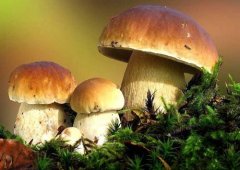
Is the porcini mushroom poisonous? Why does eating porcini cause poisoning, and how much does fresh porcini cost per jin?
Porcini mushrooms are mainly produced in Yunnan, so the price of porcini in Yunnan is somewhat cheaper than porcini from other places; the market price of Yunnan porcini is around 25 to 50 yuan per kilogram. As for the claim that porcini is poisonous, what is your view? If it really is toxic,
-
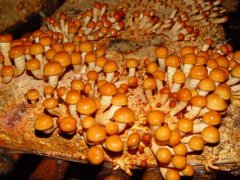
Does Pholiota nameko have to be blanched? Detailed explanation of cultivation techniques and sales prices
Does Pholiota nameko have to be blanched? It is best to do so, as this will make the Pholiota nameko fully cooked through, so there is no food safety risk from eating it undercooked. The sales price of cultivated Pholiota nameko is generally between 6 yuan and 7 yuan. So how is Pholiota nameko cultivated? Would you like to know?
-
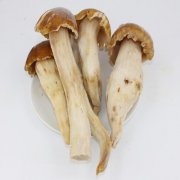
Can chicken-of-the-woods mushroom (Termitomyces) be cultivated artificially? With cultivation techniques and price per jin
Can Termitomyces be cultivated artificially? Yes, it can be cultivated artificially. Termitomyces is an edible mushroom with relatively high nutritional value. So how much does it cost per jin? Let's take a look below at how to cultivate Termitomyces artificially. Step one, culture substrate formula
-
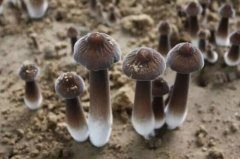
A Detailed Guide to Black-Skin Chicken-Foot Mushroom Cultivation Techniques, Price per Jin, and Investment per Mu
Large-scale artificial cultivation of the black-skin chicken-foot mushroom has low production costs, a short cycle, and high yields, and can meet people's market demand for the black-skin chicken-foot mushroom. So how do you grow the black-skin chicken-foot mushroom? The price of the black-skin chicken-foot mushroom is 35 yuan per jin, and prices vary somewhat from region to region.
-
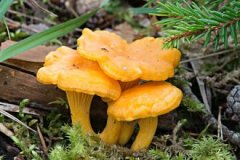
Are chanterelles poisonous? Toxicity level and price per jin explained
What kind of mushroom is the chanterelle? Some people say it is poisonous, so is it actually poisonous or not? It does have a certain level of toxicity, but at the same time it is also an edible mushroom, and people with itchy skin should avoid it. In the wild mushroom trading market, chanterelles currently cost 100 yuan per kilogram
-

Home-style sweet and sour mushrooms, both sweet and tangy, and great with rice
Salting: In a ratio of 10 kg of salt per 100 kg of washed fresh mushrooms, spread them into a bucket in layers, one layer of mushrooms and one layer of salt, sprinkle 1-2 kg of salt on top (to preserve), cover with a bamboo mat and press down with a stone. After 24 hours, take them out and drain off the salt brine, then re-salt at a ratio of 8 kg of salt per 100 kg of mushrooms. After 24 hours, they become a semi-finished product. Vinegar soaking: Soak the semi-finished product in clean water for 12 hours, take it out and drain off the water (about 8 hours), put it into a vat, pour in vinegar equal to half the weight of the semi-finished product, soak for 12 hours, take it out and drain off the vinegar liquid (about 3 hours
-
Pollution-free high-efficiency cultivation technology for "rice - mushroom"
In 2002, the Bazhou District Agricultural Technology Station demonstrated and promoted the "rice - mushroom" high-quality and high-efficiency cultivation model in more than 20 townships including Enyang and Huacheng, obtaining a per-mu (1 mu = 1/15 hectare, the same below) output value of 7148.56 yuan, an increase of 6297.56 yuan per mu compared with the wheat-rice double cropping system, a 7.4-fold increase. Practice shows that this model has the characteristics of increasing rice yield, improving soil fertility, high mushroom yield, tender texture and delicious taste, and simple operation. It is also a good way for farmers to generate tax revenue, increase income, and get rich quickly. I.
-
Rice-mushroom cultivation becomes an emerging industry
The new "rice-mushroom-rice" grain-and-cash crop rotation model not only makes full use of surplus rural labor to solve the employment problem, but also uses straw returned to the field to improve soil structure and promote increased yields and income from rice and mushrooms. 1. Selection of varieties, seasons and sites: According to local climate and soil environment and other natural resource conditions, the button mushroom (Agaricus bisporus), whose growth habits are most suitable, is mainly selected. At the end of August and mid-September after the rice harvest, choose an open, sunny idle seedling field with clean surroundings, no pollution sources, relatively dry surface, close to
-
Detailed Explanation of Rice Field Cultivation Techniques for Agaricus bisporus (1)
Rice field cultivation of Agaricus bisporus is a planting method in which rice straw and other materials are used as the main raw materials, composted and fermented to make a growing substrate, and the temperature and light resources of autumn, winter and spring and the idle season are utilized to cultivate Agaricus bisporus in the open field in rice fields after the rice harvest. In 2005, our county used no-till cultivation in single-season rice fields in 12 townships (towns) to grow 300,000 sq m of Agaricus bisporus. As of April 15, 2006, the output value per sq m was 18.8 yuan. It is estimated that the output value per 667 sq m of mushroom field (actual cultivation area of 400 sq m) can reach 8
-
Detailed Explanation of Button Mushroom Cultivation Techniques in Rice Fields (Part 5)
V. Integrated Pest and Disease Control. Integrated pest and disease control should adhere to the principle of prevention first, with prevention being more important than treatment, and to the principle of combining agricultural control, physical control, biological and ecological control, and chemical control. The use of highly toxic and high-residue pesticides must be eliminated, and no pesticides should be used during the mushroom harvesting period. Diseases and deformed mushrooms caused by environmental factors or improper technical management (such as red-foot mushrooms, landmine mushrooms, big-ball mushrooms, scaly mushrooms, etc.), as well as weed fungi (such as Coprinus mushrooms, etc.), should be controlled primarily through integrated measures. Main measures: First, the compost formula must be accurate, and the material
条件筛选