-

Detailed Explanation of Button Mushroom Cultivation Techniques in Rice Fields (Part 5)
V. Integrated Pest and Disease Control. Integrated pest and disease control should adhere to the principle of prevention first, with prevention being more important than treatment, and to the principle of combining agricultural control, physical control, biological and ecological control, and chemical control. The use of highly toxic and high-residue pesticides must be eliminated, and no pesticides should be used during the mushroom harvesting period. Diseases and deformed mushrooms caused by environmental factors or improper technical management (such as red-foot mushrooms, landmine mushrooms, big-ball mushrooms, scaly mushrooms, etc.), as well as weed fungi (such as Coprinus mushrooms, etc.), should be controlled primarily through integrated measures. Main measures: First, the compost formula must be accurate, and the material
-
High-yield field management techniques for cultivating button mushrooms (Agaricus bisporus) in rice paddies
Field selection and preparation: It is best to choose fresh fields or fields where mushrooms have been grown before that are upwind and upstream; avoid using diseased fields or old fields located at downwind, downstream outlets, otherwise they are prone to invasion by contaminating microorganisms. Plow and finely level the field; if the field is dry and has good drainage, plowing may be omitted; also open drainage edges and bed furrows, with a bed surface width of 80-90 cm and a walkway width of 60-70 cm; spread the remaining 50 kg of fine lime powder into the casing soil. Sowing: When sowing mushrooms, farmer friends should pay attention to doing the following work well: 1. Place
-
Key High-Yield Techniques for Cultivating Oyster Mushrooms on Rice Straw
High-Yield Techniques for Cultivating Oyster Mushrooms on Rice Straw 1. Selecting spawn: Experiments show that the relatively ideal strains include: the low-temperature type 792 and 118 oyster mushrooms; the medium-temperature type Xinnong No. 1, 9400 oyster mushroom, and Hypsizygus marmoreus; the high-temperature type Hainan No. 2, etc. (All of these spawns can be provided by the Binhai County Edible Fungi Research Institute.) 2. Seasonal scheduling: Along the middle and lower reaches of the Yangtze River, sowing can be done from early August to mid-February of the following year, with mid-September to mid-November being the best sowing period. 3. Rice straw selection: Choose fully dried, mold-free, golden-colored rice straw
-
Detailed Explanation of the Key Cultivation Techniques for Growing Golden Mushrooms in Rice Fields
In the townships of Dongchan, Fenshui, Shidong and others in Anju District, Mianyang, Sichuan Province today, when people mention "open-air mushrooms in rice fields," it can be said that everyone knows of them. "Growing mushrooms in rice fields is great! It doesn't affect the rice and brings very good returns." Uncle Yin from Shuangbaishu Village in Dongchan Town always speaks highly of field mushrooms, "Now, apart from growing mushrooms, I probably can't find any other cash crop that brings in more money than this." It is reported that "open-air mushrooms in rice fields" use wheat straw, rapeseed stalks, corn stalks, rice straw and other materials as raw materials,
-
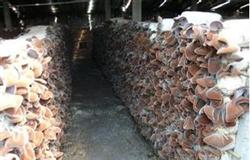
Detailed Explanation of Key Points for Cultivating Yellow-Back Wood Ear Mushroom (Auricularia polytricha) on Rice Straw
1 Rice straw softening treatment. The quality of rice straw treatment is the key to the success or failure of cultivating yellow-back wood ear mushroom and to achieving high yields. Rice straw is a loose material that easily accumulates water but is difficult to shape, and its epidermis in particular has a waxy layer that can hinder mycelial colonization of the substrate. Through experimentation, we have developed 3 methods for softening rice straw...
-
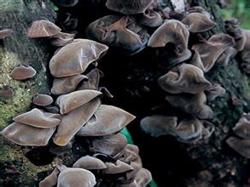
Detailed Explanation of Purple Wood Ear Cultivation Technology on Rice Straw and Sand Beds
Fungus mites, commonly known as "fungus lice," belong to the phylum Arthropoda, class Arachnida, order Acari. They are the most harmful fungal pest in the spawn production and cultivation of edible fungi, and they are also harmful to people. Their harm occurs in three aspects: first, fungus mites directly feed on mycelium, causing failure to grow after inoculation or the appearance of "mycelium regression" after growth, leading to culture...
-

How can oyster mushrooms (Pleurotus pulmonarius) be grown on rice straw for high yields?
How can you grow oyster mushrooms (Pleurotus pulmonarius) on rice straw for high yields? Seeking answers. To grow oyster mushrooms on rice straw and achieve high yields, you can refer to the following methods. 1. Selection and disinfection of rice straw: Rice straw is the substrate for the growth of oyster mushrooms. The nutrients for the growth of oyster mushrooms mainly come from the cellulose, hemicellulose and lignin in the rice straw. The quality of disinfection is related not only to the physical and chemical properties of the substrate, but also to the contamination rate of competing microorganisms. Therefore, the selection and disinfection of rice straw are prerequisites for high and stable yields.
-
Key Technical Points for Cultivating Edible Mushrooms with Rice and Wheat Straw
Technique for Cultivating Edible Mushrooms with Rice and Wheat Straw
-
What to Do When Rice Encounters Cold Dew Wind? Hazards and Preventive Measures
The Hazards of Cold Dew Wind to Rice and Preventive Measures
-
Edible Mushroom Pest and Disease Control Methods and the Utilization of Dry Rice Straw as a New Substrate
Dry Rice Straw as a New Substrate for Edible Mushrooms
条件筛选