-
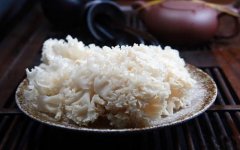
Differences Between Cauliflower Mushroom and Snow Fungus, Price Per Jin and Shelf Life Explained
The superoxide dismutase content in cauliflower mushroom ranks first among all edible fungi, earning it the title of King of Ten Thousand Mushrooms, so its price is relatively high, but artificially cultivated ones are much cheaper. How much is cauliflower mushroom per jin? Jinxiang County, Jining City, Shandong Province
-

How can oyster mushrooms (Pleurotus pulmonarius) be grown on rice straw for high yields?
How can you grow oyster mushrooms (Pleurotus pulmonarius) on rice straw for high yields? Seeking answers. To grow oyster mushrooms on rice straw and achieve high yields, you can refer to the following methods. 1. Selection and disinfection of rice straw: Rice straw is the substrate for the growth of oyster mushrooms. The nutrients for the growth of oyster mushrooms mainly come from the cellulose, hemicellulose and lignin in the rice straw. The quality of disinfection is related not only to the physical and chemical properties of the substrate, but also to the contamination rate of competing microorganisms. Therefore, the selection and disinfection of rice straw are prerequisites for high and stable yields.
-
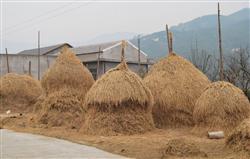
How is the wine-cap stropharia cultivated with raw rice straw?
How is the wine-cap stropharia cultivated with raw rice straw? Please explain the method. The cultivation of the wine-cap stropharia mainly uses raw materials such as rice straw, corn stalks and wheat straw, which are very easy to find in rural areas and cost very little. After cultivation, the spent material is also a high-quality organic fertilizer that can be used to improve the soil. According to measurements from small-area cultivation, its biological...
-
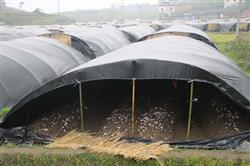
What are the methods for growing button mushrooms in rice fields?
How are button mushrooms grown in rice fields? Please explain. Button mushroom cultivation in rice fields is a planting method that uses rice straw and other materials as the main raw materials, which are composted and fermented to make the growing substrate, utilizes the temperature and light resources of autumn, winter and spring and the idle seasons, and adopts open-field cultivation of button mushrooms in rice fields after the rice harvest. 20...
-
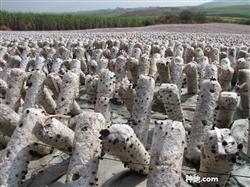
Methods and Technical Key Points for Cultivating Wood Ear Mushroom (Black Fungus) with Rice Straw
How to cultivate wood ear mushroom with rice straw? Please explain. After the autumn harvest, rural areas have large amounts of leftover rice straw, and throwing it away is a great pity. Cultivating wood ear mushroom with rice straw works very well and is also a path to wealth for farmer friends. Practice has shown that generally every 100 kg of rice straw can yield more than 10 kg of dried wood ear mushroom,...
-
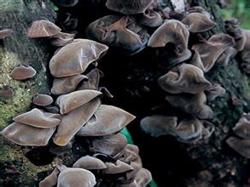
Detailed Explanation of Purple Wood Ear Cultivation Technology on Rice Straw and Sand Beds
Fungus mites, commonly known as "fungus lice," belong to the phylum Arthropoda, class Arachnida, order Acari. They are the most harmful fungal pest in the spawn production and cultivation of edible fungi, and they are also harmful to people. Their harm occurs in three aspects: first, fungus mites directly feed on mycelium, causing failure to grow after inoculation or the appearance of "mycelium regression" after growth, leading to culture...
-
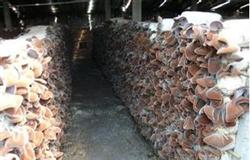
Detailed Explanation of Key Points for Cultivating Yellow-Back Wood Ear Mushroom (Auricularia polytricha) on Rice Straw
1 Rice straw softening treatment. The quality of rice straw treatment is the key to the success or failure of cultivating yellow-back wood ear mushroom and to achieving high yields. Rice straw is a loose material that easily accumulates water but is difficult to shape, and its epidermis in particular has a waxy layer that can hinder mycelial colonization of the substrate. Through experimentation, we have developed 3 methods for softening rice straw...
-

Detailed Explanation of the Key Cultivation Techniques for Growing Golden Mushrooms in Rice Fields
In the townships of Dongchan, Fenshui, Shidong and others in Anju District, Mianyang, Sichuan Province today, when people mention "open-air mushrooms in rice fields," it can be said that everyone knows of them. "Growing mushrooms in rice fields is great! It doesn't affect the rice and brings very good returns." Uncle Yin from Shuangbaishu Village in Dongchan Town always speaks highly of field mushrooms, "Now, apart from growing mushrooms, I probably can't find any other cash crop that brings in more money than this." It is reported that "open-air mushrooms in rice fields" use wheat straw, rapeseed stalks, corn stalks, rice straw and other materials as raw materials,
-
Stir-fried Tea Tree Mushrooms with Scallops in Teriyaki Sauce: fresh, fragrant and savory, perfect with rice
"Stir-fried Tea Tree Mushrooms with Scallops in Teriyaki Sauce" is a stir-fry with a Japanese touch. The "teriyaki sauce" here is Japanese-style "meat teriyaki sauce," though a Korean-made version can also be used, and the taste will not differ much. Some old friends think this kind of sauce is a "professional" seasoning, so they rarely buy it to use at home. In fact, it is a very widely used sauce; besides Korean and Japanese cuisine, it is also commonly used in Chinese and Western cooking. This teriyaki sauce can be used to cook fish, meat, vegetables and mushrooms, mostly by pan-frying, stir-frying, braising and simmering. At home, you can use teriyaki sauce to make stir-fries and some
-
Detailed Guide to Intercropping Oyster Mushrooms in Rice Fields
During the growth and development of rice, intercropping oyster mushrooms using the spaces between rice rows and the special conditions under the shade of rice clumps can provide suitable temperature and humidity conditions for the growth of oyster mushrooms (large temperature difference between day and night, good shading, sufficient scattered light, etc.), enabling high yields of oyster mushrooms, filling the market off-season when few mushrooms are available in summer, enriching summer vegetable varieties, and increasing rice farmers' income. I. Crop rotation arrangement and field plot design: Rice varieties should be selected with strong lodging resistance, tall plants, thick stalks, and resistance to rice planthoppers. Sowing in late May, transplanting in late June, with a density where
条件筛选