-
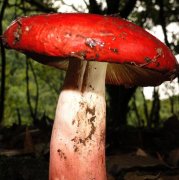
What are the effects and functions of Wuyishan, Nanping and Yunnan red mushrooms?
Red mushrooms cannot be cultivated artificially, so there are no artificially grown red mushrooms. Judging from the places they pass through, the areas that produce more red mushrooms are the Nanping area of Fujian, as well as the central and southern parts of Yunnan. There are slight differences between the two places. Fujian has four distinct seasons, and red mushrooms begin to appear before spring and summer, while Yunnan is divided into a rainy season and a dry season, and once the rainy season begins, mushrooms are produced. Mountain villagers generally take them to small markets to sell, at about 200 per kilogram (Yunnan uses kilograms), and when dried they become about 400-600. This thing still needs to be bought from mountain villagers you know well. Many bought online are the ones others have picked over, and the quality is a bit poor.<br /> <img alt="red mushroom" src="/uploads/allimg/190730/1-1ZI0163Q4946.jpg" style="height: 501px; width: 500px;" /><br /> <br /> Wuyishan is a world natural and cultural heritage site, with a pleasant climate, fertile soil, and sweet water quality. It is the place with the best-preserved biodiversity in the world, rich in all kinds of wild mushrooms, and one of the best edible mushroom producing areas in the world. <div> Red mushrooms are a rare mountain delicacy and a natural nutritious fine product, and have the reputation of “king of mushrooms”. They selectively grow in primitive hardwood broad-leaved forests in special places, are collected purely wild, and the yield is extremely low, so “things are precious when they are rare”, and their nutritional value and dietary therapy value are especially high. Nutritional value: pure natural wild red mushrooms contain rich vitamin B, D, E, and also contain niacin, which is rare in other foods, as well as trace elements such as iron, zinc, selenium, and manganese. Red mushrooms are known for being mellow and delicious, fresh and refreshing, and for their clear red soup color.</div> <div> </div> <div> Recommended ways to eat: 1. For “postpartum confinement” use: 1 liang of camellia oil, 2 liang of minced old ginger, 2 local eggs, stir-fry over high heat for a few minutes, add 1 liang of brown sugar, 2 liang of dried red mushrooms, and stew in soup with 1 silkie chicken (or 0 chicken from the countryside) and eat. 2. For tonifying deficiency and kidney deficiency with waist pain: 5 local eggs, 4 liang of dried red mushrooms, 2 liang of longan, 1 liang of brown sugar, cook in soup and eat. 3. For removing water: cook 2 liang of dried red mushrooms with other foods and eat, without adding salt.</div> <div> </div> <div> Because the yield of red mushrooms is scarce, all major supermarkets sell only small amounts.</div>
-

How to remedy problems encountered during mushroom growth?
(1) The mycelium does not grow onto the casing soil layer. This is mainly because the compost is over-fermented or under-fermented, or the pH of the compost and casing soil is improper; or because too much water is sprayed after casing, flowing into the compost layer and causing the mycelium to shrink or die. In cultivation, measures should be taken to strengthen ventilation, adjust the pH, and insert holes into the compost to release excess
-
Detailed Explanation of Red Mushroom Planting Techniques and Cultivation Management Methods
The red mushroom is a type of large mycorrhizal fungus, widely distributed around the world. In China, it is mainly distributed in Fujian, Yunnan, Jiangxi, Liaoning, Henan, Sichuan, Guangxi and other provinces and regions. Today we will introduce red mushroom planting techniques. 1. Site selection. Fungi all prefer shady and damp
-
Can Red Mushrooms Be Cultivated? A Feasibility Analysis of Artificially Cultivating Red Mushrooms
Red mushrooms have a relatively wide distribution range. Most species in the Russula genus are edible, with a delicious taste, and are rich in various amino acids, polysaccharides, vitamins and more that the human body needs. More and more people are fond of this precious wild fungus. Can red mushrooms be cultivated? How
-
Detailed Guide to Red Mushroom Cultivation Techniques: Planting Methods and Management Points
The red mushroom is a precious wild edible fungus, prized for its delicious flavor and rich nutrition, and widely loved by the public. Nowadays many people have begun cultivating this fungus. Today let us take a brief look at red mushroom cultivation techniques. Red mushroom cultivation techniques 1. As a
-
Key Points and Detailed Methods of Red Mushroom Cultivation Techniques
The first step is to prepare the mushroom house, with the temperature controlled at 25-28 degrees; the second step is to prepare the bedding material, using bean stalks, straw and similar items after water decomposition as the bedding material; the third step is to cultivate the mycelium, keeping the humidity at 65%-75%, and once the mycelium has developed and taken shape, keep the humidity at 75%. Finally, do
-
How to Identify Red Mushrooms and How Much They Cost per Jin in 2019
The wild red mushroom, known as the "king of shiitake mushrooms," is an extremely precious and rare edible fungus, with higher protein, amino acids, rich minerals and vitamins, and various medicinal components than other shiitake mushrooms. It has the effect of boosting human immunity. The main producing areas of red mushrooms are
-
What are the key points of cultivation techniques for the yellow-green curly-haired mushroom?
The curly-haired mushroom usually refers to the yellow-green curly-haired mushroom, also known as Tibetan golden mushroom, a precious edible and medicinal fungus endemic to the Qinghai-Tibet Plateau, with high nutritional value and therapeutic health benefits. So how is the yellow-green curly-haired mushroom cultivated? What are the key technical points? In fact, unfortunately
-
How to control orange-colored nematodes found in oyster mushroom bags
During the cultivation of oyster mushrooms, nematodes easily appear. Nematodes belong to the phylum Nematoda (roundworms), and there are many species that harm edible fungi, and they are widely distributed. Most of them are saprophytic nematodes, and they are found in large numbers in compost and soil. Inside oyster mushroom bags
-
What are the precautions for growing red mushrooms? A full breakdown of the latest key points
In China, red mushrooms are a species that is relatively rarely cultivated artificially, and the cultivation techniques that have been passed down are also relatively few, and some of the points to note are not very detailed. In growing red mushrooms, there are generally three things that are valued most, and these are closely related to their growth process. Let's learn about them together below.
条件筛选