-
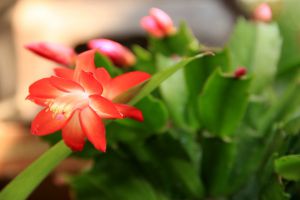
What are the reasons why a Christmas cactus does not grow flower buds
This is a type of plant in the cactus family, with lovely flowers for us to admire. Its flowering period is from October to February of the following year. However, if this period arrives but the plant does not grow flower buds, isn't that quite frustrating? So, why does this phenomenon occur?
-
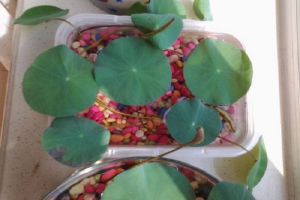
Reasons for and solutions to bowl lotus leaves withering
Many people have started keeping a small green plant at home. Some like potted plants, while others like aquatic ones, such as the bowl lotus, which grows very beautifully, especially its flowers. However, if you are not careful sometimes, problems can arise. For example, its leaves sometimes wither. Why does this happen, and what should you do about it?
-
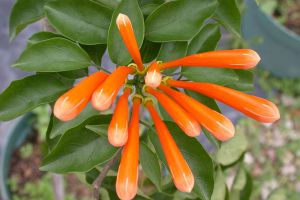
Reasons and Solutions for Yellowing Leaves on the Firecracker Vine
The firecracker vine, also known as the firecracker flower, is a very distinctive climbing flowering plant. When its flowers are in full bloom, they look like strings of firecrackers from a distance. Its flowering period is from January to June, which is quite long. It can be planted in a corner of the courtyard or beside a fence for viewing, and it can also be planted in sunlight, letting it grow along your balcony railing. Many gardening friends have encountered the phenomenon of yellowing leaves when growing it. What is the reason for this?
-
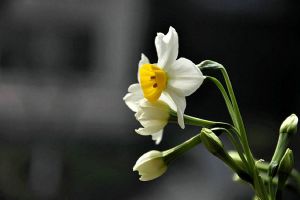
Why do narcissus bulbs need to be cut? A detailed explanation of the reasons
Many people like to place a pot of narcissus in their home. Its flowers have a delicate fragrance, and its appearance is fresh and elegant, beautiful and dignified, with an overall color combination that is also very bright and refreshing. Before planting, the plant needs to be cut. So, do you friends know why this is? What benefits does cutting bring to the plant? Now let us learn about it together.
-
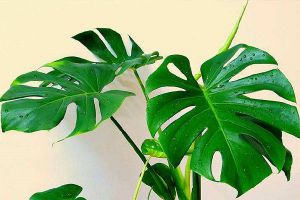
Reasons and Solutions for Yellowing Leaves of Hydroponic Monstera
Monstera (Monstera deliciosa), also called ceriman, is a very popular indoor potted foliage plant. It is extremely shade-tolerant and does an excellent job of purifying the air. That is why so many people love it. In fact, this plant can be grown not only in soil but also hydroponically. Recently a friend asked me: why have the leaves of my hydroponic Monstera turned yellow, what is the reason, and what should I do? Today I will explain the reasons and the solutions here.
-
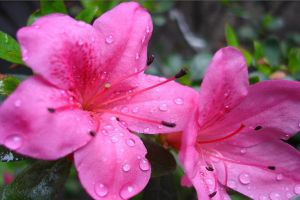
What are the reasons why Western azaleas are hard to keep alive
When it comes to "azaleas," flower lovers are probably all familiar with them, right? There are a great many species, over nine hundred in total, with Asia accounting for roughly eight hundred of them. Among them, the "Western azalea" counts as the standout. It has gorgeous colors and a beautiful, graceful form. With these qualities, it is used very widely in landscaping and is suitable for planting in many spots such as among trees, beside streams, and next to rocks. However, some people also say it is very hard to grow. Why is that?
-
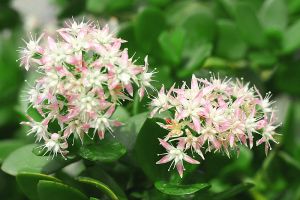
Reasons for shriveled leaves on the jade plant and how to fix them
Its leaves have an emerald green color and are very glossy, making them very pleasing to look at. It also has small flowers, white or white-pink. However, its flowers are not very common, and it is the leaves that are the most ornamental. So when its leaves shrivel, it must be very troubling. So what should we do?
-
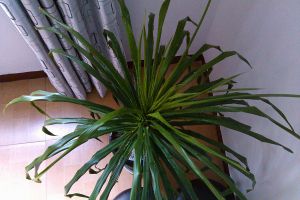
Reasons for Curled Leaves on Dracaena and How to Fix Them
Dracaena is also known as bamboo ginseng, bucai tree, and other names. It is an excellent indoor foliage plant, suitable for placement in any spot to decorate the home. At the same time, it is also a very precious medicinal herb - the well-known Yunnan red medicine "dragon's blood" (xuejie) refers to it. Today let's look at the reasons for its curled leaves and how to solve them.
-
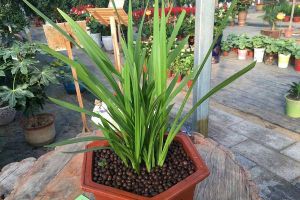
Reasons and solutions for yellowing leaves on a Dream Fragrance Orchid
The biggest fear for indoor plants is problems, especially with the leaves: yellowing, wilting, curling, spots, and so on. Today, the editor will share with you the reasons and solutions for yellowing leaves on a Dream Fragrance Orchid. If your Dream Fragrance Orchid's leaves have also turned yellow, you can refer to this.
-
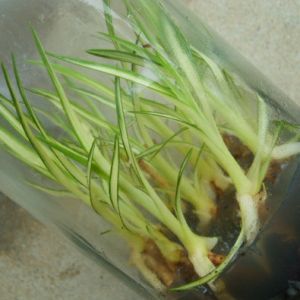
What are the reasons tissue-cultured orchid plantlets are not good
Besides being difficult to grow, tissue-cultured orchid plantlets also have a low survival rate. The low survival rate is related to the special propagation method used for tissue-cultured plantlets: the heavy use of hormones and chemical nutrients leaves the orchid plantlets in poor physical condition, frail and unable to withstand the slightest stress, and poorly adapted to the growing environment after being taken out of the flask, so they tend to sulk, neither dying nor thriving. If they are genuine tissue-cultured orchids, the flowers they produce should be the same as before, unless the wrong goods were sent. In short, tissue-cultured plantlets in the weak-plantlet stage are generally not suitable for growing at home, because these tissue-cultured plantlets themselves have low dry-matter content, poor disease resistance, a low survival rate in home cultivation, and a long cultivation cycle; many unscrupulous traders often pass off ordinary varieties as rare varieties to make money, because tissue-cultured plantlets make it hard to distinguish the characteristics of each variety (they look basically the same); if you want to introduce rare orchid tissue-cultured plantlets, it is advisable to do so at agricultural and forestry research institutes that carry out orchid tissue culture, where quality and variety are guaranteed.
条件筛选