-
How to grow Paris polyphylla from seed? A detailed explanation of the key seedling-raising techniques
How do you raise Paris polyphylla seedlings well? What should be noted during the seedling-raising process? We ask netizens to help introduce this. Zhongdiwang has compiled the seedling-raising methods for Paris polyphylla, listed in detail below for netizens' reference. Selection of the seedling site: For Paris polyphylla seed beds, choose a clearing under forest or a slope with relatively high terrain, good drainage, soil rich in organic matter, and fairly good shade (20% light transmittance). For dry land, 3 to 4 layers of shade netting must be erected. On a sunny day, plow the field and level it into beds. The bed surface is 120 cm wide, the ditch is 30 cm wide and 25 cm deep, and the ditches must be unobstructed to facilitate drainage.
-
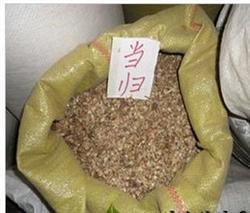
Methods and Technical Points for Raising Angelica sinensis Seedlings from Seed
How do you raise Angelica sinensis seedlings from seed? Is there a netizen who can help explain the method? Zhongdiwang has compiled the seed seedling-raising method for Angelica sinensis, and the details are listed below for netizens' reference. Selection of Angelica sinensis seeds: For seed collection, usually fresh seeds set in the second year after transplanting are used. When the seed coat turns sky blue or pink, it is...
-
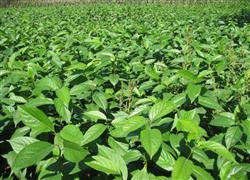
Summer Seedling Raising Methods and Technical Key Points for Eucommia ulmoides
How to raise Eucommia ulmoides seedlings in summer? Please introduce the methods. For summer Eucommia ulmoides, the following methods can be used for seedling raising: air layering propagation. Every year in June to July, on superior plants, select robust 2-3 year old branches about 1 cm in diameter as the layering branches, choose a spot about 15 cm from the point where the layering branch grows as the layering position,...
-

Detailed Explanation of Eucommia ulmoides Seedling Raising Methods and Planting Techniques
How to raise seedlings and plant Eucommia ulmoides? Please give an introduction. There are many propagation methods for Eucommia ulmoides, and the common ones include seed sowing seedling raising, stem cutting, residual root seedling cultivation, and seedling root seedling raising. (1) Seed sowing seedling raising: first select and breed superior seeds, then carry out seed sowing seedling raising. From robust-growing, smooth-barked, pest- and disease-free trees about 20 years old that have not been stripped of bark for use...
-
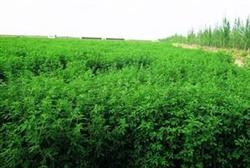
Detailed Explanation of Licorice Seedling Raising Methods and Key Planting Techniques
Abstract: Licorice is the source material for a large number of traditional Chinese medicine preparations, and is widely used in food, beverages, tobacco, daily chemicals and other fields, with broad application prospects. However, due to the lack of wild licorice resources, artificial planting efforts need to be increased. In order to improve licorice seedling raising and planting techniques, the Urumqi Grassland Station conducted licorice seedling raising and planting...
-
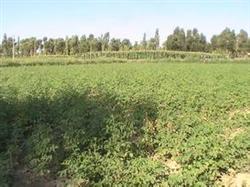
Detailed Explanation of Key Techniques for Licorice Seedling Raising and Transplanting
Licorice is an important medicinal herb. With the strengthening of national ecological and environmental protection, the use of wild resources has become very limited, and licorice seedling raising and transplanting techniques have become very important. Licorice is a perennial herbaceous plant of the Fabaceae family and is listed by the state as a key controlled medicinal herb. Glycyrrhizic acid, as a sweetener, is 200-300 times sweeter than sucrose, ...
-
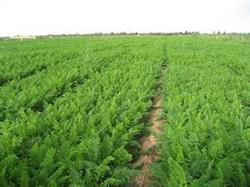
Detailed Explanation of Licorice Seedling Raising and Transplanting Methods and Technical Key Points
The glycyrrhizic acid contained in licorice is 200 to 300 times sweeter than sucrose, making it the best natural sweetener discovered to date. China exports large quantities of licorice and its extracts to European, American and Southeast Asian countries, and it has become a major foreign-exchange-earning medicinal herb. Due to increasing demand at home and abroad, wild licorice resources are becoming increasingly depleted. Therefore, it is necessary to...
-

Detailed Explanation of Pepper Seedling Raising Methods and Technical Points
How Should Pepper Be Raised as Seedlings
-

Detailed Explanation of Key Techniques for Sowing and Raising Goji Berry Seedlings
Seedling raising by direct sowing, that is, sexual propagation. It uses seeds to propagate seedlings. The advantage of this method is that a large number of seedlings can be raised in a short period of time, meeting the urgent need for seedlings in production, and it is low in cost and easy to master. The disadvantage is that the seedlings produced vary greatly, the superior traits of the mother tree cannot be maintained, and fruiting is late with poor quality. However, considering the current need for large quantities of seedlings in production, although this method has disadvantages, it still has certain application value. Seed preparation: There are many varieties of goji berry, but the three varieties Ningqi No. 1, Ningqi No. 2 and Damaye are relatively good.
-
What are the methods for propagating goji berry seedlings? Introduction to common seedling-raising methods
Goji berry (Lycium barbarum) can be propagated by seed, cuttings, division, and layering, with seed propagation and cutting propagation being the main methods in field production. 1. Seed propagation: For seed propagation, spring sowing is preferable, and the seedlings can be transplanted and established in the same year. Drilling is mostly used for seedling raising, with furrows opened at a row spacing of 30-40 cm and a furrow depth of 2-3 cm; the pre-germinated seeds are mixed with fine soil or fine sand and scattered into the furrows, then covered with about 1 cm of soil. After sowing, press the soil down and cover with grass to preserve moisture. In the arid and windy areas of the northwest, the method of deep furrow opening and shallow soil covering can be used, with a sowing rate of 0.3-0.5 kg per mu. When the seedlings
条件筛选