-
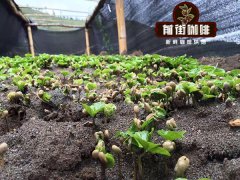
Qianjie Coffee Plantation Summary of Breeding Steps: Seedling Raising, Field Planting and Shading
Before raising coffee seedlings, it should be noted that, under normal circumstances, green coffee beans do not have the conditions to germinate. Therefore, only by using fresh coffee cherries or the current year's parchment beans can coffee seedlings possibly be raised. Use clean river sand for raising coffee seedlings to ensure good
-
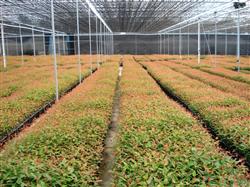
What are the eucalyptus seedling-raising methods? Detailed explanation of the key techniques
How to raise eucalyptus seedlings? Here is a detailed guide. Eucalyptus seedling raising can refer to the following methods: 1. Small seedling cultivation 1.1 Seedbed preparation (1) Seedbed specifications the bed bottom width is 1.2 m, the length is generally under 5 m, and the path width is 5 cm. (2) Making the bed After removing the weeds and topsoil from the bed surface, use 50...
-
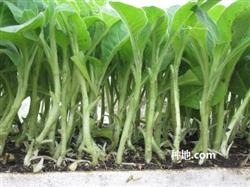
Detailed Explanation of Key Tobacco Seedling Raising and Management Techniques
How to raise tobacco seedlings and how to manage them? Seedling raising and transplanting is a tobacco cultivation method widely adopted around the world. In tobacco cultivation in China, except for a small portion of yellow flower tobacco and sun-cured tobacco that are direct-seeded, the vast majority of tobacco-growing areas use seedling raising and transplanting. The basic requirement for raising seedlings is to timely produce sufficient quantities of strong seedlings of appropriate size. Generally, spring tobacco requires...
-
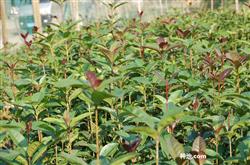
Detailed Explanation of Seed Sowing and Seedling Raising Methods and Technical Points for Osmanthus Trees
How to sow seeds and raise seedlings of osmanthus trees? Please advise. Osmanthus is generally propagated by cuttings, while single-trunk osmanthus is mostly propagated by sowing. The following is an introduction: 1. Seed collection. Osmanthus flowers from September to October, and the fruit matures from late March to late April of the following year. When the fruit enters the maturity stage and the peel gradually changes from green to purple-black, it can be collected...
-

How to grow Andrographis paniculata seeds? Detailed explanation of sowing and seedling raising methods
How to grow Andrographis paniculata seeds?
-
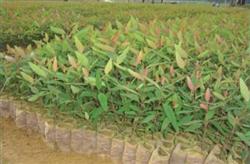
Detailed Explanation of Eucalyptus Seed Collection, Seedling Raising and Afforestation Techniques
Eucalyptus is a world-famous fast-growing tree species with strong adaptability, diverse timber types, wide uses and high economic value. It is both a timber tree species and a tree species for roads, gardens and windbreaks. At present, eucalyptus afforestation extends across 15 provinces and regions in southern China, mainly distributed in Guangdong, Guangxi, Fujian, Jiangxi, Sichuan, Yunnan and 6 other...
-

Detailed Explanation of the Method for Sprouting and Raising Black Locust Seedlings from Root Segments
Black locust (Robinia pseudoacacia) is tolerant of drought and poor soil and grows quickly, making it a good tree species for rural landscaping around homes and for block planting. If the root-segment sprouting method is used for raising seedlings, it is not only low in cost and simple to carry out, but the seedlings are also of good quality. 1. Site selection and bed preparation Choose a nursery site that is sheltered from the wind, faces the sun, has level ground and good drainage as the hotbed. Before making the beds, apply 1000 kg of organic fertilizer per mu, and 50 kg each of ammonium bicarbonate and superphosphate; after plowing and harrowing level, scatter a 100:1 bait of bran and methamidophos on the bed surface to prevent damage from underground pests such as mole crickets. The beds should run north-south, 1.5 m wide and about 12
-
Key Technical Points for Raising Taxus Seedlings in Container Bags and Afforestation
Taxus (yew), a tree species under first-class national key protection, is an evergreen tree reaching 30 m in height, with bark grayish brown, reddish brown, or dark brown, splitting into strips; first-year branches green or pale yellow-green; leaves linear, slightly curved or straight, apex gradually and slightly acuminate, with dense, uniform, minute rounded horn-like papillary protuberances on the midrib beneath; seeds ovoid, with a protruding short blunt tip at the apex; heartwood orange-red, sapwood pale yellowish brown, grain straight, extremely hard and durable, used for high-grade furniture, piano casings, joinery, etc., and regarded by the public as a treasure. Taxus grows mostly wild
-
Detailed Explanation of the Seedling Raising Methods and Techniques for Large-Leaf Privet (Ligustrum lucidum)
The seedling raising method for large-leaf privet (Ligustrum lucidum) is as follows: before sowing in early spring, first stratify the seeds in moist sand for about 60 days. Sow in drills with a row spacing of 15 to 20 cm, at a seeding rate of 7.5 to 10 kg per 667 sq m, cover with soil 1 to 1.5 cm thick, and mulch with straw. Germination and emergence generally begin in mid-April; once some of the seedlings have emerged completely, remove the straw and thin the seedlings in time. One-year-old seedlings reach 40 to 60 cm in height and can be lifted for use as hedges; for street trees or courtyard landscaping, they need to be transplanted and grown on as large seedlings for 2 to 3 years, and when the seedlings reach 1.5 to 2 m in height they can be transplanted; large seedlings must be lifted with a soil ball, and part of the branches and leaves should be pruned off.
-
Methods and Technical Key Points for Raising Black Locust Seedlings from Seed
Black locust is a pioneer tree species for afforestation on barren hills, with characteristics such as tolerance to poor soil, tolerance to drought, fast growth, and wide uses. 1. Nursery site selection and land preparation The seedling-raising site should be selected as level ground with good drainage, deep and fertile neutral sandy loam soil, and irrigation conditions. Vegetable plots must absolutely not be chosen, and continuous cropping is even less suitable. After the seedling-raising site is selected, plow it in autumn to a depth of about 30 cm. In early spring, harrow it fine and level, and apply 5000 kg of decomposed barnyard manure per mu. During land preparation, poisonous soil made from phoxim emulsifiable concentrate should be applied to control underground pests.
条件筛选