Detailed Explanation of Key Tobacco Seedling Raising and Management Techniques
How to raise tobacco seedlings and how to manage them? Seedling raising and transplanting is a tobacco cultivation method widely adopted around the world. In tobacco cultivation in China, except for a small portion of yellow flower tobacco and sun-cured tobacco that are direct-seeded, the vast majority of tobacco-growing areas use seedling raising and transplanting. The basic requirement for raising seedlings is to timely produce sufficient quantities of strong seedlings of appropriate size. Generally, spring tobacco requires...
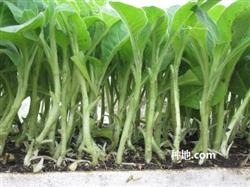
How to raise tobacco seedlings and how to manage them?
Seedling raising and transplanting is a tobacco cultivation method widely adopted around the world. In tobacco cultivation in China, except for a small portion of yellow flower tobacco and sun-cured tobacco that are direct-seeded, the vast majority of tobacco-growing areas use seedling raising and transplanting.
The basic requirement for raising seedlings is to timely produce sufficient quantities of strong seedlings of appropriate size. Generally, spring tobacco requires strong seedlings suitable for transplanting, with thick stems, about 7 cm tall, about 0.7 cm in diameter, with 8 to 10 true leaves, free of pests and diseases, with normal growth and development, a seedling age of 50 to 60 days, a well-developed root system, dark green leaf color, and strong stress resistance.
1. Seedling raising methods
(1) Open-field seedling raising: generally carried out in warm seasons, and the forms used can be divided into flat beds, raised beds, and sun-facing beds.
① Flat beds: the bed is at the same height as the ground or slightly higher, with ridges made around the bed for easy irrigation and management. This is commonly used in the plain areas of Shandong, Henan, and southern tobacco-growing regions.
② Raised beds: drainage ditches are made around the bed to facilitate drainage of accumulated water in the bed and increase the bed soil temperature. This is the main method for seedling raising in plain areas with a relatively high groundwater table and in paddy fields.
③ Sun-facing beds: a windbreak is made on the north side of the bed to block wind and protect against cold. Generally, sorghum stalks, corn stalks, or rice straw and wheat straw are used as wall materials. According to experiments, sun-facing beds can increase the bed temperature by 3°C compared with flat beds, and the seedling formation period is advanced by 10 days.
(2) Hotbed seedling raising: it has the effects of increasing temperature, preserving heat, blocking wind, and retaining moisture, and sowing and seedling raising can be carried out during the frost period. It is widely used in the northeastern tobacco-growing areas where the frost-free period is relatively short. For hotbed specifications, in the northeastern tobacco-growing areas the bed is generally 10 to 12 m long and 1.7 to 2.0 m wide, and the bed frames are mostly made from wooden boards and sorghum stalks. The bottom and surroundings of the frame are packed firmly with soil. The bed surface is dug 20 to 25 cm deep and filled with heating materials and nutrient soil. The heating materials mostly use chopped corn stalks, fallen leaves, rice straw, and fresh horse and mule manure, tamped to a thickness of about 6 cm. The nutrient soil is generally prepared from 50% fertile soil, 30% decomposed barnyard manure, and 20% rotted and finely crushed stalks, grass, and fallen leaves.
(3) Plastic greenhouse seedling raising: artificial heating inside the greenhouse, sowing in hotbeds, and thinning and temporary planting. For the construction specifications of the plastic greenhouse, according to experience in Yanbian, Jilin, it should be moderate in size. If too large, it uses more materials, is susceptible to wind damage, and easily accumulates snow; if too small, the temperature rises quickly during the day and drops rapidly at night, which is unfavorable for heat preservation. Generally, no less than 60 sq m is appropriate. The center is 2 to 2.5 m above the ground, and both sides are 1.5 m high, forming an arch shape. After the plastic film is laid, it is reinforced with hemp rope on top, with a rope spacing of 50 to 70 cm. Heating pipes are installed inside the greenhouse, and a large furnace is built at one end of the greenhouse. The sowing hotbed and the temporary planting hotbed are the same.
2. Sowing
(1) Seed treatment: includes seed disinfection and seed soaking for germination. ① Seed disinfection: it can eliminate anthracnose and various pathogens attached to the seed coat, achieving the effect of disease prevention and seedling protection. Commonly used agents include 2% formalin solution, 0.1% silver nitrate solution, 1% copper sulfate solution, and 0.5% mercuric chloride solution. Put the seeds into a clean white cloth bag, place them in any one of the above solutions, soak for 10 to 15 minutes, then remove them, rinse off the liquid thoroughly, and set aside for seed soaking and germination or dry sowing. ② Seed soaking and germination: use clean small white cloth bags, each holding about 500 g of seeds, and the seed amount must not exceed 1/2 of the bag volume to prevent swelling and compression during germination. After bagging, put them into water and rub the seeds, rubbing and washing until the water drips and the color becomes lighter. After rubbing the seeds, soak them immediately, and the soaking water temperature should preferably be about 20°C. Soak for 8 to 10 hours, remove and drain off excess water, and place under 20 to 25°C for germination. It is best to rinse once a day, and after rinsing, drain off excess water. After about 5 days, when the radicle length equals the seed length, sow immediately. Germinated sowing shortens the emergence period and gives uniform emergence compared with direct sowing. It is widely used in spring tobacco-growing areas in China.
(2) Sowing: whether sowing quality can timely produce strong seedlings is the key, and sowing must be done at the right time according to local conditions. The climatic conditions in each tobacco-growing area in China differ greatly, and the sowing period and cultivation system also differ greatly. For flue-cured tobacco alone, there are 4 major categories: spring tobacco, summer tobacco, autumn tobacco, and winter tobacco, as well as wheat-field interplanted tobacco that is neither spring nor summer. The sowing period is determined by the transplanting period. In general, the sowing period for spring tobacco and summer tobacco is 60 to 70 days before transplanting, and for autumn tobacco and winter tobacco it is about 50 days before transplanting. In Hunan Province, the sowing period is January. The sowing rate is mainly determined according to seed germination rate, sowing method, and seedling raising method. For broadcast sowing, use 3 to 5 g of seed per 10 sq m (net area). Drill sowing and dibbling use less seed. When using plastic film for heat-preserving seedling raising, watering in the early stage of the seedbed is extremely inconvenient and also unfavorable for heat preservation, so sufficient bottom water must be applied before sowing. Sowing should be uniform, and after sowing it should be covered with fine sand, fine soil, rice straw, pine needles, or pig manure. The thickness should be appropriate and uniform. When spring tobacco uses germinated sowing, the plastic film should be covered on the same day, and the surroundings should be tightly pressed with soil. The highest point of the film surface should preferably be about 40 cm above the bed surface.
3. Seedling stage management
(1) Protection during the seedling stage: in the early stage of the seedbed, the seedlings are tender and small, have poor stress resistance, and are vulnerable to low-temperature and freezing damage. Heat preservation, moisture retention, wind protection, hail protection, and frost protection are key measures in the early stage of seedling raising. After sowing spring tobacco, the film must be sealed tightly. Only by maintaining temperature and moisture in the bed can seedlings emerge quickly. After the seedlings have 2 true leaves, as the temperature rises, ventilation and dehumidification should be carried out; otherwise, the seedlings are easily scorched, with spots or blotches appearing. At this time, on sunny days, generally open both ends of the film from 8 to 9 a.m. to 4 to 5 p.m. for ventilation, and control the temperature within 35°C. At the 4 true leaf stage of the seedlings, the ventilation and dehumidification time should be extended. If the temperature continues to rise after opening both ends, the ventilation openings should be enlarged. At the upright leaf stage of the tobacco seedlings, open both ends in the morning and afternoon, and at noon also open one side of the film, combining this with hardening the seedlings.
(2) Watering: for heat-preserving seedling raising covered with plastic film, when sufficient bottom moisture water is applied before sowing, no watering is needed during the emergence stage. For open-field seedling raising without plastic film covering, during the emergence stage water should be sprinkled daily or every other day so that the soil remains moist and loose. At the "cross" stage, the number of sprinklings can be appropriately reduced, and the amount of water sprinkled can be appropriately increased. After the upright leaf stage, sprinkling or an appropriate amount of bed irrigation should be carried out according to the size of the tobacco seedlings and soil moisture. At the seedling formation stage, water is usually cut off mainly to harden the seedlings, following the principle of not watering unless dry, in order to improve the stress resistance of the tobacco seedlings. In areas with more rainfall, attention should be paid to timely drainage, and throughout the entire seedling raising process, there must be no water accumulation in the seedbed.
(3) Fertilization: seedbed fertilization is mainly base fertilizer, with topdressing as a supplement. The amount of base fertilizer should meet the needs before the third true leaf stage; otherwise, the base fertilizer is insufficient. Topdressing should be applied as appropriate according to the growth status of the tobacco seedlings, and 1 to 3 times is acceptable. When the base fertilizer is sufficient, topdressing may also be omitted. If topdressing is needed, compound chemical fertilizer is preferable. Before the third true leaf appears, tobacco is most sensitive to ammoniacal nitrogen, so topdressing must be done cautiously. The amount of nitrogen chemical fertilizer should preferably be 5 to 10 g per sq m, and excessive amounts must be strictly avoided. After spraying chemical fertilizer, the tobacco seedlings must be rinsed clean with clear water to prevent fertilizer damage.
(4) Thinning and weeding: these are indispensable measures for cultivating strong seedlings. Thinning is carried out in 3 times when the 3rd, 4th, and 5th true leaves appear, and the last thinning is final spacing. The seedling spacing is generally 6 to 8 cm. Timely weeding is conducive to seedbed ventilation and the prevention and control of pests and diseases, and reduces waste of fertilizer and water. Usually, weeding is combined with thinning.
(5) Leaf pinching: this is a measure to promote thick and vigorous tobacco seedlings. It includes 3 methods: timely removal of lower yellow and wilted leaves and leaves that are yellow-green in color and have relatively low physiological function, and pinching off part of the upper leaves with vigorous physiological function. Leaf pinching is conducive to ventilation and light transmission, can inhibit the growth rate of tobacco seedlings, and is an effective measure to regulate uniform growth of large and small tobacco seedlings and prevent excessive growth in the later stage.
(6) Timely prevention and control of pests and diseases: the main diseases at the seedling stage include anthracnose, damping-off, and others, with anthracnose being the most common. After the 4 to 5 true leaf stage of tobacco seedlings, spray 1 to 2 times with 1:1:150 Bordeaux mixture, or spray 50% zineb 500-fold solution. The main insect pests at the seedling stage include cutworms, mole crickets, slugs, and others. The most common damage is from cutworms. Adults can be trapped and killed with light or poisoned bait (0.5 kg of 90% trichlorfon, add 20 kg of water, mix with 40 kg of roasted fragrant wheat bran, and scatter in the field in the evening). In severely affected areas, pesticides can be used to treat the soil, mixing 2.5 kg per mu of 30% trichlorfon powder into the soil. When slugs occur, scatter lime powder near the tobacco seedlings in the evening, or spray and kill with 1:100 rapeseed cake liquid in the morning and evening.
Click to get more tobacco cultivation techniques
Click to get more flower cultivation techniques