Detailed Explanation of Eucalyptus Seed Collection, Seedling Raising and Afforestation Techniques
Eucalyptus is a world-famous fast-growing tree species with strong adaptability, diverse timber types, wide uses and high economic value. It is both a timber tree species and a tree species for roads, gardens and windbreaks. At present, eucalyptus afforestation extends across 15 provinces and regions in southern China, mainly distributed in Guangdong, Guangxi, Fujian, Jiangxi, Sichuan, Yunnan and 6 other...
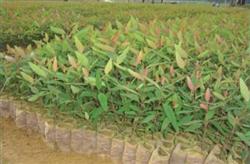
Eucalyptus is a world-famous fast-growing tree species with strong adaptability, diverse timber types, wide uses and high economic value. It is both a timber tree species and a tree species for roads, gardens and windbreaks.
At present, eucalyptus afforestation extends across 15 provinces and regions in southern China, mainly distributed in Guangdong, Guangxi, Fujian, Jiangxi, Sichuan, Yunnan and 6 other provinces (regions). In China, the more extensively cultivated species include Eucalyptus exserta, Eucalyptus citriodora, Eucalyptus globulus, Eucalyptus robusta, Eucalyptus camaldulensis, Eucalyptus dunnii, Eucalyptus botryoides, Eucalyptus rameliana and the newly bred Leilin No. 1 Eucalyptus. In addition, Eucalyptus amplifolia, Eucalyptus grandis, Eucalyptus obliqua, Eucalyptus paniculata, Eucalyptus saligna, Congo No. 12 Eucalyptus and Eucalyptus tereticornis are all promising for development.
1. Seed Collection
Species within the same subgenus of Eucalyptus readily hybridize, producing new hybrids, which provides favorable conditions for selection, breeding and introduction. Guangdong and Guangxi have selected superior trees of Eucalyptus exserta and established seed orchards and mother tree stands, creating the necessary conditions for providing genetically superior seeds and establishing fast-growing, high-yield plantations. In seed collection, emphasis should be placed on collecting from superior mother trees and seed orchards.
Eucalyptus exserta begins to flower and bear fruit about 3 years after afforestation, with the peak fruiting period at about 10 years. However, it is best to use trees over 10 years old as seed mother trees, as the phenotype and hereditary characteristics are relatively stable at this age. In the Leizhou Peninsula of Guangdong, the phenological period of Eucalyptus exserta shows fruit ripening in October to November, with the general pattern being earlier in the south and later in the north.
After the capsules mature, they remain hanging on the tree for over a year without falling off, and the seeds do not completely disperse. The capsules turning dark green with brown spots is the characteristic of seed maturity. After the capsules are collected, they are generally sun-dried for 4 to 20 hours, the valves split open and the seeds scatter out. To avoid prolonged sun exposure affecting seed viability, seeds can be collected in batches multiple times. The seed extraction rate of capsules is 8%-12%, purity 8.6%, thousand-grain weight 0.309g, with 3.236 million seeds per kilogram. Carefully selected seeds can achieve a germination rate of up to 85%. Eucalyptus exserta seeds stored in bags in a ventilated and dry place can maintain viability for over 1 year.
2. Seedling Raising
The seedlings for Eucalyptus exserta afforestation include bare-root seedlings and container (including nutrient brick) seedlings. In the past, bare-root seedlings were mostly used for afforestation, but now nutrient brick seedlings are mostly used for large-scale afforestation. In some places, plastic bags, nutrient cups, nutrient baskets and other containers are also used for seedling raising and afforestation, all achieving good results. Container seedling afforestation is considered one of the key measures for fast-growing and high-yield eucalyptus.
Eucalyptus seedlings can be divided into four growth stages: ① Germination and emergence stage. From seed germination to cotyledons turning green. The duration varies with season - 4 to 8 days in summer, and 10 to 20 days in late winter and early spring. The characteristics of this period are: seeds absorb water and germinate, roots begin to develop, tissues are tender, stress resistance is poor, they prefer shade and moisture, are intolerant of scorching sun and waterlogging, are susceptible to pests and diseases, and management should be strengthened. ② Opposite true leaf stage. From the emergence of the first pair to 5-6 pairs of true leaves. Since most eucalyptus seedling juvenile leaves are opposite, with only very few alternate, it is called the opposite true leaf stage. It takes about 10 days in summer and about 20 days in late winter and early spring. At this time, seedling height is about 5-6 cm, seedlings are still delicate, and the growth rate of underground and aboveground parts is almost equal. Resistance to adverse factors such as surface high temperature, drought and heavy rain is still weak, but fibrous roots begin to elongate, and requirements for water, fertilizer and light gradually increase. Competition between seedlings begins to appear, and management should focus on fertilizing, adjusting density and preventing pests and diseases. ③ Alternate true leaf stage. From opposite to alternate true leaves, until seedling leaf surfaces meet on the seedbed. Seedling height is about 6-11 cm, and it takes about 20-30 days in spring. The aboveground vegetative organs of seedlings enlarge, tissues become more substantial, stress resistance becomes stronger, and growth rate begins to accelerate. Competition among seedlings for nutrient space intensifies. This stage mainly involves thinning, filling gaps, weeding and topdressing, and continued pest and disease control. ④ Fast-growth stage. From seedling branches and leaves meeting on the seedbed to out-planting, seedling height 12-20 cm. At this time, seedling stress resistance is stronger. As long as water and fertilizer are suitable, daily height growth can reach 0.5-1.0 cm. This stage takes about 15 days in late spring and early summer. The main work is topdressing, watering and pest control.
For transplanted seedlings, the sowing season is not very strict in warm climates. The main consideration is to avoid summer and autumn heavy rains, scorching sun and frost damage that seedlings may encounter in the early stage. Generally, spring February to March and autumn September to October are suitable. Seed germination requires sufficient moisture, mainly keeping the top 5 cm of soil moist, but not excessively wet.
The shade-loving nature of seedlings is very short-lived. Generally, 10 days after germination, light duration and intensity need to be increased, so shade frames should be removed promptly. In areas with frost damage, shade frames also serve as warm frames. In the early seedling stage, special attention should be paid to soil management, keeping the seedbed moist and weed-free.
Spring-sown seedlings after 1-2 months, autumn-sown after 2-3 months, when seedling height is 6-10 cm, must be transplanted. Small seedlings should be transplanted with soil, keeping roots undamaged, without needing to cut leaves. After transplanting, there is no need for a recovery period, and both survival and growth show great superiority. When seedlings reach 30-60 cm (small seedlings) or 1-1.5 m (large seedlings), they can be out-planted for afforestation.
3. Afforestation
Eucalyptus growth rate depends largely on site preparation. Different site preparation methods on the growth and root development of young Eucalyptus exserta forests show that machine-plowed full cultivation with large holes (depth 20-25 cm) gives the best growth, manual holes (40×40×33-60×60×50 cm) are second, and ox-plowed strip cultivation (depth 10 cm) is worst. Height and diameter growth under machine-plowed full cultivation with large holes is 20%-50% higher than under ox-plowed strip cultivation. Root development is also better with machine-plowed large holes. According to different suitable sites, different site preparation methods should be adopted. On flat land below 5°, implement machine-plowed full cultivation, with deep plowing of 20-25 cm, or even over 30-40 cm. On hilly land of 5-15°, carry out strip cultivation along contour lines according to terrain, with strip width 100-120 cm and depth 30-40 cm. Both require staking points and then digging 60×60×50 cm large holes. On steep slopes above 15°, Eucalyptus exserta should not be planted.
To promote rapid growth and timber formation of Eucalyptus exserta, base fertilizer should be applied in the holes. In arid areas, contour-level ditches can be constructed to accumulate moisture. The spacing of Eucalyptus exserta afforestation should not be too dense. Afforestation density depends on ecological conditions and management objectives, generally 100-120 trees per mu is suitable; short-rotation pulpwood forests should be densely planted. Using a configuration with wide row spacing and narrow plant spacing, such as 1.5×4 m, 2×3 m, etc., allows trees to fully utilize nutrient space, fully receive side light, and facilitates mechanical tending. For rectangular configuration, in hilly and mountainous areas and when establishing soil and water conservation forests, the row direction should be consistent with contour lines; in areas with frequent strong winds, the row direction should be perpendicular to the harmful wind direction; in high-latitude flat areas, north-south rows are more conducive to full utilization of light than east-west rows. The afforestation period for Eucalyptus exserta is February to March in spring and September to October in autumn. Early spring afforestation should pay attention to weather; afforestation should not be carried out during prolonged drought without rain. If rain occurs between February and August, planting can also be done, but it is best to choose the interval between consecutive rainy days and 3-4 days after rain. In frost-free areas, afforestation can also be done in winter. Afforestation seedlings should not be too large. The best height for large seedlings is 80-120 cm, and for small seedlings 30-60 cm. When planting large seedlings, before lifting the seedlings, cut off 2/3 or 3/4 of the branches and leaves, and sometimes also cut off the tender tips; if the weather is dry or the afforestation season is too late, stem cutting can be done. Stem cutting should not be too high, generally cutting at 5-10 cm from the root collar. Stem cutting should be done before lifting seedlings or immediately after lifting. After stem-cut planting and survival, many new shoots sprout, and premature bud pruning should be avoided. It is best to keep 2-3 sprouts, and after several months select and retain 1 branch. Small seedlings can be less pruned or not pruned when planted, and keeping some native soil on the roots is better. Experience from many places proves that small seedling afforestation is better than large seedling afforestation, not only with higher survival rate but also with greater growth. However, small seedling afforestation must be tended promptly in the same year.
4. Tending
The main measures for young forest tending include loosening soil and weeding, fertilizing, fixing stems and planting green manure. Loosening soil and weeding should be done in early spring, before the rainy season or after autumn rains, 2-3 times per year, for 3 consecutive years. Methods include strip cultivation and hole cultivation, depending on site conditions and management conditions. On gentle slope sites, tractor or ox-plow strip cultivation tending can be used, with strip width 1.5-2 m and depth 10-15 cm. Where there are no machine or ox-plow conditions, manual strip cultivation is generally used. Due to labor shortage or condition limitations, manual hole cultivation is usually used, centered on the plant, with a radius of 0.5-0.6 m and depth of 10 cm. For sites with sparse weeds and loose soil, the number of soil loosening should be reduced and more fertilizer applied. For bare and eroded sites, tending should be done along horizontal strips, along with fertilizing and planting green manure, to store water and conserve soil and improve site conditions. Although Eucalyptus exserta does not have strict requirements for soil fertility, appropriate fertilization during the young forest stage can greatly promote growth and facilitate good stem form development. Fertilizing is best done in early spring combined with loosening soil and weeding. Apply organic complete fertilizer or organic compost mixed with a certain proportion of ammonium sulfate and superphosphate fertilizer. Fertilizing can be done by furrow application or hole application.
For container seedling afforestation, each planting hole generally has two seedlings. After 1 year, most plants have interconnected root systems and begin to differentiate. Stem fixing should be carried out, that is, retaining one dominant plant with good stem form per hole. For young forests with poor site conditions, stem fixing can be delayed by one year. Planting green manure plants in young forests can suppress weed growth, reduce surface evaporation, increase soil fertility, and promote fast growth and high yield of trees. Tephrosia candida, Crotalaria pallida, Mucuna capitata, Japanese grass, Pueraria phaseoloides and tropical alfalfa can be planted. However, cover plants will more or less compete with trees for water and fertilizer during growth, so green manure should be planted at a certain distance from trees, and timely mowing and green manuring combined with young forest tending should be carried out.
Eucalyptus exserta artificial young forests grow rapidly, generally closing canopy in 3-5 years after afforestation. After canopy closure, as stand age increases, the contradiction between plants competing for water, fertilizer and nutrient space becomes increasingly acute. Natural pruning is fast and differentiation is obvious. When trees strongly differentiate, tending thinning must be carried out promptly to eliminate intense competition among trees and ensure normal stand growth. In the tending process, the main aspects to master are the start time, method, intensity and repetition period of tending thinning.
The start of tending thinning is generally at 4-6 years of age, that is, when strong differentiation occurs and suppressed trees account for 30%-40% of total trees. Most Leizhou Eucalyptus exserta forests begin tending thinning when the stand average height exceeds 6 m. The method of tending thinning is mostly low thinning. The principles are: remove weak and retain strong, remove inferior and retain good, remove harmful and retain beneficial, and appropriately consider density. That is, retain dominant trees, sub-dominant trees and intermediate trees with normal development, straight stem form and suitable for timber cultivation; cut down suppressed trees with poor growth and development, curved trunks, pest and disease damage, windthrow, unsuitable for timber cultivation, and some other trees; in overly sparse sections, to avoid windows and bare forest land after thinning, trees listed for thinning should also be retained. Tending thinning intensity calculated by number of trees is 30%-40%, calculated by growing stock is 15%-25%. The repetition period of tending thinning is 3-5 years, depending on stand growth conditions. Due to good natural pruning, artificial pruning is generally not carried out.
Harvesting and regeneration: The harvesting age is determined according to management objectives. Eucalyptus exserta has strong sprouting ability, and short-rotation and sprout regeneration are mostly used to cultivate various timber types. This tree species has the advantages of rapid growth, straight stem form and quick intermediate returns through sprout regeneration. After harvesting, generally 10-20 days later the stumps begin to sprout new shoots, reaching a peak at 30-50 days; at 70-80 days sprouting begins to slow down. The sprouting rate reaches 80%-95%. One-year-old sprouts after harvesting reach 3.5-4 m in height and 2.5-2.8 cm in DBH. At 8-10 years old, average height is 11-12 m, DBH 8-10 cm, and growing stock per mu is 6.5-8.2 m3, ready for harvesting and utilization. In Leizhou Eucalyptus exserta sprout regeneration forests, over 90% of trees have straight stem form, and the forest appearance is neat. Sprouts from each stump can be organized at 1-2 years old, and stem fixing and thinning carried out after 3-4 years. Each mu can produce 450-600 straight sprouts of 4-5 m height and 3-5 cm diameter, and harvest 300-400 kg of eucalyptus leaves, from which 2.5-3.5 kg of eucalyptus oil can be distilled. The best age for sprout regeneration is 6-10 years; too late or too early is not suitable. Sprout regeneration can be done in all four seasons, but in areas with typhoons and heavy rain, winter is preferable; otherwise summer is suitable. Generally, the height of regeneration stumps should be 5 cm above the ground.