At what time does the national first-class protected plant "dove tree" (Davidia involucrata) bloom? Where are its main places of origin? What are its cultivation prospects? (
Davidia involucrata has been listed as a national first-class key protected wild plant. It is a monotypic genus endemic to China, a relict plant, and also a world-famous ornamental plant. So at what time does the dove tree bloom? Where are its main places of origin? What are its cultivation prospects?
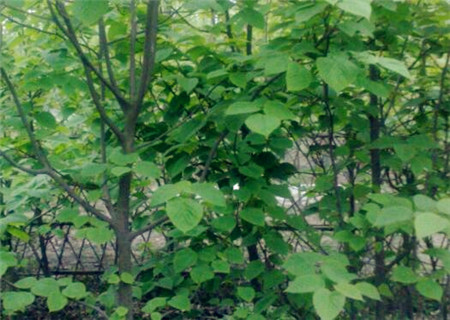
The blooming time of dove tree flowers
Dove tree flowers usually bloom in April. Davidia involucrata blooms in late spring and early summer, with a flowering period lasting up to one month. The flowers are white, like white doves, so it is also called the dove tree. From bud to full bloom and then to withering, the flowers of the dove tree change color multiple times. The flowers of this tree bloom in succession with a riot of colors, and because of this special spectacle it has earned the name "a tree of wondrous flowers."
The distribution of the dove tree's places of origin
Davidia involucrata is widely distributed in China. Wangjia Town in Gongxian County, known as the "hometown of Davidia involucrata," has a large number of dove trees, the most in the country. Others are distributed in Zhenping and Langao in southeastern Shaanxi; Shennongjia, Xingshan, Badong, Changyang, Lichuan, Enshi, Hefeng and Wufeng from western to southwestern Hubei; Sangzhi, Dayong, Cili, Shimen and Yongshun in northwestern Hunan; Songtao, Fanjing Mountain, Daozhen, Suiyang, Bijie and Nayong from northeastern to northwestern Guizhou; Wushan in eastern Sichuan; Pingwu and Qingchuan in the north; Wenchuan, Guanxian, Pengxian, Baoxing, Tianquan, Emei, Mabian, Ebian, Meigu, Leibo and Junlian from the west to the south; Nanchuan in southern Chongqing; Qiaojia, Suijiang, Yongshan, Daguan, Yiliang, Weixin, Zhenxiong and Zhaotong in northeastern Yunnan; and in the deep mountains and wild ridges of Liulong in Shidong Town, Huaiji County, Guangdong Province, among other places.
What are the cultivation prospects for Davidia involucrata? After its large-scale successful introduction in Henan and other places, as well as its preliminary application in urban landscaping in Shanghai, Shandong and other places, Davidia involucrata has gradually entered the vision of major landscape designers. So what exactly are its new highlights and what development prospects can attract so many landscape designers' attention to it? According to analysis, the biggest feature of Davidia involucrata is the two open white large bracts when it blooms in spring, like a white dove spreading its wings about to fly, and it is a symbol of "peace and friendship." Its tree form is tall and beautiful, and it is an extremely rare spring-flowering ornamental tree in gardens; planted alone it can form a scene by itself, while planted in groups or rows the scene is even more spectacular. In Europe and America it enjoys the name "the most beautiful ornamental tree of the northern temperate zone." It is an indispensable landscape decoration point in future landscaping. Many merchants, precisely seeing this highlight, are introducing high-quality Davidia involucrata on a large scale, which has led to increasing market demand for it, and its cultivation prospects are immeasurable.
Cultivation techniques
Seed collection
Fruits that fall naturally in the forest and sprout on their own are very few. To artificially propagate Davidia involucrata and Davidia involucrata var. vilmoriniana, the fruit must first be broken up. At the seedling stage, a shade shed must be built and the seedbed kept moist. For cuttings, tender branches should be used as cuttings, carried out from May to July. Air layering can be done in spring at the base of vigorous one-year-old branches. Transplanting of seedlings should be done after leaf fall or before the buds sprout the following spring. When lifting seedlings, the root bark and terminal buds must not be damaged; long lateral roots and lateral branches can be appropriately pruned. When planting, the hole should be large with a flat bottom, the seedling upright and the roots spread out, and sufficient water for settling the roots should be poured.
There are the following 3 methods for breaking up the fruit:
1. Pour the collected fruits into a stone mortar and, as if pounding rice, repeatedly strike them with a wooden mallet, paying attention to using appropriate force. If the force is too small, the fruit skin cannot be completely separated, while if the force is too great, the seeds will be crushed. Wash the crushed fruits with clean water, mix with plant ash, and then sow.
2. Directly pile the ripe fruits in a dark, damp open area, letting them freeze naturally to promote physiological transformation, so that the flesh rots and the seed shell becomes brittle from freezing. When piled for 3 months at an average temperature of 6.9°C, the seed germination rate is 92.6%, while at an average temperature of -2.5°C the germination rate can reach over 98%.
3. The simplest and easiest method is to pour the ripe fruits into a covered manure bucket, fill the bucket with fresh human urine, and completely submerge the fruits. After 6 to 7 weeks, once the flesh and seed shell have completely rotted, pour them into a bamboo basket, rinse with clean water, mix the seeds with plant ash, and then sow. This method is widely used in Changyang Tujia Autonomous County, Hubei Province, and the seedling emergence rate is above 95%.
Sowing propagation
Sowing methods
Choose well-drained, both fertile and moist sandy loam or loam as the seedbed, and dig ditches around the seedbed to a depth of no less than 40 cm. Soil pH requirements are not strict; even in soil with a salt content of 0.15%, dove tree seedlings can grow and develop. Before sowing, use agents such as zineb, carbendazim, thiophanate and formalin to disinfect the soil and deep-plow it. Before sowing, open furrows in the seedling field, 10 to 15 cm deep and 5 to 8 cm wide, then place the treated seeds into the furrows at a distance of 10 to 15 cm, cover with soil, compact, and water thoroughly.