-
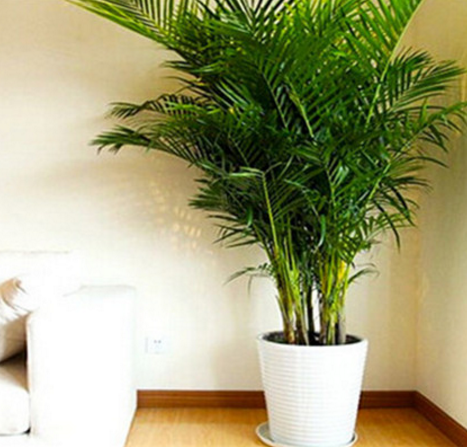
Is Areca Palm Toxic? A Guide to Indoor Growing and Proper Repotting
Areca palm is a small palm plant with strong shade tolerance. Placed in the home, it can effectively remove volatile harmful substances such as benzene, trichloroethylene and formaldehyde from the air, and can also increase indoor air humidity. Is areca palm toxic? Can it be grown indoors? Is areca palm toxic?
-
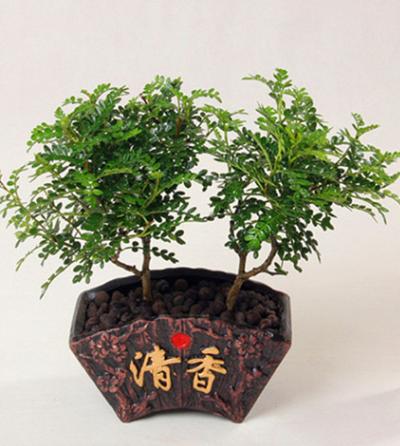
Proper pruning methods and propagation techniques for the fragrant olive tree
The fragrant olive tree is a small shrub or tree plant, large enough for garden viewing and small enough for pot cultivation, with a height between 1-8 m, making it entirely suitable for home growing and viewing. How to prune the fragrant olive tree and when to prune it: pruning the fragrant olive tree is not very demanding regarding season, and generally it can be pruned in all four seasons
-

How to fertilize Angelica sinensis properly? Master the scientific fertilization method
How to fertilize Angelica sinensis properly
-

What are the main properties and characteristics of snake venom?
Snake venom is a toxic protein and polypeptide substance containing various enzymes secreted by venomous snakes, and it is also the substance that causes poisoning reactions after a venomous snake bites a person. Fresh snake venom is a somewhat fishy-smelling, egg-white-like viscous liquid, appearing yellow, pale yellow, green, or even colorless. When fresh, it shows a neutral or weakly acidic reaction; after standing for a while, it may become alkaline. Its water content is 50%-75%, and its specific gravity is between 1.030 and 1.080. Fresh venom readily produces foam when exposed to air, and at room temperature it easily spoils and deteriorates after 24 hours, losing its toxicity. In a refrigerator it can be preserved for 15-30 days, and at 40°C it can be stored for a longer time. After vacuum drying or freeze-drying treatment, snake venom can be preserved at room temperature for 20-30 years, but its toxicity intensity and the activity of some enzymes will decrease to varying degrees, and it can still dissolve in water. Snake venom loses its toxicity after exposure to ultraviolet light and heating. Strong acids, strong bases, and heavy metal salts, which can precipitate and denature proteins, can all destroy snake venom. Snake venom is also easily decomposed and destroyed by oxidants, reducing agents, proteolytic enzymes, and the like, thereby losing its toxicity. After formaldehyde treatment, it also loses its toxicity, but its antigenicity can still be retained.
-
How can mushrooms improve wood properties? Swiss research has the answer
Switzerland's Federal Laboratories for Materials Science and Technology said on the 27th that they are experimenting with mushrooms to improve certain properties of fir and spruce, in order to expand the uses of these woods. Fir and spruce make up 60% of Switzerland's trees and have the advantages of strong mechanical endurance and being easy to process, but they also have weaknesses such as being difficult to process finely and difficult to use for a long time. In addition, protective coatings such as fireproof, anti-corrosion or UV-resistant coatings are difficult to penetrate into these woods, which limits their development and use, for example, they cannot be used as exterior building materials. Researchers are experimenting with wood-eating mushrooms to change
-
Detailed explanation of honey storage methods: proper preservation keeps it from spoiling
Proper storage of honey is an important part of ensuring its quality, so during storage the following points should be noted: 1. Honey is an acidic, viscous liquid that is corrosive to metals such as zinc, iron and aluminum as well as to plastic buckets. To avoid contaminating the honey, do not use metal containers without food-grade coating or plastic buckets to store honey; instead, use containers such as glass bottles and porcelain jars. 2. Honey is highly hygroscopic and readily absorbs odors, so it must be stored sealed to avoid absorbing water and fermenting, as well as picking up
-
How should soybeans be harvested properly? A full breakdown of the key methods
Soybeans should be harvested promptly once mature. If harvesting is too late, the pods lose too much moisture and are prone to shattering and dropping seeds, causing losses. The suitable harvest period should be determined according to different harvest methods. When harvesting with a sickle, begin harvesting after all soybean leaves have fallen, as nutrient transport to the seeds has essentially stopped by then. Mechanical harvesting must be done after the whole plant is fully mature and dry. Manual harvesting is best done in the morning, when the soybean plants have a higher moisture content, so they do not prick the hands and are less prone to pod shattering. A low stubble height is required, with no "horse ears" left exposed and no missed cutting.
-
Three key steps for storing Gastrodia elata properly
Recently, I have received letters from many farmer friends asking how to store Gastrodia elata seed tubers. During the production of Gastrodia elata, seed rot often occurs, causing losses. In my opinion, three key steps should be taken when storing Gastrodia elata. First, the harvest step. Gastrodia elata is dug in spring and winter. When digging Gastrodia elata in winter, select fresh, pest-free, undamaged small tubers, air-dry them for 1-2 days to remove part of the moisture, and then store them together for use as seed the following year. Second, the temperature step. Place the partially air-dried Gastrodia elata seed tubers in layers in a brick pond, a large earthen basin or a wooden box
-
Proper removal of silkworm excrement can effectively reduce the occurrence of silkworm diseases
Silkworm excrement not only harbors the pathogens of viral flacherie, but is also a breeding and transmission site for the pathogens of many silkworm diseases such as empty-head soft rot, bacterial soft rot, and muscardine. Data show that when pathogen-carrying silkworm excrement from spring-reared silkworms is left for 15 days and then comes into contact with mulberry leaves, it can cause the incidence of midgut-type viral flacherie in silkworms that eat those leaves to reach 75%; when pathogen-carrying silkworm excrement from late-autumn-reared silkworms is left for 1 day and then comes into contact with mulberry leaves, it can cause the incidence of midgut-type viral flacherie in silkworms that eat those leaves to reach 60%, and after 7 days the incidence reaches 100%. Therefore, during routine rearing,
-
Gui Green No. 1: Introduction to a national-level improved tea tree variety with Guangxi's independent intellectual property rights
Tea is an important economic crop in China, and in particular one of the pillar industries for poverty alleviation and prosperity in the mountainous areas of Guangxi. With the rise of organic tea (green food) production, some varieties with resistance to pests and diseases and strong adaptability have received attention. Varieties determine characteristics such as the sprouting period of tea trees, processing suitability, quality traits and resistance. To develop tea production, tea products must be early to market, distinctive, of superior quality and favorable in price to be in a position to seize the market. Therefore, to make Guangxi's tea industry strong and large, we must start from the "source" - adopting superior
条件筛选