Is Areca Palm Toxic? A Guide to Indoor Growing and Proper Repotting
Areca palm is a small palm plant with strong shade tolerance. Placed in the home, it can effectively remove volatile harmful substances such as benzene, trichloroethylene and formaldehyde from the air, and can also increase indoor air humidity.
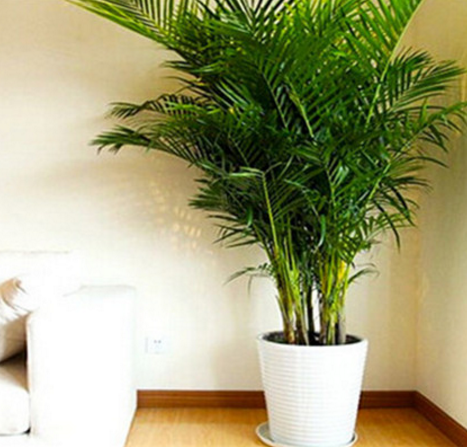
Is areca palm toxic? Can it be grown indoors?
1. Is areca palm toxic?
People who want to grow areca palm may worry about whether it is toxic. In fact, this worry is completely unnecessary: this plant is not toxic at all. Not only is it non-toxic, but as a medicinal material, areca palm can also treat many diseases. As a medicine, its main effect is to astringe and stop bleeding, and it has a good therapeutic effect on conditions such as coughing up blood and blood in the stool. It can thus be seen that the claim that areca palm is toxic is completely a rumor.
2. Can areca palm be grown indoors?
This plant is not toxic, so it can be grown indoors. The areca palm has a very graceful plant form and is highly ornamental; growing it indoors can decorate the interior with charm and interest. In addition to its ornamental role, areca palm can absorb harmful gases in the air such as formaldehyde, benzene and other highly volatile harmful gases, and has a good purifying effect on the air, which is beneficial to our health. Not only that, areca palm has a strong water evaporation capacity, so growing areca palm indoors is like placing a natural humidifier. Placing a pot of areca palm indoors can keep indoor humidity between 40%—60%. This property of areca palm can also raise the indoor temperature in winter, so growing areca palm indoors is very beneficial. On the other hand, areca palm is also relatively easy to grow indoors and relatively easy to keep alive. Areca palm is a small palm plant with very good shade tolerance, and it can also be grown in a relatively cool indoor environment.
How to repot areca palm correctly
1. Repotting time for areca palm
Areca palm needs repotting mainly because the plant's growth makes the flower pot too small to match the plant, and this will inhibit its growth; at this point it is best to repot.
The repotting time for areca palm should be from late March to mid-September each year. If it is grown in a greenhouse, repotting can be done in all four seasons.
After repotting areca palm, the pot should be placed in a slightly shaded place, so that it can recover better and avoid wilting caused by water loss.
2. Repotting method for areca palm
The general steps for repotting areca palm are to take out the plant, replace the potting soil, repot it, and care for it after repotting.
When taking out the plant, you can gently tap around the sides of the pot with your hand, so that the roots are loosened and separate from the pot. Turn the pot upside down, gently hold the plant with your hand, and then tap the bottom of the pot, and the plant will come out.
After taking out the plant, prepare new potting soil and choose a flower pot of suitable size. Then place pot shards at the bottom of the pot to promote drainage, add expanded clay pebbles and so on as a drainage layer, and then add fertilizer and soil in turn. Put in part of the soil first, then place the plant's roots into it, making sure the root system is spread out well, and continue filling with soil. After filling with soil, water thoroughly once.
Note that areca palm is often propagated by division in combination with repotting. Division is relatively simple and is mainly carried out around April.
Introduction to the functions and feng shui of indoor flowers
The feng shui relationship of indoor plant placement
1. Luck-bringing plants
How to use plants to bring good luck
Every year on March 5 or 6, according to the 24 solar terms of the lunar calendar, it is Awakening of Insects, when temperatures rise relatively quickly and spring thunder gradually begins. Flowers and trees are turning green, and as spring returns to the earth it is very suitable to place more green plants at home to decorate the home; at the same time they can also play a role in bringing good luck, because the correct use of green plants can promote wealth and dissolve negative energy.
What to note in home feng shui: for indoor planting, it is advisable to choose plants with broad leaves, and avoid the pointed, slender leaves of cacti, which easily lead to disputes and quarrels. Do not grow plants with slender leaves, as this makes the owner prone to disputes and quarrels. It is also best not to grow ferns and kudzu-like plants; such plants are relatively yin, and if they grow luxuriantly, the home easily attracts "unclean" things. You may choose more broadleaf plants with strong vitality.
Plants to note: for example, night-blooming jasmine releases a large amount of particles that strongly stimulate the sense of smell at night, which has adverse effects on patients with heart disease and high blood pressure; the flowers of oleander are toxic, and their fragrance easily makes people drowsy and reduces bodily functions; tulip flowers contain soil alkali, and too much contact makes hair fall out easily, and so on. These belong to inauspicious trees and are not suitable for planting.
Plants can also be divided by the colors of the five elements
Metal—white, apricot and gold, belonging to yellow-toned flowers, and must be paired with metal flower vessels and accessories. Among them, money tree, wan liang jin, money plant, narcissus and yellow orange are most recommended.
Wood—cyan and green. All green plants belong to this, and seed plants should be chosen, implying the meaning of "prosperity". Such as emerald small potted plants and Buddhist pine.
Water—black and blue, represented by hydroponically grown plants, paired with blue or transparent glass flower vessels, such as lucky bamboo and lucky bamboo.
Fire—red and purple, plants that bloom or bear fruit, choosing red flower vessels and flower vessels; such as anthurium, phalaenopsis and garden balsam are all very suitable.
Earth—yellow and brown, shade-tolerant indoor plants, should use black flower vessels or flower vessels inlaid with gemstones, such as emerald.
If a person's fate lacks a certain one of the five elements, they can choose plants of the related color to grow, so as to supplement what is lacking in their fate.
If they are generally people you do not know well, they can choose related plants according to the following methods;
Living room; you may refer more to the following plants;
Chrysanthemum symbolizes longevity and increased blessing, and helps stabilize the qi field and magnetic field. Note that longevity chrysanthemum and cosmos are both suitable for placing at home, but pay attention to sunlight exposure and also watch out for pests. [This is suitable for elderly people]
Orange (tangerine); "tangerine" is homophonous with "luck", so potted citrus became a household decoration for people during the Spring Festival. The golden appearance of oranges has the meaning of gold and silver treasures, and is quite helpful for increasing wealth. Note that you should not pull the kumquats off, and fallen dead branches and leaves should be cleaned up frequently.
Narcissus; wards off evil and removes filth, brings good fortune and as one wishes, and can also attract wealth. Note that before narcissus blooms, it looks like a large scallion, and it is very important to keep it fresh.
Lucky grass is also called auspicious grass. Just from its name, one knows it is a plant containing an auspicious meaning. Lucky grass is small and delicate, green all year round, and easy to grow in both soil and water, symbolizing "good fortune and as one wishes."
Lucky bamboo is also called "evergreen bamboo" and is a popular "money tree", symbolizing attracting wealth. Note not to water too much, to avoid the roots rotting because of it.
The following plants can be grown not only in offices but also in living rooms, and their effects are interchangeable.
Auspicious wealth-gathering type
Money tree, lucky bamboo, dragon blood tree, broadleaf fig, Norfolk Island pine, schefflera, areca palm, palm grass, clivia, hoya, cyclamen, citrus, tiger's tongue, bird's nest fern and so on. In office feng shui, these plants have the effects of good fortune and as one wishes, gathering wealth and bringing prosperity.
Tranquil and gentle type
Lily, spider plant, rose, calla lily, tuberose, tulip and so on, with the effects of tranquility and reaching far, and calmness of mind.
Strong and prosperous Wenchang type
Asparagus fern, sweet flag, lucky bamboo, freesia, bamboo, mountain bamboo flower and so on. These plants can strengthen people's thinking ability, calm the spirit and open the senses, and can strengthen and prosper Wenchang.
Healthy and refreshing type
Rose, carnation, orchid tree, begonia, camellia and so on, neat and refreshing, can promote physical health, and belong to the health messengers of office spaces.
Evil-dissolving and evil-driving type
Euphorbia, cactus, golden spur euphorbia, dragon bone, potted gourd and so on have powerful evil-driving strength and can control and transform external negative energy, belonging to the peace guardians of office spaces.
Bedroom; as a place for rest, the bedroom is generally not suitable for placing overly large plants, and small potted plants are better. Too many flowers and plants easily gather yin energy, and plants absorb oxygen and release carbon dioxide at night, so they easily affect people's health.
In a spacious bedroom, standing large potted plants can be chosen; in a smaller bedroom, hanging potted plants can be chosen; or plants can be placed in exquisite decorative pots or set on the windowsill or dressing table.
Plants that give off sweet fragrances, such as jasmine, hyacinth or night-blooming jasmine, can let people fall asleep soundly amid natural fragrance. Placing plants such as clivia, golden pothos and asparagus fern gives a soft feeling and can relax the nerves. For bedroom plants, the growing medium can use sphagnum moss instead of soil, to keep the room clean.
In the bedroom, one can grow many plants that enhance sweet feelings, such as lily, lotus banana and silk tree, all of which express the meaning of marital love and lasting harmony.
2. The connection between green plants and marriage feng shui
At first hearing, it seems impossible to connect plants with marriage. In everyone's impression, people probably only know that some plants represent a certain meaning, such as asparagus fern symbolizing happy and sweet marriage and everlasting love, and calla lily symbolizing two people forever of one heart and good fortune, and so on. But from another angle, green plants not only give people a fresh, soft and pleasant feeling, they also subtly influence the relationship between husband and wife after marriage.
In feng shui, green is the most auspicious healthy color system. If suitable plants are placed in the home, it can not only create a stable, quiet, warm and peaceful environment, but to a certain extent can also enhance "harmony" between husband and wife. For example, hot summer days easily make people irritable; especially after both husband and wife come home from work, along with physical discomfort, they may quarrel over a trivial matter. But if they see large green leaves or exquisite greenery, the "summer heat" will also dissipate.
In fact, in ancient China, people always liked to connect plants with marriage. For example, the Book of Songs describes that a man about to marry, when preparing for the wedding and arranging the bridal chamber, said: "I scatter lotus leaves on the roof and hang sweet flag and iris on the wall; let mint fill the courtyard with fragrance, and the roof beams are made of camphor; on the walls are palm leaves, on the door is magnolia, on the roof ridge are peonies, and vines of all colors are woven into curtains. The ground is spread with grass mats, and on the mats hang white magnolias; orchids give off fragrance, hazelnuts and lotus entwine, butterfly flowers and lilies reflect each other, and a hundred flowers bloom in the garden."
In addition, green plants are also a huge "carbon-absorbing oxygen-producing factory." The green leaves of plants absorb carbon dioxide from the air and, under the action of sunlight and chlorophyll, react with the water absorbed by the plant to form glucose, while releasing oxygen, and then glucose molecules form starch. Therefore, placing some green plants in a room, such as lucky bamboo and money tree, not only symbolizes the vigorous vitality of marriage, but can also produce fresh oxygen, which is greatly beneficial to health.
Below is a brief introduction to the placement positions of plants that make marriage "prosper" and "weaken":
1. Place some long-green plants with thick leaves or large leaves in the prosperous direction, which can achieve the effect of "prospering," such as sago palm, rubber tree, banana and lucky bamboo.
2. In the "declining position," it is suitable to place thorny plants, such as "dragon bone," "jade unicorn," and various cacti. These thorny plants, placed in the "declining position" or "inauspicious position," have the effect of "dissolving negative energy" in feng shui.
But note that some plants release oxygen during the day and compete with people for oxygen at night, and some plants have cancer-promoting effects, such as datura, sedge, red garden balsam, scissors grass, broadleaf kiwifruit and so on, so when choosing, you must understand them clearly.
3. Plant placement feng shui
1. Front door
If the front door faces stairs, you can use
crinum lily, fish-tail palm, palm grass
to dissolve negative energy. Place them at the conflicting position. Also, if the balcony window faces negative energy, you can use
cactus, rose, jade unicorn
to dissolve negative energy, and potted gourds can also dissolve negative energy.
2. Entryway
Because the entryway is the area where family visitors form their first impression after entering the interior, the indoor plants placed there play an important role. Designs such as large plants with lighting, stylish trees, and combinations of blooming orchid pots are all suitable for the entryway. In addition, between the entryway and the living room, consider placing the same type of plants to connect these two spaces.
Placing plants in the entryway greens the indoor environment, increases vitality, makes the auspicious more auspicious, and turns the inauspicious into auspicious. However, it must be noted that plants placed in the entryway should mainly be evergreen foliage plants. For example
sago palm, money tree, golden pothos and foliage fig
and so on. Thorny plants such as cacti, roses and rhododendrons must never be placed in the entryway, lest they damage the feng shui there, and entryway plants must be kept evergreen; if any turn yellow or withered, replace them as soon as possible.
3. Living room
The living room is the space where indoor plants are most often placed in the home. The most visually striking and most expensive plants should all be placed in the living room. Living room plants are mainly used to decorate furniture, using plants at varying heights to coordinate the home's monotonous straight-line state. When arranging plants, first focus on decorative beauty; the number should not be too many, as too many are not only messy but also grow poorly. When choosing plants, pay attention to matching sizes. In addition, they should be placed against the wall so as not to hinder residents' movement.
From the placement of plants in the living room, the host's personality traits can also be reflected: the feathery leaves of ferns give a friendly feeling; goose-down texture makes people gentle; crown-of-thorns shows hard, prickly stems that make people keep their distance; bamboo styling reflects an unyielding character; orchids have the character of being quiet and fragrant, elegant and refined. The temperament of the plants coordinates with the host's personality and the indoor atmosphere.
When arranging the living room, avoid scattering messy green plants or ordinary ornamental flowers on the windowsill, fireplace, television and other positions. Carefully choosing plant types can improve the interior: for example, using hanging baskets and trailing plants can make an overly tall room appear lower; a relatively low room can use neat, upright plants to make the interior appear taller; plants with small leaves and branches extending in arcs can make a narrow room appear more spacious.
Balanced plant proportions are extremely important, and the application of contrast should not be ignored either. A living room with magnificent decoration can be enhanced with plants with large, simple leaves, while foliage plants with complex forms and varied colors can make a monotonous room richer and give the living room a spacious, comfortable feeling.
Usually lucky bamboo, Norfolk Island pine, cactus, Buddhist pine, schefflera, palm grass, money tree, clivia, hoya, orchid, cyclamen, citrus, bird's nest fern, dragon blood tree and other plants are called "auspicious things" in feng shui, and can imply good fortune and as one wishes, gathering wealth and bringing prosperity.
4. Bedroom
The bedroom pursues an elegant, clean, quiet and comfortable atmosphere. Placing plants inside helps improve the quality of rest and sleep. Plants that give off sweet fragrances, such as jasmine, hyacinth or night-blooming jasmine, can let people fall asleep soundly amid natural fragrance. Placing plants such as clivia, golden pothos and asparagus fern gives a soft feeling and can relax the nerves. For bedroom plants, the growing medium can use sphagnum moss instead of soil, to keep the room clean.
In a spacious bedroom, standing large potted plants can be chosen; in a smaller bedroom, hanging potted plants can be chosen; or plants can be placed in exquisite decorative pots and set on the windowsill or dressing table.
5. Dining room
The dining room is a place for family reunion, and its position is close to the kitchen, making watering easy. Arranging some potted plants with brilliant flowers, such as begonia and poinsettia, can add a cheerful atmosphere, or place hanging potted plants rich in color changes on a wooden partition cabinet to separate the dining room from other functional areas. Modern people pay great attention to the cleanliness of the dining area, so dining room plants are best grown with sterile culture soil.
In addition, when placing plants in the dining room, also note: the plants' growth condition should be good, and their form must be low, so as not to hinder face-to-face communication and conversation. Suitable plants include: saffron crocus, cyclamen, four-season begonia, ivy and so on, but in the dining room, avoid placing plants with too strong a scent, such as hyacinth.
6. Kitchen
The rate of plants appearing in the kitchen is second only to the living room. This is because some family members spend a lot of time in the kitchen every day, and the environmental humidity is also very suitable for most plants. In addition, ordinary household kitchens mostly use white or light-colored decoration and stainless steel sinks, and colorful plants can soften hard lines and inject a stream of vitality into the kitchen.
Usually, in north-facing rooms with fewer windows, decorating with some potted plants can eliminate the feeling of cold. Because there is little sunlight, shade-loving plants should be chosen, such as Guangdong evergreen and star point wood and the like. The kitchen is a workspace with frequent operations and scattered items, and smoke and temperature are both relatively high, so large potted plants are not suitable, while hanging potted plants are more suitable. Among them, spider plant is best; placing a pot of spider plant in a room can absorb harmful gases such as carbon monoxide, carbon dioxide, sulfur dioxide and nitrogen oxides within 24 hours, playing the role of an air filter.
7. Bathroom
Because the bathroom has high humidity and large temperature differences between hot and cold, growing moisture-tolerant ornamental green plants can absorb dirty air, so ferns, weeping fig, golden pothos and so on are suitable. Of course, if the bathroom is both spacious and bright and has air conditioning, then more brilliantly colored plants such as ornamental bromeliads, arrowroot and cymbidium can be grown, decorating the bathroom like a mini garden and making people enjoy it.
8. Balcony
Because the balcony is relatively open and has sufficient sunlight, it is suitable for growing all kinds of brightly colored flowers and evergreen plants. You can also use a combination of hanging baskets, flowering plants placed on railings, and ornamental potted plants placed against the wall to decorate the balcony. Placing some flowers and plants on the balcony, in addition to beautifying the environment, also has good feng shui effects. There are many plants suitable for growing on the balcony, and they can mostly be divided into two major categories: those that prosper and those that dissolve negative energy.
If looking out from the balcony, the nearby scenery is beautiful and there is no form of negative energy, then you should place plants that can achieve a prospering effect. The plants placed on the balcony that also have a strong feng shui effect are roughly the following:
1. Lucky bamboo: belongs to the Araceae family, with thick and strong stems and thick, large, dark green leaves, and extremely strong vitality. The large leaves of large-leaf lucky bamboo spread out like thick palms reaching out, drawing in qi and receiving blessings from outside, and have a powerful prospering effect on home feng shui, so the larger the leaves of lucky bamboo, the better, and it should be kept evergreen.
2. Money plant: its leaves are thick and full, easy to grow, with vigorous vitality, absorbing external metal qi, and is extremely helpful for bringing wealth to the home.
3. Sago palm: also called dragon blood tree. The most popular on the market is the soil-grown Brazilian sago palm. The leaves of sago palm are narrow and long, with yellow spots in the center. Sago palm implies strength and supplements the home's qi and blood, and is one of the most important prospering plants.
4. Palm grass: its stems are relatively thin, and its leaves are narrow and long. Planting palm grass on the balcony can keep the residence safe.
5. Rubber tree: Indian rubber tree, with a straight and upright trunk, thick and glossy leaves, strong growth ability and easy to grow, suitable for both outdoor and indoor planting.
6. Money tree: its characteristics are thick and strong stems, and pointed, long, dark green leaves. It is tolerant of growing and easy to grow, full of vitality and vigor.
7. Money tree: its leaves are slender, and its color is dark green. It belongs to shade-loving plants and is extremely rich in an air of wealth and honor.
If looking out from the balcony, the surrounding environment is harsh, with nearby sharp corners rushing at it, a street rushing straight at it, a street curving away, or facing a temple, hospital, cemetery and so on, then you must place plants that can dissolve negative energy. What differs between negative-energy-dissolving plants and prospering plants is that their stems or flowers and leaves have thorns; thorns can confront external negative energy and make it retreat, and can play a role in protecting the home. Such negative-energy-dissolving plants include cactus, rose, rhododendron, dragon bone, jade unicorn and so on.
Flowers and plants not suitable for growing at home
1. Flowers that produce unusual odors
Pine and cypress types, jade clove, elderberry and so on. Pine and cypress types secrete lipid substances and release a relatively strong camphor-like fragrance; smelling it for a long time can cause decreased appetite and nausea. The unusual odor released by jade clove can cause people to gasp and feel depressed.
2. Oxygen-consuming flowers and plants
Clove, night-blooming jasmine and so on. When they carry out photosynthesis, they consume a large amount of oxygen, affecting human health. When night-blooming jasmine stops photosynthesis at night, it releases a large amount of waste gas, which can make patients with high blood pressure and heart disease feel depressed.
3. Flowers and plants that cause allergies
Lantana, hydrangea, pelargonium and so on. Once people touch or stroke such flowers and plants, they can cause skin allergies, or in severe cases unbearable itching and red rashes.
How to use plants to bring good luck
Every year on March 5 or 6, according to the 24 solar terms of the lunar calendar, it is Awakening of Insects, when temperatures rise relatively quickly and spring thunder gradually begins. Flowers and trees are turning green, and as spring returns to the earth it is very suitable to place more green plants at home to decorate the home; at the same time they can also play a role in bringing good luck, because the correct use of green plants can promote wealth and dissolve negative energy.What to note in home feng shui: for indoor planting, it is advisable to choose plants with broad leaves, and avoid the pointed, slender leaves of cacti, which easily lead to disputes and quarrels. Do not grow plants with slender leaves, as this makes the owner prone to disputes and quarrels. It is also best not to grow ferns and kudzu-like plants; such plants are relatively yin, and if they grow luxuriantly, the home easily attracts "unclean" things. You may choose more broadleaf plants with strong vitality.
Plants to note: for example, night-blooming jasmine releases a large amount of particles that strongly stimulate the sense of smell at night, which has adverse effects on patients with heart disease and high blood pressure; the flowers of oleander are toxic, and their fragrance easily makes people drowsy and reduces bodily functions; tulip flowers contain soil alkali, and too much contact makes hair fall out easily, and so on. These belong to inauspicious trees and are not suitable for planting.
Plants can also be divided by the colors of the five elements
Metal -- white, apricot and gold, belonging to yellow-toned flowers, and must be paired with metal flower vessels and accessories. Among them, money tree, wan liang jin, money plant, narcissus and yellow orange are most recommended.
Wood -- cyan and green. All green plants belong to this, and seed plants should be chosen, implying the meaning of "prosperity". Such as emerald small potted plants and Buddhist pine.
Water -- black and blue, represented by hydroponically grown plants, paired with blue or transparent glass flower vessels, such as lucky bamboo and lucky bamboo.
Fire -- red and purple, plants that bloom or bear fruit, choosing red flower vessels and flower vessels; such as anthurium, phalaenopsis and garden balsam are all very suitable.
Earth -- yellow and brown, shade-tolerant indoor plants, should use black flower vessels or flower vessels inlaid with gemstones, such as emerald.
If a person's birth chart lacks one of the five elements, they can choose plants of the corresponding color to grow, so as to supplement what is lacking in their fate.
If it is generally someone you do not know well, you can use the following methods to choose the relevant plants;
Living room; you can refer more to the following plants;
Chrysanthemums symbolize longevity and increased blessings, and help stabilize the aura and magnetic field. Note that longevity chrysanthemums and cosmos are both suitable for placing at home, but pay attention to sunlight exposure and also watch out for pests. [This is suitable for elderly people]
Orange (mandarin orange)
Mandarin orange: "orange" (ju) is homophones with "luck" (ji), so potted citrus plants have become a household decoration during the Spring Festival. The golden appearance of oranges carries the meaning of gold and silver treasures, and is quite helpful for increasing wealth. Be careful not to pull off the kumquats, and clean up dead branches and fallen leaves frequently.
Narcissus; wards off evil and removes filth, brings good fortune and wishes fulfilled, and can also attract wealth. Note that before the narcissus blooms, it looks like a large scallion, so keeping it fresh is very important.
Lucky grass, also called auspicious grass, as soon as you see its name, you know it is a plant with an auspicious meaning. Lucky grass is small and delicate, evergreen all year round, and easy to grow in both soil and water, symbolizing "good fortune and wishes fulfilled."
Lucky bamboo, also known as "ten-thousand-year bamboo," is a popular "money tree," symbolizing attracting wealth. Be careful not to water it too much, lest the roots rot because of it.
The following plants can be grown not only in the office but also in the living room, and their effects are interchangeable.
Auspicious wealth-gathering type
Money tree, lucky bamboo, dragon blood tree, broad-leaf ficus, Norfolk Island pine, schefflera, areca palm, palm bamboo, clivia, hoya, cyclamen, citrus, tiger tail orchid, bird's nest fern, etc. In office feng shui, these plants have the effect of bringing good fortune and gathering wealth and prosperity.
Quiet and gentle type
Lily, spider plant, rose, calla lily, tuberose, tulip, etc., have the effect of bringing tranquility and peace of mind.
Strengthening Wenchang type
Asparagus fern, acorus, lucky bamboo, freesia, bamboo fern, purple bergenia, etc. These plants can strengthen people's thinking ability, calm the spirit and open the mind, and can strengthen Wenchang.
Healthy and refreshing type
Rose, carnation, orchid, begonia, camellia, etc., are neat and refreshing, can promote physical health, and are the health messengers of office spaces.
Evil-dissolving and evil-repelling type
Euphorbia, cactus, golden thorn, dragon bone, potted gourd, etc. have powerful evil-repelling strength and can restrain and transform external evil, belonging to the peace guardians of office spaces.
Bedroom; as a place for rest, the bedroom is generally not suitable for placing overly large plants; small potted plants are better. Too many flowers and plants easily gather yin energy, and plants absorb oxygen and release carbon dioxide at night, so they can easily affect people's health.
In a spacious bedroom, you can choose standing large potted plants; in a smaller bedroom, you can choose hanging potted plants; or put the plants in exquisite decorative pots or place them on the windowsill or dressing table.
Plants that give off sweet fragrances, such as jasmine, hyacinth, or night-blooming cereus, can let people fall asleep soundly in natural fragrance. Placing plants such as clivia, golden pothos, and asparagus fern gives a soft feeling and can relax the nerves. For the growing medium of bedroom plants, sphagnum moss can be used instead of soil to keep the room clean.
In the bedroom, you can grow many plants that enhance sweet affection, such as lily, lotus banana, and silk tree, all of which convey the meaning of marital love and lasting harmony.