-
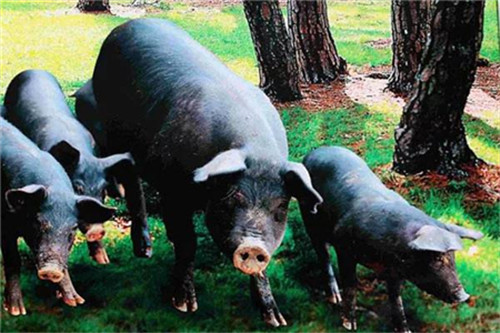
How to properly provide health care and reduce inflammation in sows after farrowing?
How should sows be properly given health care and anti-inflammatory treatment after farrowing?
-
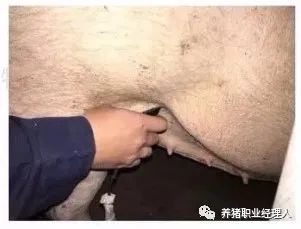
Proper use of ultrasound for pregnancy testing
How to correctly use ultrasound for pregnancy testing
-
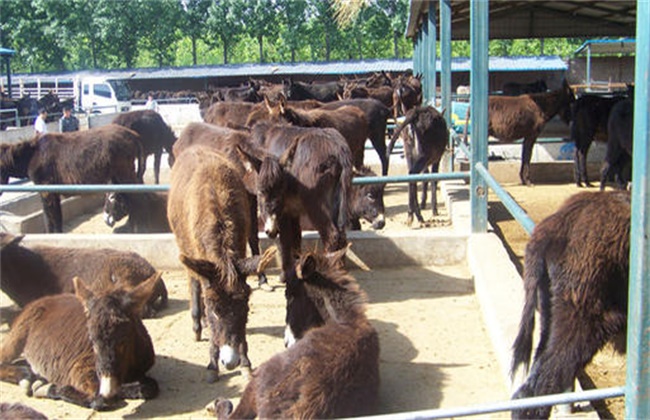
How can deworming be done properly during meat donkey farming?
How should deworming be done in meat donkey farming?
-
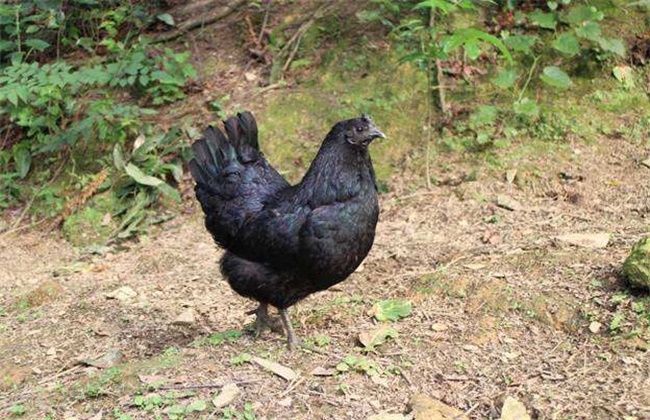
A Detailed Guide to Methods for Waking Broody Silkie Chickens: Teaching You How to Properly Wake a Silkie Chicken
Methods for Waking Broody Silkie Chickens
-
How to properly and reasonably fertilize fish ponds in aquaculture
Conventional fertilizing methods have certain advantages and disadvantages. How to fertilize, how to fertilize correctly, let's discuss with you the fertilizing before fry release and the pros and cons of conventional fertilizing...
-

What are the main properties and characteristics of snake venom?
Snake venom is a toxic protein and polypeptide substance containing various enzymes secreted by venomous snakes, and it is also the substance that causes poisoning reactions after a venomous snake bites a person. Fresh snake venom is a somewhat fishy-smelling, egg-white-like viscous liquid, appearing yellow, pale yellow, green, or even colorless. When fresh, it shows a neutral or weakly acidic reaction; after standing for a while, it may become alkaline. Its water content is 50%-75%, and its specific gravity is between 1.030 and 1.080. Fresh venom readily produces foam when exposed to air, and at room temperature it easily spoils and deteriorates after 24 hours, losing its toxicity. In a refrigerator it can be preserved for 15-30 days, and at 40°C it can be stored for a longer time. After vacuum drying or freeze-drying treatment, snake venom can be preserved at room temperature for 20-30 years, but its toxicity intensity and the activity of some enzymes will decrease to varying degrees, and it can still dissolve in water. Snake venom loses its toxicity after exposure to ultraviolet light and heating. Strong acids, strong bases, and heavy metal salts, which can precipitate and denature proteins, can all destroy snake venom. Snake venom is also easily decomposed and destroyed by oxidants, reducing agents, proteolytic enzymes, and the like, thereby losing its toxicity. After formaldehyde treatment, it also loses its toxicity, but its antigenicity can still be retained.
-
Detailed explanation of honey storage methods: proper preservation keeps it from spoiling
Proper storage of honey is an important part of ensuring its quality, so during storage the following points should be noted: 1. Honey is an acidic, viscous liquid that is corrosive to metals such as zinc, iron and aluminum as well as to plastic buckets. To avoid contaminating the honey, do not use metal containers without food-grade coating or plastic buckets to store honey; instead, use containers such as glass bottles and porcelain jars. 2. Honey is highly hygroscopic and readily absorbs odors, so it must be stored sealed to avoid absorbing water and fermenting, as well as picking up
-
Proper removal of silkworm excrement can effectively reduce the occurrence of silkworm diseases
Silkworm excrement not only harbors the pathogens of viral flacherie, but is also a breeding and transmission site for the pathogens of many silkworm diseases such as empty-head soft rot, bacterial soft rot, and muscardine. Data show that when pathogen-carrying silkworm excrement from spring-reared silkworms is left for 15 days and then comes into contact with mulberry leaves, it can cause the incidence of midgut-type viral flacherie in silkworms that eat those leaves to reach 75%; when pathogen-carrying silkworm excrement from late-autumn-reared silkworms is left for 1 day and then comes into contact with mulberry leaves, it can cause the incidence of midgut-type viral flacherie in silkworms that eat those leaves to reach 60%, and after 7 days the incidence reaches 100%. Therefore, during routine rearing,
-
Pigs' drinking water cannot be ignored; raising pigs well requires attention to proper drinking water
Water is an important substance for the life activities of all animals. Pigs are no exception. In pigs, all life and physiological activities, including the digestion and absorption of nutrients, excretion of waste, blood circulation, respiration, and regulation of body temperature, depend on water. Once a pig's body lacks water, its life and physiological activities will be affected, leading to poor digestion and absorption of pig feed, thicker and more concentrated blood, elevated body temperature, and so on, which reduces feed conversion efficiency, increases feeding costs, and lowers breeding profitability. At the same time, it can also hinder pig growth and development and trigger various diseases. 1. Pig drinking water
-
Characteristics, properties, cultivation and utilization of bermudagrass
A species of the genus Cynodon in the grass family (Poaceae), scientific name Cynodon dactylon (L.) Pars., an overwintering annual herb. Also known as wiregrass and "xingyizhi". It is an excellent forage grass, turfgrass and soil-and-water conservation crop. It is distributed throughout the warm regions of the world; in China it is found south of the Yellow River basin. Fibrous roots are fine and tough; it has rhizomes or stolons, with internodes of varying length; the part of the stem lying flat on the ground reaches more than 1 m in length and roots and branches at the nodes, while the upright part is 10-30 cm tall; leaves
条件筛选