-
-
-
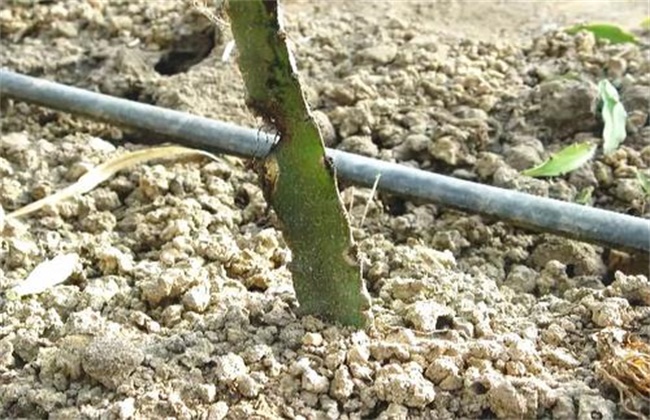
How to solve the four major problems of dragon fruit roots? A full breakdown of the methods
The four major problems of dragon fruit roots and their solutions
-
-
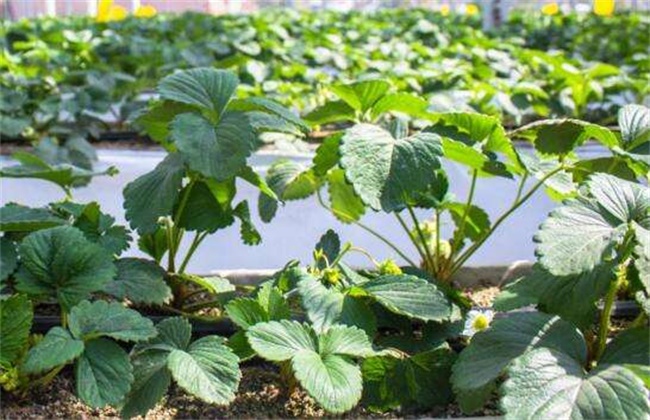
What are the problems that are extremely likely to occur with greenhouse strawberries?
Problems that are extremely likely to occur with greenhouse strawberries
-

What are the common problems in fruit tree training and pruning?
Common problems in fruit tree training and pruning
-

Analysis of Common Problems and Countermeasures in Nanguo Pear Production
I. Planting Density Issues In old Nanguo pear orchards, the spacing between trees is large, the number of trees per unit area is small, the tree canopy is tall, management is extremely inconvenient, production costs are high, early yields per unit area are low, and the trees take a long time to reach full bearing age. Based on current advanced management methods and techniques, rational close planting is advocated. Given that Nanguo pear trees exist both as standard-rootstock trees and as dwarfing interstock trees, we believe that the suitable planting density for standard-rootstock Nanguo pear trees is a tree spacing of 3-4 m and a row spacing of 4-5 m, with 33-35 trees planted per mu of orchard. With this tree and row spacing, through the comprehensive application of various pruning measures, the trees can enter the high-yield period earlier, and the canopy spread can be controlled at 3-4 m. If water and fertilizer conditions are good and the canopy cannot be controlled, in the later stage the method of removing every other tree and removing every other row can be adopted to gradually increase the tree and row spacing. However, when establishing the orchard, permanent trees and temporary trees must be designated. Permanent trees should use a large-canopy tree form, while temporary trees should use a small-canopy tree form that bears fruit early. As the canopy of the permanent trees continuously expands, the canopy of the temporary trees should be gradually reduced to ensure the tree form and yield of the permanent trees. For dwarfing interstock Nanguo pear trees, the suitable planting density is generally a tree spacing of 1.5-2 m and a row spacing of 3 m, with a planting density of 111-148 trees per mu. On mountainous land with high elevation and steep slopes, the soil layer is often thin, management is inconvenient, and the canopy does not grow large, so under the condition of not affecting orchard operations, the planting density can be appropriately denser. On flat land with fertile soil, the canopy generally grows tall, so the planting density can be appropriately sparser.
-
8 common appearance problems of bagged Emerald pear and their solutions
Emerald is an excellent new pear variety bred by the Zhengzhou Fruit Research Institute, developed by crossing New Century and Zaosu. Since 2000, after 6 years of bagged cultivation through top-grafting to change the canopy in our city, we have found that this variety has a regular fruit shape, a smooth and glossy fruit surface, creamy white flesh, a crisp and tender texture with abundant juice, and few stone cells, making it an early-maturing pear variety of excellent quality. However, in production we have found that bagged pears often show abnormal phenomena such as black wrinkling, fruit russeting, tiger-skin markings, floral green coloration on the fruit surface, black spots, cracking, and deformities that affect the external quality of the fruit. For this reason we conducted an investigation and analysis and proposed solutions.
-
Common Problems in Indian Jujube Production and Their Solutions
Although Indian jujube (Ziziphus mauritiana) has been successfully introduced and trial-planted across various parts of southern China, it is still in its early stages, and the area under commercial production is currently small. However, Indian jujube cultivation in China currently suffers from problems such as mixed and confused varieties, extensive and careless cultivation management, and poor marketing channels, all of which need to be further improved and resolved. 1. Weak regional planning for development and mixed, confused varieties. Indian jujube has the characteristics of early fruiting and high yield (planted in the same year, it bears fruit in the same year) and excellent quality with high prices. Combined with heavy publicity in the media by some fruit seedling suppliers, this has set off a wave of Indian jujube planting in several southern provinces in recent years.
-
Problems and Countermeasures in Off-Season Cultivation of Longan
The use of potassium chlorate to promote flowering in longan was first pioneered in Taiwan, China, and its application in production for off-season longan cultivation began in Thailand. In recent years, longan-producing areas across our province have also been experimenting with potassium chlorate to promote flowering for off-season longan cultivation. Some have achieved certain economic benefits, but most orchards have shown poor or even no...
条件筛选