Problems and Countermeasures in Off-Season Cultivation of Longan
The use of potassium chlorate to promote flowering in longan was first pioneered in Taiwan, China, and its application in production for off-season longan cultivation began in Thailand. In recent years, longan-producing areas across our province have also been experimenting with potassium chlorate to promote flowering for off-season longan cultivation. Some have achieved certain economic benefits, but most orchards have shown poor or even no...
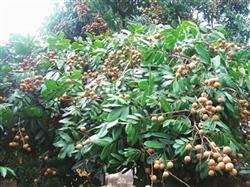
The use of potassium chlorate to promote flowering in longan was first pioneered in Taiwan, China, and its application in production for off-season longan cultivation began in Thailand. In recent years, longan-producing areas across our province have also been experimenting with potassium chlorate to promote flowering for off-season longan cultivation. Some have achieved certain economic benefits, but most orchards have shown poor or even no results after application. The authors intend to offer some views on the application of potassium chlorate in production for everyone's reference.
Existing Problems
1. Uneven Application Results
Responses to this technology vary across our province and Hainan Province. Some places have achieved good results, but more places have reported poor results, with some trees producing no flowers at all or very few flowers; even among trees that flowered, flowers on different branches differed greatly in flowering period, resulting in flowers and fruit on the same tree, or after flowering, adverse weather (such as low-temperature overcast rain or high temperatures) or inadequate pest and disease control and fertilizer and water management led to massive flower and fruit drop; some trees produced a certain yield, but the fruit size was uneven and the commercial value was poor.
2. Application Technology Is Still Immature
In fact, the technology of applying the strong oxidizer potassium chlorate for off-season longan cultivation is itself still immature and requires in-depth investigation by researchers. Therefore, this technology is currently not suitable for large-scale promotion.
① Application Method Issues Currently, potassium chlorate is applied either to the soil or to the foliage. Based on existing observations, it is generally reported that soil application is more effective than foliar application, though further research is still needed. For soil application, what is the most effective method? Should it be applied to the entire root zone or only locally? Should it be applied deep or shallow? There is no definitive conclusion yet.
② Application Timing Issues In which season - spring, summer, autumn or winter - is application most effective? Are there differences in the optimal timing of application among different regions, different years, and even different cultivars and different tree ages? These questions require in-depth investigation.
③ Dosage Issues Based on current observations, there is considerable arbitrariness in the application rate of potassium chlorate in production, with per-tree application rates ranging from 0.1 kg, 0.5 kg or more. The application rate should be determined according to specific conditions such as tree size, terrain, soil nature, and the climate of the application season (especially rainfall), and systematic research is needed.
④ Consequences of Continuous Application Can potassium chlorate be applied continuously over the long term? What effects does long-term application of potassium chlorate have on the tree? What effects does it have on soil quality and fertility? These are currently unclear.
Countermeasures
1. Strengthen Research on the Mechanism of Flower Promotion by Potassium Chlorate
Regarding the mechanism by which potassium chlorate promotes flowering, although some reports exist, much remains unclear. Based on the observation that soil application is more effective, it is speculated that potassium chlorate promotes flowering mainly by affecting the root system. However, whether the flower-promoting effect is due to root damage and water control caused by its strong oxidizing action, or due to the chlorate ions being absorbed by the roots and then affecting the metabolic activities of the tree, warrants in-depth research.
2. Strengthen the Management of the Sale and Use of Potassium Chlorate
Potassium chlorate can be used as a raw material for processing explosives and is prone to explosion upon strong impact. Therefore, improper handling can lead to accidents. It is recommended that relevant government departments strengthen the management of the sale and use of this chemical. Distributors should only be permitted to sell potassium chlorate with authorization from relevant departments, and fruit growers must use it under the guidance of technicians to prevent accidents.
3. Technical Measures to Improve the Effectiveness of Potassium Chlorate in Off-Season Longan Cultivation
① Key Technical Points for Using Potassium Chlorate to Promote Flowering The application of potassium chlorate to promote flowering must be accompanied by related technical measures to achieve good results. These measures can be summarized as "three observations and two preventions." They are described below:
(1) Three Observations:
First, observe the tree - the tree must be vigorous: Plants with vigorous vegetative growth often have poorer flowering ability, and generally achieve better flower-promoting results after potassium chlorate application. Conversely, if potassium chlorate is applied to trees with poor growth, it will severely affect the vegetative growth and nutrient accumulation of the tree. Even if flower promotion succeeds, poor nutrition will result in poor fruit development, uneven size, and poor commercial value. It will also affect the subsequent growth and fruiting of the tree.
Second, observe the shoots - apply after new shoots have matured: Although some have applied it during the tender shoot stage and still produced flower buds, we believe that the flower quality is better when applied after new shoots have matured. This is because flower bud differentiation requires substantial nutrition, and when the bearing mother branch has not yet fully matured, stored nutrient accumulation is very low. Flower buds differentiated at this time are inherently nutrient-deficient, so flower quality is naturally not high.
Third, observe water - prevent soil waterlogging after application: Excessive soil moisture or waterlogging dilutes the concentration of potassium chlorate and reduces the flower-promoting effect. Therefore, do not irrigate heavily immediately after application; keeping the soil moderately moist is sufficient. During the rainy season, plastic film should be laid over the root zone under the canopy after application to prevent rainwater from diluting or washing away the potassium chlorate.
(2) Two Preventions:
First, prevent the conflict between shoots and fruit: During the flowering period and the young fruit growth period after petal fall, care should be taken to prevent branches and shoots from sprouting and growing, so that new shoots do not compete with flowers and young fruit for nutrients and cause massive flower and fruit drop.
Second, prevent the formation of thick-skinned small fruit: If young fruit encounters high summer temperatures or low winter temperatures during the growth period, the fruit will develop thick skin and become small due to sunburn or poor development, losing its commercial quality. This problem can be addressed by spraying water and providing shade in summer to lower fruit surface temperature, and by spraying foliar fertilizers and growth regulators in autumn and winter.
② Select Appropriate Application Timing and Strengthen Cultivation Management After Application Deviating from the normal phenological period will subject the growth and development of various tree organs (especially flowers and fruit) to severe environmental stress, resulting in poor or abnormal development. Therefore, the greatest difficulty in commercial off-season longan cultivation lies in maintaining the internal and external quality and commercial value of the fruit after the phenological period of flower and fruit development has been forcibly altered. In fact, truly achieving this is nearly impossible. Therefore, we believe that to maximize the benefits of potassium chlorate in production, it is best used to increase the yield of in-season longan. It can also be used in spring as a remedial measure to promote flowering and fruiting in trees that did not bear fruit in the normal season. Of course, if large-scale temperature-controlled facilities can be built, potassium chlorate can be used at any time to assist in off-season longan cultivation. However, the high initial investment makes this approach currently impractical for widespread implementation in our country. Nevertheless, under natural conditions, small-scale off-season longan cultivation in suitable locations is certainly worth attempting. Since applying potassium chlorate to promote flowering in different seasons will present different problems in production, targeted measures must be taken to overcome these problems in order to achieve better results.
Spring application for autumn ripening: Apply when there is abundant rain; after application, the soil surface in the root zone should be covered with plastic film to prevent rainwater from washing away or diluting the potassium chlorate. The young fruit development period coincides with high summer temperatures, so attention should be paid to shading and water spraying to prevent sunburn. It is also necessary to prevent excessive new shoot growth, which can cause severe fruit drop.
Summer application for winter ripening: Flowering occurs during the peak summer heat, when insect activity is minimal, making poor pollination and fertilization likely. Artificial pollination should be strengthened. At the same time, summer new shoot growth is vigorous, so shoot growth should be controlled to protect flowers and fruit. In the later stage of fruit development, winter approaches, temperatures gradually decline, and sunshine decreases, so the tree canopy should be kept well-ventilated and well-lit to reduce ineffective branches and leaves. Early fruit thinning should also be carried out to ensure that limited nutrients are concentrated on supplying fruit with potential. In the late stage of fruit growth, insulation and cold protection are also needed to prevent massive pre-harvest fruit drop. Overall, "summer application for winter ripening" off-season longan cultivation is relatively difficult, and the commercial value is not high. Unless in the southernmost areas of our province, it is generally not advisable.
Winter application for spring ripening: The flowering period falls in late autumn and early winter, when temperatures are relatively low, sunshine is poor, and there is almost no insect activity, making pollination and fertilization a major problem. The young fruit development period falls in the low-temperature winter season, making massive fruit drop likely. This can be attempted in southern regions (such as Hainan). One month before and after the normal season: Management is similar to in-season longan, and this has the greatest potential for commercial application.