What are the problems that are extremely likely to occur with greenhouse strawberries?
Through greenhouses and polytunnels, strawberries can now be cultivated even in winter in good time, and this has become an important way for farmers in various places to earn income and get rich. Some achieve considerable returns, but others, for a variety of reasons, get low yields or poor quality. The main reason is that several problems are extremely likely to occur during cultivation, seriously affecting economic returns. Let's take a look below.
1. Only flower buds, no blooming
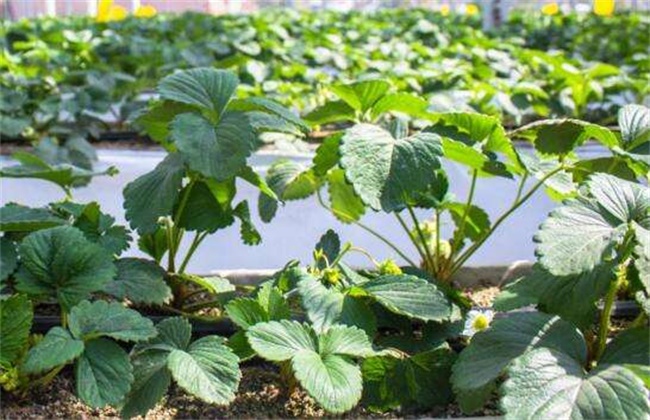
Many farmers report that the strawberries they grow have thick, sturdy rhizomes, dark green leaves, and normal leaf growth, but they only form flower buds and do not bloom, and the reason is puzzling. There are many reasons why strawberries only form flower buds and do not bloom. First, excessive application of nitrogen fertilizer during fertilization causes excessive vegetative growth of the plant, which is not conducive to flower bud differentiation. Some farmers also apply large amounts of plant growth hormones to regulate flower bud formation, using gibberellin and auxin, which is also not conducive to flower bud differentiation. Temperature and light are also important factors affecting the formation of strawberry flower bud differentiation. If temperature and light are not regulated properly, flower bud formation will be hindered. In addition, watering strawberries too much, when fertilizer is sufficient, leads to excessive vegetative growth, causing too many leaves or insufficient leaves, which also delays flower bud differentiation.
Solution: In response to the above reasons for only forming flower buds and not blooming, during cultivation, fertilization must be done reasonably. On the basis of controlling nitrogen fertilizer, increase the application of phosphorus and potassium fertilizer. Regularly remove leaves, especially old leaves, to reduce nutrient consumption, increase nutrient accumulation, and promote flower bud differentiation.
2. Poor coloring
Many fruit growers, when entering the harvest period, find that the fruit colors unevenly, with the fruit appearing pink, or the space between fruits still green. Although this does not affect taste or flavor, it seriously affects appearance and makes it impossible to sell at a high price. The main reason for poor coloring of strawberries is low temperature and poor light, which affect the formation and expression of endogenous hormones in the fruit, affect chlorophyll degradation and anthocyanin formation, and thus cause poor coloring. Strawberries need to be kept at 10-25°C to color normally, with 20-25°C being the best, giving good coloring results and fast coloring. If continuous low temperature occurs, or the temperature is too high and the light is too strong, anthocyanin formation will be slow and poor coloring will occur.
Solution: Therefore, when cultivating strawberries, the temperature and light conditions in the greenhouse should be well controlled. During the fruit expansion period, keep the daytime temperature at 20-25°C, and the nighttime temperature must not be lower than 5°C. If the nighttime temperature is too low, add straw curtains. During the growing period, brassinolide can be sprayed, which can promote rooting, improve cold resistance, and promote coloring.
3. Damage from powdery mildew
Strawberries are extremely susceptible to powdery mildew in low-temperature and high-humidity environments. From the seedling stage to the mature stage, the leaves, flowers, and fruits of strawberries can be repeatedly infected, causing premature aging of the plant and reduced fruiting. After infection, growth stops, fruit rot occurs easily, and the quality, yield, and storability of the fruit are seriously affected.
Solution: To prevent and control powdery mildew well, start from the seedling stage by making beds. First, cultivate strong seedlings, transplant at the right time, and plant at a reasonable density. The base fertilizer should mainly be decomposed farmyard manure and phosphorus and potassium fertilizer. During the growing period, apply an appropriate amount of nitrogen-phosphorus-potassium compound fertilizer as a top dressing, and do not apply nitrogen fertilizer alone. After flower bud formation, pay attention to water management. Drip irrigation under film is recommended; do not use flood irrigation. At the early stage of disease onset, apply medication promptly. Chlorothalonil can be sprayed, once every 7-10 days, for 2-3 consecutive times. Each spraying should be uniform, and both the front and back sides of the leaves should be sprayed.
The above is an introduction to the three problems that are extremely likely to occur with greenhouse strawberries. We hope it can help you. To learn more related knowledge, please stay tuned to us.