How to solve the four major problems of dragon fruit roots? A full breakdown of the methods
When growing dragon fruit, the roots are the foundation of the plant, and problems with the root system are a big problem. Moreover, dragon fruit is a shallow-rooted crop with no taproot, so the water and nutrients it needs all come from root absorption. If the roots absorb poorly, the later yield and quality cannot keep up. Now let's take a look at the common root problems of dragon fruit with the editor.
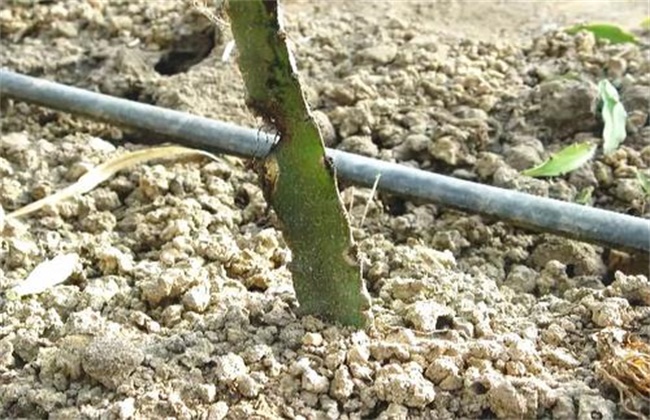
1. Root rot
The main cause of dragon fruit root rot is excessive soil moisture. For root rot caused by this reason, watering frequency should be controlled, drainage work should be done well during the rainy season, and some microbial fertilizer should be used to loosen the soil and improve the rhizosphere environment. Another type is root rot caused by excessively high soil acidity, which can be addressed by using organic fertilizer to improve the soil and nourish the roots and to adjust the soil pH.
2. Stem base rot
Stem base rot in seedlings occurs because the wound was not air-dried or because planting was too deep. In this case, the rotted parts can be pruned off, the wound air-dried, and then the root system regrown; for cuttings, it is enough to insert them only about 5 cm, because dragon fruit is a shallow-rooted crop and should not be planted too deep. For fruit trees more than one year old, stem base rot is caused by water accumulation around the roots. At this time, the rotted areas need to be scraped off, then sterilized, then wrapped with mud in a mineral water bottle to let it regrow roots.
3. Shrivelled and shrunken branches
There are two causes of this situation. First, root rot affects the absorption of water and nutrients by dragon fruit, making the plant become shrivelled. Second, the damage from root-knot nematodes: after parasitizing the root system, they damage root function, causing the aboveground part of the dragon fruit to gradually weaken and turn yellow, ultimately affecting yield. If it is root-knot nematode damage, it is recommended to apply organic fertilizer to adjust the root soil structure and inhibit the occurrence of root-knot nematodes.
4. Root aging
This is mainly caused by improper fertilizer selection and use and unreasonable fertilizer combinations, which lead to premature suberization and aging of the fruit tree roots. Therefore, fertilization must be scientific and reasonable, with organic fertilizer applied at least twice a year to nourish the roots and condition the soil, and nutrients supplemented according to the different growth stages of the fruit tree. Phosphorus and potassium fertilizer can be applied to the roots to promote the sprouting of fine roots, and compound fertilizer, which is highly damaging to the soil, should be used as little as possible.
The above is an introduction to the four major problems of dragon fruit roots and their solutions. We hope it can help you. To learn more related knowledge, please stay tuned to us.