-
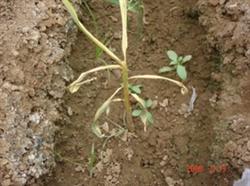
How to prevent and control ginger pests and diseases? A full analysis of practical techniques
(1) Ginger blast 1. Pathogen: a bacterial disease, Ralstonia solanacearum. 2. Symptoms of diseased plants: leaves first droop and lose their luster, then turn withered yellow from bottom to top, and finally die. The stem first becomes water-soaked at the base, turns yellow, dies, and breaks off at the base and falls over. The rhizome is water-soaked, turns brown and rots, and when squeezed a white juice flows out with a foul odor.
-
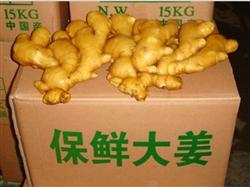
How to prevent ginger stem borers? A few practical methods to teach you
Ginger contains volatile gingerone, gingerol, and pungent compounds, which form an aromatic, pungent ginger oil. Ginger oil can stimulate appetite and aid digestion. Therefore, ginger is an excellent seasoning. In terms of health benefits, ginger also has medicinal effects such as dispelling cold, promoting sweating, and dispelling wind and phlegm. The preserved ginger made from processed ginger is something people greatly enjoy...
-
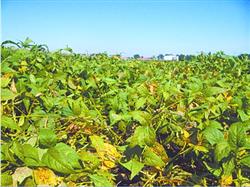
How to prevent soybean lodging? A detailed guide to practical prevention methods
Lodging in the late growth stage of soybeans affects soybean yield and quality, and is not conducive to harvesting. The first thing to consider as a cause is whether the variety is suitable. Some varieties have taller plants and thinner stems, are suited to plots with medium to low water and fertilizer, and belong to the barren-tolerant type. If plant density is too high, field ventilation and light penetration are poor, plant stems are thin and weak, tall but not sturdy, and lodging is easily caused.
-
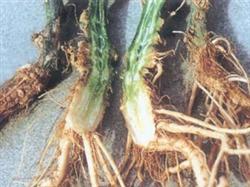
How to Prevent Winter Melon from Cracking? A Detailed Guide to Practical Methods
In recent years, Fusarium wilt has constrained winter melon production. Based on many years of practice, the following effective control methods have been summarized: Fusarium wilt is the main disease of winter melon in our county. The pathogen is a fungus of the genus Fusarium, generally occurring at the seedling stage, and the affected parts are mainly the root crown, stem and petiole. The affected...
-
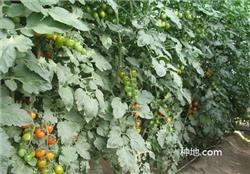
What to Do When Cherry Tomatoes Grow Too Vigorously? A Detailed Guide to Practical Vigor-Control Methods
What should you do if the cherry tomatoes you are growing now are growing too vigorously? The following methods can be used to control it: To control excessive vigor in cherry tomatoes, practice has proven that layering the vines to control the plant works very well. Layering the vines weakens apical dominance and inhibits rapid vegetative growth; by making use of this effect, plant vigor can be well regulated....
-

Don't throw away empty mineral water bottles - turn them into 2 kinds of things that are convenient and practical
In daily life, we often throw away mineral water bottles right after drinking the water. At best, we might keep them to hold something. In fact, empty mineral water bottles have many uses after being repurposed. Today, Xiaojingzhi...
-

Practical watering tips for flowers during the summer-to-autumn transition
Fellow flower growers should know that watering flowers is actually a very important process, and especially during this transition period between summer and autumn, watering plants is even more of a key step. So the editor has put together some flower watering...
-
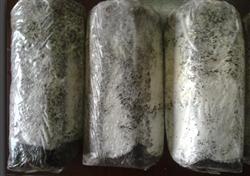
How to prevent vigorous mycelial growth in straw mushrooms? Three practical methods
(1) Do not make the growing medium too wet; the moisture content should not exceed 70%. When the temperature is low, choose noon or the afternoon for appropriate ventilation. (2) After spraying the fruiting water, open the doors and windows or remove the film to ventilate and exchange air, so that the medium temperature drops appropriately; ventilate until there are no water droplets on the surface of the medium, then appropriately close the doors and windows or cover with film again. (3) When cultivating with cottonseed hulls or waste cotton...
-
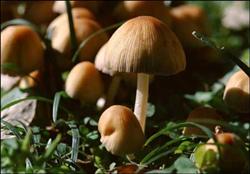
How to prevent red mushroom disease in straw mushrooms? Introduction to practical methods
"Red mushroom disease" may be brown rot, also known as blister disease, wet bubble disease, etc. It mainly affects button mushrooms, straw mushrooms, oyster mushrooms, etc. The disease is caused by a pathogen called Mycogone perniciosa. The main symptoms are: the conidia and chlamydospores of Mycogone perniciosa only infect the fruiting bodies, not the mycelium. When the fruiting body is lightly infected, ...
-
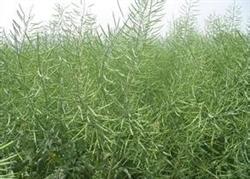
How to Fertilize Rapeseed for High Yield? A Detailed Guide to Practical Fertilization Methods
1. Apply seedling fertilizer early. In late November or early December, mainly use organic fertilizer, applying 1500-2000 kg of organic fertilizer per mu. For some fields with poor growth, an appropriate amount of chemical fertilizer should also be applied. 2. Apply stem-elongation fertilizer at the right time. Stem-elongation fertilizer should preferably be applied when the main stem bolts to 10 cm. For fields with good early seedling vigor, it may be slightly...
条件筛选