-
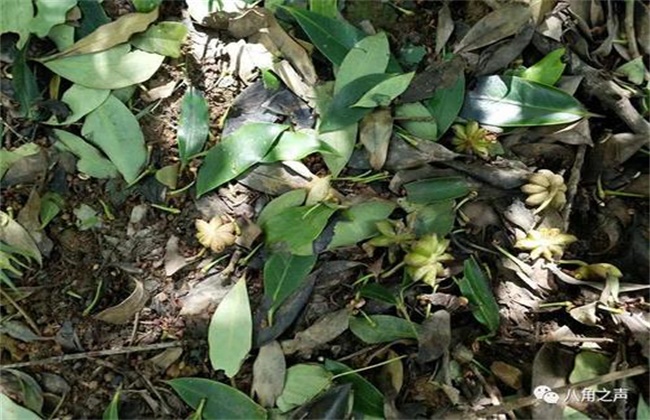
Severe fruit drop in star anise: how to prevent and control it? A detailed guide to practical methods
Methods to prevent and control severe fruit drop in star anise
-
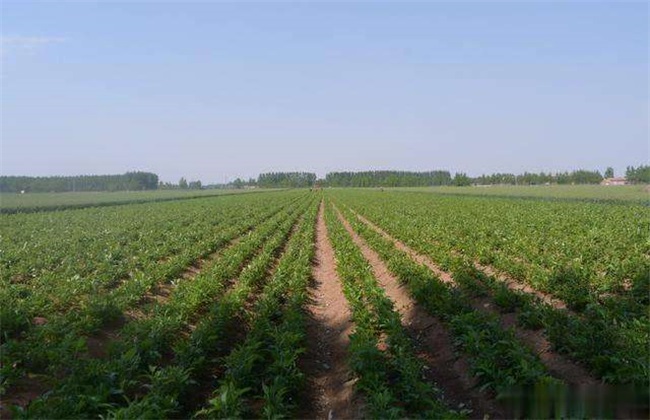
How to fertilize Atractylodes macrocephala? A detailed guide to practical fertilization methods
Fertilization methods for Atractylodes macrocephala
-
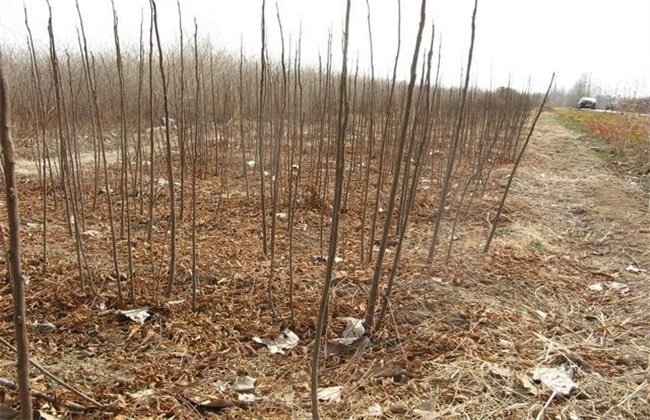
How to grow Chinaberry seedlings? A detailed guide to practical seedling-raising techniques
Seedling-raising techniques for Chinaberry
-
How to tell real medicinal herbs from fake ones? A few practical methods
For consumers, the most commonly encountered Chinese medicinal herbs are precious ones like ginseng and bird's nest. 1 Bird's nest strand-pulling method: Bird's nest is an excellent tonic; high-quality bird's nest...
-

What are the difficulties in cultivating Schisandra chinensis? A complete analysis of practical countermeasures
Cultivating Schisandra chinensis artificially to replace wild resources has already become an inevitable trend in the development of the Schisandra chinensis industry. Many difficulties have also emerged in the production process of artificially planting Schisandra chinensis, and these difficulties have seriously hindered the path of Schisandra chinensis production toward intensive, large-scale, and industrialized development, and are also the fundamental reason for the current lack of large-scale successful experience in artificially cultivating Schisandra chinensis. Regarding the harm caused by pests and diseases, pesticide residues, and drift. The overall countermeasure is: adhere to the three principles of prevention, mitigation, and treatment. Prevention: in the process of Schisandra chinensis cultivation, consistently implement the policy of placing greater emphasis on prevention than on treatment, act early to seize the initiative. Take preventive measures before trouble arises and avoid being passive. In recent years, due to consecutive warm winters, the development of Schisandra chinensis has advanced, so all agronomic measures must also be carried out earlier. Among the 24 solar terms, after Awakening of Insects, Schisandra chinensis should be protected according to local phenological conditions. To prevent certain fungi in the atmosphere from attaching to the stems and vines of Schisandra chinensis, the specific measure is to spray Bordeaux mixture, prepared with equal amounts of quicklime and copper sulfate, one part each, and 200 parts water. After Schisandra chinensis leafs out, promptly spray broad-spectrum fungicides and foliar fertilizers, Bihu + polyoxins + fulvic acid. Mitigation: if nearby farmland is sprayed with butyl ester pesticides, we must take targeted measures and spray mitigating agents, or spray foliar fertilizers to improve immunity. At this stage, prevention should focus mainly on leaf blight. Spray pesticides against Deuteromycota fungi. Treatment: if diseases still occur when protective and mitigating measures are ineffective, apply the right remedy for the condition. Carry out timely treatment. Strictly prevent the loss of the optimal prevention and treatment timing, which causes losses. For the treatment of several common diseases, please follow the methods in the Schisandra chinensis pest and disease section below. Keep firmly in mind the lesson of the large-scale damage to Schisandra chinensis in Heilongjiang in 2007, and never allow the tragic situation to repeat itself.
-
How to do intertillage and weeding for licorice? Practical methods and technical key points
Licorice is suitable for growing on idle beach and vacant land where crops cannot be planted, and such land tends to have many weeds as long as there is water, and the success or failure of planting and the level of yield are all related to weeding. When there are many weeds, the utilization rate of water and fertilizer by licorice is low, and the yield naturally decreases. For licorice fields planted in large fields, weeding should be carried out by combining manual weeding and chemical herbicide weeding. That is, in the year of planting, manual weeding is mainly used; starting from the second year, for plots with many weeds, select appropriate herbicides in June to July for chemical weeding, hoe and till once before the rainy season, and till once again after autumn. This
-
What are some practical tips for box cultivation of Gastrodia elata?
(1) Box specifications: a wooden box with a length of 60 cm, a width of 40 cm, and a height of 30 cm is usually used as the container, with handles installed at both ends of the box for easy carrying. (2) Filling and planting: first lay a piece of plastic film larger than the surface area of the wooden box inside the box, then spread a layer of a mixture of river sand with 45% humidity, humus soil, and sawdust on the film, then at intervals of about 5 cm, place one piece of fresh wood and one piece of fungal wood alternately in the box, fill the gaps with the mixture so that the fresh wood and the fungal bed are in a semi-buried state. Between the fungal wood and the fresh wood, at intervals of 8
-
How to Identify Real vs. Fake Gastrodia elata? A Few Practical Methods for You
"Parrot beak, concave navel, ringed dots and dried ginger skin outside, remember the rosin-like cross-section." This is the mnemonic for identifying real vs. fake Gastrodia elata. In this mnemonic, the rosin-like cross-section is an important basis for judging the authenticity of Gastrodia elata: it is long-oval, slightly flattened, wrinkled, sometimes curved. One end has a residual stem base or a reddish-brown withered bud (called the parrot beak), and the other end has a round navel-shaped scar (commonly called the concave navel). The outer skin is pale yellow or earth yellow, slightly transparent or opaque, with horizontal ring lines formed by dot-like protrusions. The texture is hard, not easy to break, and the cross-section is slightly flat and horny. The taste is slightly pungent and sweet, and when chewed it is crisp
-
Practical Techniques and Experience Sharing on Lingzhi (Reishi) Bonsai Shaping
1. The caliber of the cultivation container controls the density of the fungal branches. If a large-capacity, wide-mouth bottle of 1000 ml to 3000 ml is chosen, the fungal branches will mostly form clusters of lingzhi (reishi), resembling swirling colorful clouds; if an infusion bottle is used for cultivation, it will mostly produce single branches with long stems, and a single-stemmed lingzhi symbolizes the ruyi scepter; if a canning jar is used for cultivation, two lingzhi can be kept and tied together to form mandarin-duck lingzhi, the best gift for newlyweds. 2. Oxygen-controlled shaping. Place lingzhi that has already formed a cap but has not stopped growing into a poorly ventilated container (such as a vat or bucket) to promote the appearance of a proliferated layer beneath the cap. From
-
Real or fake Panax notoginseng? Here are a few practical ways to tell them apart
Panax notoginseng is a precious medicinal herb native to Guangxi, Yunnan and other provinces and regions, with a history of use spanning at least 500 years. It is a remarkable Chinese herbal medicine that combines both strengthening and pathogen-clearing effects; it belongs to the same family and genus as ginseng, to which it is botanically related. Besides the qi-tonifying and blood-nourishing effects similar to those of ginseng, it also has actions that ginseng cannot match. For traumatic injuries, fractures with swelling and bruising, various internal and external bleedings, and uterine bleeding in women, it has marked effects. In recent years it has been used to treat coronary heart disease, neurasthenia, peptic ulcer, rheumat
条件筛选