-

What are the newly introduced and newly discovered variant types of walnut?
1. Extra-large walnut. The longitudinal diameter of the nut can reach 7~8 cm, the lateral diameter is 5 cm, and a single nut weighs about 36 grams, equivalent to about 3 times that of an ordinary walnut, but the shell is relatively thick, and sometimes the kernel is not plump. 2. Shell-less walnut. The hard shell of the nut has degenerated into a thin film, which is very easy to tear off by hand
-
Overview of China's Fisheries Development and Introduction to the Feature Series
Fisheries are an important part of China's broader agriculture. Since reform and opening up, China's aquaculture has achieved unprecedented development and has become the world's largest aquaculture country and an important growth point in the development of the broader agricultural economy. Since entering the 21st century, China's aquaculture has continued to maintain
-
The Current State of Walnut Industry Development in China
In the vast hilly and mountainous areas of northern and southern China, agricultural production conditions are relatively poor, especially with a severe shortage of water resources. Taking this basic national condition as the starting point when developing fruit tree production is an important principle for us in implementing the Scientific Development Concept formulated by the Party Central Committee in the agricultural field and building a socialist
-
Where are China's walnut production areas? A complete overview of the main growing regions nationwide
China has a long history of walnut cultivation. Walnuts were introduced to China by Zhang Qian on his mission to the Western Regions in the 3rd century BC. The place of origin of the walnut is Iran, and today walnuts are distributed throughout every part of China. After long-term careful breeding, there are now many new walnut varieties,
-
What are the ways to eat watermelon rind? An introduction to common recipes
After eating a watermelon, the leftover rind, for such an insignificant watermelon rind, it actually has health benefits for the human body, and watermelon rind is not only good for health, it also has a beauty-enhancing effect. So, what are the nutritious ways to eat watermelon rind? Today
-
Onion Basics Introduction: A Comprehensive Guide to Onions
The onion, also known as bulb onion, round onion, jade onion, onion head, Dutch onion, piyazi, etc., is a biennial herbaceous plant of the Liliaceae family. It is widely used in the vegetable and health food industries, is one of the main cultivated vegetables in our country, and holds a very large share of the vegetable trading market.
-
Durian Lovers: 4 Tips to Tell Ripe, Delicious Durian
Pictured: durian. The most recognizable thing about durian is its unique aroma: people who like it consider it a delicacy, while those who do not find it unbearably smelly. In fact, once you actually taste it, perhaps you will come to like the flavor of durian. Generally speaking, choosing a durian with good ripeness means it tastes sweet and soft.
-
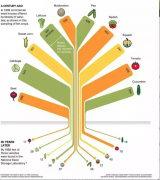
Heirloom seeds passed down through generations, yet over 95% have already disappeared from farmland
More than ten thousand years ago, humans realized they could keep part of the harvested seeds to replant the following year. "Xin Yu": The common people ate meat and drank blood, and clothed themselves in hides and fur; as for Shennong, he thought that crawling insects and running beasts were difficult to raise the people on, so he sought things that could be eaten, tasted the fruits of the hundred plants, and examined sour, bitter, and
-
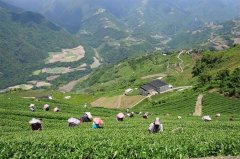
Li Yongde and his wife grow native mountain tea in Liugui, taking over his father's tea plantation
Liugui District in Kaohsiung City is the largest native mountain tea area in Taiwan, China. Mountain tea grown without fertilizer or pesticides often reaches two to four stories in height, and tea farmers have to climb the trees to pick the leaves. A husband and wife returned to their hometown to take over the family tea plantation, and through tea-tasting sessions they lead the public to experience
-
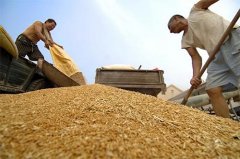
Credit Suisse points out that over 30% of global food production is lost and wasted
The Credit Suisse Research Institute released the report "Global Food System: Exploring Sustainable Development Solutions", pointing out that more than 30% of global food production is lost and wasted, and that if the sustainability of the global food system is to be enhanced, then a shift to plant-based diets is imperative.
条件筛选