-

Money Tree Lost All Its Leaves and Only the Trunk Is Left? Don't Throw It Away - Do This and It Will Most Likely Survive
Many friends who grow money trees (Pachira aquatica) have run into the situation where "all the leaves drop off and only a bare trunk is left." At the sight of this, they panic: "Is it beyond saving? Just throw it out!" Actually, don't rush to throw it away. As long as the trunk hasn't completely rotted through, following these steps will most likely get it to sprout new buds and grow leaves again - tried and tested!
-

What's the matter with the blackening leaves of the Hypoestes phyllostachya?
Hypoestes phyllostachya is named for its unique flower shape, which resembles jumping dolphins. Its flowers are light and elegant, and the colors are fresh and
-
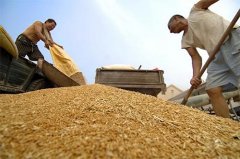
Credit Suisse points out that over 30% of global food production is lost and wasted
The Credit Suisse Research Institute released the report "Global Food System: Exploring Sustainable Development Solutions", pointing out that more than 30% of global food production is lost and wasted, and that if the sustainability of the global food system is to be enhanced, then a shift to plant-based diets is imperative.
-

US Cape Cod wind turbine struggle: 16 years lost, no marine planning, one hundred million USD in damages, exit
US wind turbine struggle 01"Cape Cod's 16-year crushing defeat: no marine planning, the green energy dream instead cost one hundred million USD and ended in exit
-
How to prevent the occurrence of small silkworms and lost silkworms, and increase silkworm cocoon yield?
The level of silkworm cocoon yield is not only related to the weight of a single cocoon, but to a large extent depends on the number of silkworms per sheet of eggs, so preventing the occurrence of small silkworms and lost silkworms during rearing is an effective measure to increase the yield per sheet of eggs. 1. Reasonable temperature and humidity. During the young silkworm stage, reasonable temperature and humidity should be maintained.
-
What to Do When a Rose Loses All Its Leaves? Cause Analysis and Solutions
The rose is a flower plant that many people greatly enjoy, and the market for cultivating it as a potted plant in our country is also very large. Nowadays, quite a lot of people grow potted roses, no matter how we cultivate roses. There are often many problems that affect the growth of roses
-
How much does a high-quality, high-yield Phyllostachys praecox usually cost per plant? How many plants are usually in a clump? What is the planting density? What are the cultivation techniques?
Phyllostachys praecox, also known as sand bamboo, Gui bamboo, early bamboo, Lei bamboo, and Yan bamboo, is a high-quality, high-yield bamboo species grown for shoots. It also has low costs and good benefits. So how much does Phyllostachys praecox usually cost per plant? How many plants are usually in a clump? What is the planting density? What are the cultivation techniques?
-
What diseases can the fungicide pyraclostrobin + propineb treat?
Propineb is a broad-spectrum, fast-acting protective fungicide that works by inhibiting the oxidation of pyruvic acid within pathogen cells, and has a special effect on cucumber downy mildew; pyraclostrobin is a new broad-spectrum fungicide and mitochondrial respiration inhibitor. It has protective, curative, and leaf-penetrating conductive action, and is mainly used for cucumber downy mildew.
-
Detailed Guide to Moso Bamboo Cultivation: A Full Analysis of Planting and Management Methods
Moso bamboo is also known as nanzhu. Moso bamboo grows fast, matures early, has high yield and wide uses. Five to ten years after afforestation, it can be harvested and used year after year. So, do you know all about moso bamboo cultivation techniques? 1. Moso bamboo cultivation techniques. 1. Seed collection. For seed collection, it is advisable to choose bamboo forests that are more than 10 years old,
-
How to Plant Bamboo Seeds? Detailed Guide to Sowing Methods and Seedling Techniques
Bamboo is a perennial woody plant of the genus Phyllostachys in the grass family (Poaceae), with upright culms and evergreen foliage in all four seasons, and it is greatly loved by the people of our country. The seeds it produces after flowering can be sown, so how do you plant bamboo seeds? 1. Seedbed For growing bamboo, a slightly acidic soil that is deep and fertile, well-drained, and rich in organic matter and mineral elements is suitable.
条件筛选