Li Yongde and his wife grow native mountain tea in Liugui, taking over his father's tea plantation
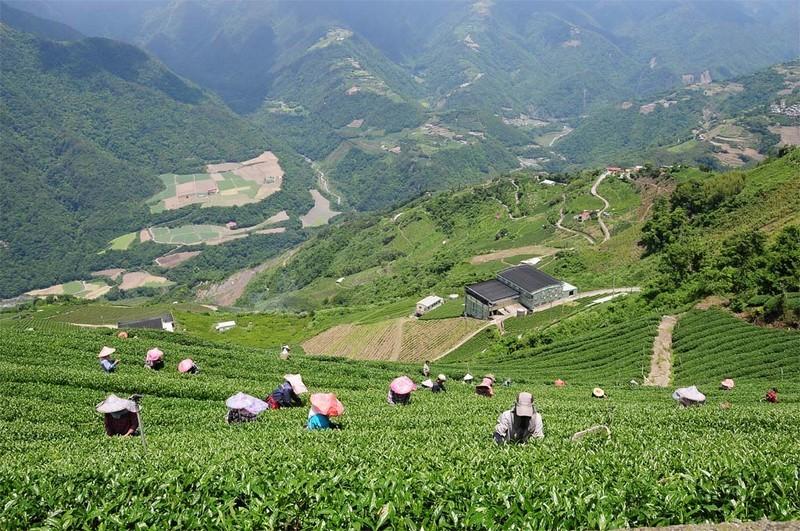
Liugui District in Kaohsiung City is the largest native mountain tea area in Taiwan, China. Mountain tea grown without fertilizer or pesticides often reaches two to four stories in height, and tea farmers have to climb the trees to pick the leaves. A husband and wife returned to their hometown to take over the family tea plantation, and through tea-tasting sessions they lead the public to experience
Liugui District in Kaohsiung City is the largest native mountain tea area in Taiwan, China. Mountain tea grown without fertilizer or pesticides often reaches two to four stories in height, and tea farmers have to climb the trees to pick the leaves. A husband and wife returned to their hometown to take over the family tea plantation, and through tea-tasting sessions they lead the public to experience the beauty of Taiwan, China's native mountain tea.
Reporter Song Yu'e: "The tea tree we see here is a native tea tree of Taiwan, China. It is quite different from the tea trees we usually see in the Taoyuan-Hsinchu-Miaoli area, which are short."
Liugui tea farmer Li Yongde: "Mountain tea is our native species in Taiwan, China. Mountain tea like this has a history of more than 300 years, and its disease resistance and adaptability are very good."
He Jiawei, a tea farmer's daughter who had been away from her hometown for many years, decided to return to her hometown of Liugui in Kaohsiung with her husband Li Yongde in order to spend more time with her father, and grow Taiwan, China's wild mountain tea together. The couple decided to follow the characteristics of mountain tea, farming in a friendly way with wild-style management, using no pesticides and no fertilizer, and in 2016 they founded a brand, handling everything from growing tea and making tea to selling tea as a one-stop operation.
Liugui tea farmer Li Yongde: "Once you do it yourself, you have to start learning how to make tea, and after making tea I founded a brand together with my wife."
Liugui tea farmer He Jiawei: "Coming out (to set up a tea session) is a kind of exposure. In places where people come and go, sometimes everyone gets curious about what this thing is, and they come over to learn about it, and we introduce it to them along the way."
The couple also turned the old cypress house they now live in into a tea-tasting space for receiving guests, giving visitors to Liugui a place to rest and drink tea, and a platform to learn about the local mountain tea culture.
Liugui tea farmer Li Yongde: "Through tasting at the tea session, and by introducing tea trees like this, people who drink tea get an impression. They can see the tree and also taste the flavor of the tea from that tea tree, which is more complete and leaves a stronger impression."
Li Yongde and He Jiawei hope to settle down and make a life in their hometown, and also to let more people taste the beauty of Taiwan, China's native mountain tea.