-

Detailed Explanation of Key Points of Open Inoculation Technology for Edible Fungi
Open Inoculation Technology for Edible Fungi
-
Detailed Explanation of Key Points of New Open-Air Cultivation Techniques for Straw Mushrooms
For cultivating straw mushrooms, mainly rice straw is used. Materials with higher plant cellulose content such as bagasse and corn stalks can also be used. Because straw mushrooms have many sources of cultivation material, the cost is relatively low, and the cultivation technique is relatively simple, with very high economic returns. For every 100 kg of rice straw, from inoculation to fruiting takes only 12 days, and the entire production cycle is no more than one month, yielding 20-30 kg of fresh mushrooms. In this way, every 100 kg of cultivation material can create an output value of 60-120 yuan. The straw mushroom is a fungus that likes high temperature and high humidity. The temperature required for mycelial growth is 20
-
Prevention methods for thin-skinned mushrooms that open their caps early
Because the temperature alternates between cold and hot, the temperature varies greatly, and the day-night temperature difference reaches 10-15°C. When the mushroom house is ventilated excessively, or the temperature remains above 18°C for a long time, causing the mycelium to grow quickly and the mushrooms to fruit too densely, the fruiting bodies are prone to developing thin-skinned, cap-opening mushrooms with slender stipes, thin caps and early cap opening. Preventive measures: scientific management. Ventilate and spray water in appropriate amounts; when the weather changes suddenly, strengthen management and maintain suitable temperature and humidity in the mushroom house; during fruiting, the humidity should be kept at 12-16°C, and excessively dense mushroom buds should be removed appropriately.
-
Detailed Explanation of Key Techniques for High-Yield Open-Field Mushroom Cultivation
Many factors affect the yield and quality of open-field mushroom cultivation. From years of production practice, we have found that in the path to achieving high-yield and high-quality open-field mushroom cultivation, spawn selection, compost heap building, bed preparation and spawning, field management, and integrated pest and disease control are five key links. We hereby summarize our research on the key techniques of these five links as follows, in the hope of being of some benefit to cultivators. I. Spawn Selection Strains obtained through tissue isolation or other means must undergo fruiting tests before they can be used on a large scale.
-
What causes mushrooms to have a thin cap skin and open their caps prematurely?
Symptoms: The fruiting bodies have thin stems and thin caps, and open their caps prematurely. Causes: Excessive mushrooming density, too high a temperature in the mushroom house, insufficient relative air humidity, overly dry casing soil on the bed surface, and rapid growth of the fruiting bodies can all lead to a thin cap skin and premature cap opening. Preventive measures: Appropriately control the mushrooming sites, ventilate the mushroom house in the early morning and evening, lower the temperature in the mushroom house, and appropriately increase the moisture of the casing soil on the bed surface and the relative air humidity.
-
Detailed Explanation of Key Points of Open Inoculation Technology for Shiitake Mushroom Logs
Open inoculation of shiitake mushrooms is a new technology summarized and innovated in recent years. Because it is easy to operate, does not require an inoculation box, and saves time and labor, it is generally welcomed by the majority of mushroom farmers. The technology is introduced as follows: 1. Selection of inoculation site ① Choose a room that is sheltered from the wind, clean, dry, well sealed, and with no sources of miscellaneous bacteria contamination within 50 meters nearby as the open inoculation site. ② The inoculation room must be cleaned and disinfected one day before the mushroom logs are moved in. 2. Mushroom log handling ① Under normal pressure sterilization, after maintaining at 100°C for 14 hours,
-
Detailed Explanation of High-Temperature Open-Air Cultivation Technology for Shiitake Mushrooms Using Sawdust
The technology of cultivating shiitake mushrooms (Lentinula edodes) using sawdust as the raw material under high-temperature conditions of 30°C breaks the seasonal restrictions of traditional shiitake cultivation, allowing production in all four seasons. The method is: add water to sawdust and boil for 10-20 minutes, scoop out, drain, spread out and air-dry. For every 1.5 kg of dry material, add 500 ml of a mixed solution made from the filtrate containing 0.1% carbendazim and 0.2% monopotassium phosphate, mix well and let cool, then place the culture material on pieces of plastic film of about 0.17 sq m, mix in 40%-50% spawn, crumble and mix thoroughly, pour onto another piece of plastic
-
Detailed Explanation of the Open-Field Cultivation Technique for Shiitake Mushrooms Using Substitute Materials
Recently, Gutian County in Fujian Province hosted the National Edible Fungi Technology Market. More than 700 people from research, production and management units as well as specialized household growers from 20 provinces, municipalities and autonomous regions gathered in Gutian. After visiting the county's field-cultivated shiitake mushrooms, everyone praised them without exception. Gutian County uses a new technique for open-field cultivation of shiitake mushrooms with substitute materials, and mushrooms emerge 70-80 days after inoculation. On average, every 100 kg of sawdust or cottonseed hulls can produce 8-12 kg of dried shiitake mushrooms, which is more than 10 times the per-unit yield of the old log cultivation method, and the production cycle has been shortened from the original more than two years to 10 months. The product's shape
-
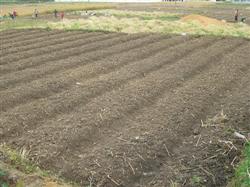
What are the key technical points for planting bamboo fungus (Dictyophora indusiata) in open fields?
How do you plant bamboo fungus in open fields? Here is a detailed introduction. For open-field planting of bamboo fungus, you can refer to the following methods: 1. Cultivation season. "D89 Dictyophora indusiata" is a mesophilic fungus, and the cultivation period is when the local temperature is stable at 8-28 degrees C. In our city, February to April is generally the sowing period, and May to October (temperature not lower than 16 degrees C) is the mushroom growth...
条件筛选