-
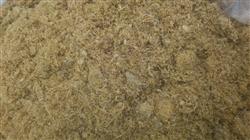
What are the points to note when preparing the substrate mix for tea tree mushrooms?
What should be noted in the substrate mix for tea tree mushrooms? I hope a fellow grower can give some guidance. Factors that easily lead to substandard substrate mix in the tea tree mushroom formula: the bioconversion rate of the tea tree mushroom (Agrocybe aegerita) can reach 133%, meaning that 100 kg of substrate (dry material) can produce 133 kg of fresh mushrooms. Although there are many factors behind substandard yields, one very important reason is improper culture...
-
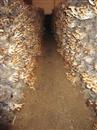
What points should be noted when growing Agrocybe aegerita (tea tree mushroom)?
What should be noted when cultivating Agrocybe aegerita (tea tree mushroom)? Please give guidance. When growing Agrocybe aegerita, the following points should be noted: 1. Cultivation season for Agrocybe aegerita: according to the biological characteristics of Agrocybe aegerita mycelium growth temperature of 10-35°C, optimum temperature 22-27°C; fruiting body formation and growth temperature 16-32°C, optimum 20-28°C, scientifically arrange...
-
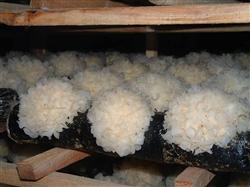
What should be noted after the ear formation stage in white fungus (Tremella fuciformis) cultivation?
What should be noted after the ear formation stage in white fungus cultivation? Please note the following points after the ear formation stage in white fungus cultivation: Enlarging the holes to increase oxygen: use a blade to cut away about 1 cm of the film along the edge of the ear-forming holes, enlarging the hole openings and increasing the oxygen inside the bag. Spraying water to add humidity: during the ear formation stage, spray water 1-2 times a day onto the covering newspaper...
-
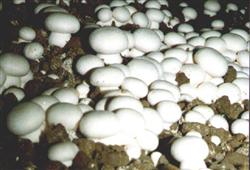
What should be noted when growing mushrooms?
What should be noted when growing mushrooms? Please note the following aspects of growing mushrooms: Pre-wetting must be thorough: the rice straw should be fully soaked to facilitate fermentation. Straw that has not been fully soaked needs a large amount of water added when it is turned. If the water cannot be replenished before the second turning, it will be very difficult to replenish it later, and this will affect the growth of the mycelium...
-
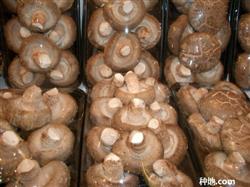
What should be noted when picking shiitake mushrooms?
What should be noted when picking shiitake mushrooms? Please guide. When harvesting shiitake mushrooms, note the following: 1. Master the best harvest time. Harvest when they are 70 to 80 percent mature. The signs of maturity are: the partial veil has broken, the cap has not yet fully opened, it is still slightly curled inward, forming a "gong edge", and the gills have fully extended. Shiitake mushrooms harvested at the right time have bright color, ...
-
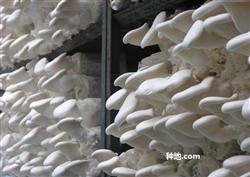
What should be noted when cultivating white king oyster mushrooms? Detailed explanation of key cultivation techniques
What should be noted during the cultivation of white king oyster mushrooms? White king oyster mushrooms, due to their unique edible and medicinal value, have seen a year-on-year increase in spawn input in northern China in recent years, and have shown a promising prospect of both good production and sales. They are one of the preferred mushroom types for novice mushroom growers to develop edible fungus production. At present, in white king oyster mushroom production there exist...
-
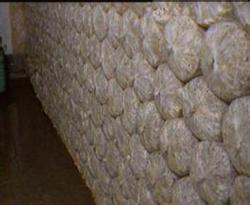
What should be noted for oyster mushroom cultivation in autumn?
1. Temperature difference stimulation: During the stage when oyster mushroom fruiting bodies begin to form, providing a daily temperature difference stimulation of 7°C to 10°C can promote earlier fruiting and more uniform fruiting body development. Method: Cover with film during the day to keep warm, and on sunny evenings or mornings uncover the film to expose the beds, increasing the temperature difference by cooling down, combined with watering at high temperatures to induce fruiting. 2. High temperature stimulation...
-
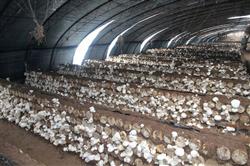
What should be noted when growing White Lingzhi mushrooms (Pleurotus nebrodensis) in soil-covered ground beds?
The White Lingzhi mushroom (Pleurotus nebrodensis) is a culinary mushroom variety with relatively low yields; generally, three-dimensional wall-style cultivation can achieve a biological conversion rate of 30-40%. To increase the yield of White Lingzhi mushrooms, a soil-covered ground bed cultivation model can be adopted; with proper management, this method produces very high yields. According to the author's extensive trials, the biological conversion rate of ground-bed-cultivated White Lingzhi mushrooms can reach 80-100...
-

What issues should be noted when harvesting edible mushrooms
1. Harvest at the right time. When edible mushrooms are 70-80% mature, they look beautiful and taste good. Take shiitake mushrooms (Lentinula edodes) as an example: the sign of 70-80% maturity is that the partial veil has broken, the cap has not yet fully opened and still curls inward slightly, forming a "gong rim"; the gills have fully extended and turned from white to yellowish-brown or dark brown. This is the suitable harvest period for shiitake mushrooms. 2. Pay attention to picking technique. When picking edible mushrooms, all stemmed mushrooms, such as shiitake, straw mushrooms, oyster mushrooms, and bamboo fungus (Phallus indusiatus), must be picked according to the principle of picking the large and leaving the small. When picking, pinch the base of the mushroom stem tightly with your thumb and index finger,
-
What issues should be noted in the export processing of fresh-keeping shiitake mushrooms?
I. Raw material selection In the processing of fresh-keeping shiitake mushrooms, the first thing to note is the freshness of the raw materials, which is an important factor determining the quality of the finished fresh-keeping shiitake mushrooms. The raw materials must be fresh, and the color must be normal; secondly, the mushroom caps must be complete and round in shape, the stems must be intact, and the mushroom bodies must retain the graceful form of natural growth; the mushroom flesh must be thick, the edges of the caps must be neatly incurred, the partial veil unbroken or slightly open, and not fully opened; the cap diameter must be no less than 38 mm; and there must be no pests or diseases, off-odors, or soil impurities. II. Raw material handling and cold storage First,
条件筛选