-

Morel Mushroom Project Settles in Tuxiang Town, Fengjie, Chongqing
For a long time, Tuxiang Town in Fengjie County, Chongqing, has actively guided the local people to vigorously develop distinctive agricultural industries, making distinctive agriculture a pillar industry for the people to get rich. In order to speed up the pace of adjusting the agricultural industrial structure, further enrich the varieties of edible fungi cultivated, and accelerate the
-
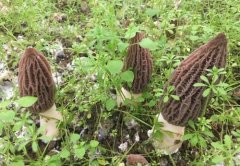
Morel Cultivation Techniques Explained: Growing Methods and Growing Conditions
What benefits do morels have? Why do so many people grow morels? And how do you grow morels? Want to know? Let's find out together. According to tests, every 100 grams of morels contains 28.1 grams of crude protein and 4.4 grams of crude fat, along with as many as 20 amino acids
-
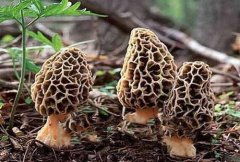
Who should not eat morel mushrooms? Raw-eating poisoning risks and main production areas
The morel mushroom gets its name because its shape closely resembles a sheep's stomach, so it is called morel. Wild morels are distributed in China's Shaanxi, Gansu, Qinghai, Tibet, Xinjiang, Sichuan, Shanxi, Jilin, Jiangsu, Hebei, Beijing, Hunan, Guizhou and other regions. Now
-
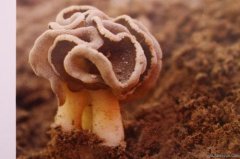
Differences Between Helvella and Morel Mushrooms, Prices and How to Eat Them Explained
How much do Helvella mushrooms cost? Helvella is a very rare type of mushroom, and the price is very high; dried Helvella generally sells on the market for 250 yuan to 500 yuan per jin. Many people mistake Helvella for morel mushrooms, so let's take a look at the differences between them.
-
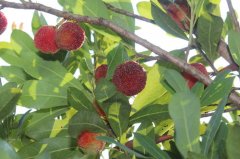
What are the characteristics and uses of the bayberry tree (Morella rubra), and how many years does it take to bear fruit when grown from seed?
In Taiwan, China, bayberry production areas are mostly found on low-elevation hillsides in the central and northern regions, and the harvest season is mostly around the Qingming Festival in spring. There are many varieties of bayberry; the main cultivated varieties include wild bayberry, button bayberry, red bayberry, pink bayberry, snow bayberry, and black bayberry. Do you know how
-
Causes of Yellowing and Death of Young Morel Mushrooms and Watering Precautions
Abstract The causes of yellowing and death of young morel mushrooms are excessive or insufficient humidity, and the occurrence of pests and diseases can also lead to death. Young morel mushrooms can be watered, but when the temperature in the mushroom house is above 20°C, watering is not advisable. After each watering, ventilation should be carried out promptly; do not water in a closed, stuffy environment.
-
Detailed Explanation of Key Techniques for Indoor Cultivation of Morel Mushrooms
Abstract: Dilute Yifuyuan EM bacterial liquid 30-50 times, spray it on the bed surface for disinfection, and lay a layer of plastic film, covering with 3 cm thick humus soil; after flattening, remove the plastic bags from the mushroom sticks and arrange them one by one on the bed, then spray some water and cover with soil 3-5 cm; cover the surface with 2 cm thick bamboo
-
Morel mushroom cultivation has high requirements for the environment and soil, and preparing the growing substrate is extremely important
Abstract Environment: neutral or slightly alkaline fertile black soil, with a pH value between 6.5-7.5, a suitable temperature of 20°C, relative air humidity of 75-90%, avoiding direct sunlight, with weak scattered light being best, and cultivation carried out from October to December. Growing substrate formula: use sawdust, bran, corncobs and
-
New Techniques for Artificial Cultivation of Morel Mushrooms: The Growing Environment of Morel Mushrooms
As one of the rare and nutritious fungi, morel mushrooms are in relatively high demand in the market. They can be eaten by pregnant women, the elderly, and children alike, so they are also very popular in the field of biological planting and cultivation technology. The artificial cultivation techniques for morel mushrooms are simple and easy to carry out, with low investment ⟦4 <p>As one of the rare and nutritious fungi, morel mushrooms are in relatively high demand in the market. They can be eaten by pregnant women, the elderly, and children alike, so they are also very popular in the field of biological planting and cultivation technology. The artificial cultivation techniques for morel mushrooms are simple and easy to carry out, with low investment, high yields, and they can even be developed into a poverty-alleviation industry to help poor households escape poverty and become prosperous. So, what are the requirements of morel mushrooms for their growing environment? How are they cultivated artificially? Below, the editor will share with fellow netizens.</p><p></p><p><strong>New Techniques for Artificial Cultivation of Morel Mushrooms</strong></p><p>1. Temperature and humidity: Morel mushrooms are a low-temperature, high-humidity type of fungus. They mostly appear after rain from March to May, and occasionally from August to September. Their growing period is long. In addition to requiring relatively low temperatures, they also need a large temperature difference to stimulate the differentiation of the mycelium. The mycelium growth temperature is 21-24°C, the fruiting body formation and development temperature is 4.4-16°C, and the relative air humidity is 65%-85%. For this reason, the cultivation time should be in November-December.</p><p>2. Soil conditions: The soil pH value should be 6.5-7.5. Neutral or slightly alkaline soil is favorable for the growth of morel mushrooms. Morels often grow in limestone or chalk soil, and can grow in humus soil, black or yellow loam, and sandy mixed soil.</p><p>3. Cultivation methods: The cultivation methods for morel mushrooms are mainly indoor de-bagged cultivation, outdoor de-bagged cultivation, and outdoor raw material cultivation. Humidity management: Morel mushrooms like moisture, and the growing environment must maintain humidity. In outdoor cultivation, in winter and especially in early spring, if there is more rain and the temperature is suitable, the mycelium and fruiting bodies grow well. If there is drought in early spring, watering must be done at the right time.</p><p></p><p><strong>The Growing Environment of Morel Mushrooms</strong></p><p>1. Temperature and humidity: Morel mushrooms are a low-temperature, high-humidity type of fungus. They mostly appear after rain from March to May each spring, and occasionally appear from August to September in autumn, but in very small numbers. Morel mushrooms have a long growth period. In addition to requiring relatively low temperatures, they also need a large temperature difference, which can affect the decomposition of the mycelium.</p><p>2. The mycelium growth temperature is 21-24°C; the primordium formation temperature is 16-21°C; the fruiting body formation and development temperature is 4.4-16°C, and the humidity is about 65%-85%. For this reason, the cultivation time should be placed in November-December as much as possible.</p><p>3. Soil: The soil pH requirement is around 6.5-7.5. Neutral or slightly alkaline soil is favorable for the growth of morel mushrooms. Morel mushrooms often grow in limestone or chalk soil. They can grow in humus soil, black and yellow loam, and sandy mixed soil.</p><p></p><p><strong>Which Places Are Suitable for Planting Morel Mushrooms</strong></p><p>1. The main producing areas of wild morel mushrooms are distributed in Henan, Shaanxi, Gansu, Qinghai, Tibet, Xinjiang, Sichuan, Shanxi, Jilin, Jiangsu, Yunnan, Hebei, Beijing and other regions of China. Within two to three years after a mountain fire, the yield is especially high. Therefore, pickers in North America collect morel mushrooms according to mountain fires. However, after the fire is controlled, the number growing in the same area will decrease year after year.</p><p>2. From late spring to early autumn, they grow in mixed coniferous and broad-leaved forests at an altitude of about 2000-3000 m, mostly on broad-leaved forest ground and beside roads, singly or in groups. Some also grow in poplar forests, orchards, grasslands, riverbanks, elm forests, pagoda tree forests, and beside roads and rivers at the edges of the above forests. They grow singly or in patches, and the soil is generally sandy alkaline or slightly alkaline. Generally, more mushrooms emerge from early May to early June. They belong to the cold-loving type of edible (medicinal) fungi.</p><p></p><p><strong>How to Select Morel Mushrooms</strong></p><p>Morel mushrooms should not contain too much water. Particularly heavy ones are often injected with water by unscrupulous vendors. Such morel mushrooms not only lose their nutrients seriously, but are also especially difficult to preserve. Carefully observe the surface of the morel mushrooms; they should be structurally intact and should not smell sour. Do not buy overripe morel mushrooms. Observe the cap: those that have not fully opened, or that have opened without breaking or withering, are the good ones.</p><p></p><p>The varieties of morel mushrooms also differ greatly. At present, producers all require each single product to be stored separately, and they cannot be mixed during processing and production. Therefore, much attention must be paid during cultivation. Morel mushrooms have certain requirements for their growing environment, and are generally cultivated in beautiful environments with green trees and mountain forests. The editor suggests that growers can cooperate with tourist sightseeing areas, so that picking and viewing can go on at the same time, which can generate value-added benefits.</p>
-
How to Grow Morel Mushrooms? A Detailed Guide to Morel Mushroom Cultivation Techniques
Abstract Humidity: Morel mushrooms like moisture, so if there is drought in early spring, water them in a timely manner. Temperature: If the temperature changes drastically in early spring (below 4°C or above 16°C), it will affect the development of the fruiting bodies. Cultivation: The main methods are indoor cultivation after removing the casing, outdoor cultivation after removing the bags, and outdoor raw-material cultivation.
条件筛选