-

Detailed Explanation of Key Cultivation Techniques for Dutch Mini Cucumbers
Cultivation Techniques for Dutch Mini Cucumbers
-
The modern potato industry technology system is being built by the Ministry of Agriculture.
It focuses on demonstrating and promoting advanced, applicable, efficient, high-quality and water-saving cultivation techniques for dryland potatoes, accelerating the integration and transformation of agricultural scientific and technological achievements, and using this as a marker to drive the technological upgrading and sustainable development of China's potato industry. On July 22-23, the Department of Science and Technology of the Ministry of Agriculture, together with the Department of Crop Production, held the "National On-site Observation Meeting on Water-Saving, Efficient and High-Quality Cultivation Techniques for Dryland Potatoes" in Ulanqab, Inner Mongolia. According to reports, the potato, used as both food, vegetable, feed and processing raw material, has now become the world's fourth largest food crop after rice, wheat and corn.
-
Spring-planted rice D You 68, a variety recommended by the Ministry of Agriculture
D You 68 is a three-line hybrid mid-season rice bred by the Rice Research Institute of Sichuan Agricultural University. It was approved by the Sichuan Provincial Crop Variety Approval Committee in 1997. Its whole growth period is 4-5 days longer than that of Shanyou 63, and it belongs to the late-maturing medium indica combination. Plant height 120 cm, growth uniform, plants luxuriant, tillering ability relatively strong, high ear-bearing rate, large panicles with many grains, panicle length about 23 cm, grains per panicle 187-194, seed setting rate about 80%, 1000-grain weight 26.3-27.7 g. Wide adaptability, strong stress resistance, good color at maturity, relatively great flexibility in seedling age
-
Key Technical Points for Winter Potato Cultivation with No-Till or Minimum-Till Rice Straw Mulching
I. No-till or minimum-till field preparation. 1. Selection of no-till or minimum-till fields. No-till or minimum-till potato cultivation is best carried out in sandy loam fields with convenient drainage and irrigation, loose soil, a pH value of 5.5-6, and good water and fertilizer retention. It is especially suitable for planting in sandy loam paddy fields with good drainage and irrigation conditions during the winter fallow period in our city. Fields prone to drought and water shortage and shallow, poor fields, heavy clay fields, low-lying fields, mountain pit fields, cold waterlogged fields, and rotten
-
New Mini Sweet Potato Variety Hits Supermarkets: Professor Promotes It on Site
Around noon today, the food section of the Vanguard supermarket in Pujia Xincun was filled with drifting aromas, drawing many customers to stop and look. It turned out that more than 60 fragrant, piping-hot roasted sweet potatoes had just come out of the oven. Serving everyone at the counter was an elegant middle-aged woman who, while helping people choose sweet potatoes, also introduced their nutritional value and cooking tips, making everyone nod in agreement. This woman selling sweet potatoes was none other than the developer of this mini sweet potato - Ji Zhixian, a professor at the Provincial Academy of Agricultural Sciences. Teach
-
Growing Environment and Variety Selection for Mini Sweet Potatoes
1. Environment selection: Select the planting site according to the environmental conditions standard for pollution-free food - vegetable production areas. At the same time, the soil is required to be loose newly opened red or yellow soil or sandy paddy-upland rotation land, with acidic soil. 2. Variety selection 2.1 Jinyu (formerly Zhe 1257). Bred by the Zhejiang Academy of Agricultural Sciences, skin color pink, flesh color pure yellow, tuberous roots short and round, smooth skin, taste mealy, sweet, and glutinous, fine texture, no coarse fiber (strings), rich aroma, drying rate 30%-32%, 5-7 tuberous roots per plant, uniform tuberous root size, good early maturity, can be harvested in about 110 d (days), suitable for planting in different seasons, marketable tuberous root rate can reach 85%, small tubers below 50 g also have distinctive features and are suitable for hotel and restaurant consumption. This variety emerges well, drought tolerance is average, the main disadvantage is susceptibility to vine cutting disease, effective disease avoidance measures are selecting disease-free seed tubers, high vine cutting, and avoiding continuous cropping, paddy-upland rotation has a better control effect. 2.2 Liangyuan (formerly ais). Introduced variety from abroad. Skin color golden yellow, flesh color red, tuberous roots round, skin relatively smooth, taste soft, sweet, and glutinous, excellent quality, rich aroma; drying rate 25%-26%, suitable for steaming or roasting, 5-6 tuberous roots per plant, uniform tuberous root size. Good emergence, medium maturity, growth period about 130 d (days). 2.3 Xinxiang. A new variety bred by the Zhejiang Academy of Agricultural Sciences. Purple-red skin and yellow flesh, tuberous roots oval, skin relatively smooth, taste relatively mealy, fine texture, relatively sweet, drying rate 27%-29%. Underground tuberous roots are shallow and concentrated, suitable for mechanized harvesting, 6-7 tuberous roots per plant, uniform tuberous root size. This variety has good early maturity and high yield, when cultivated with plastic film mulching from late April to early May, it can be harvested in 90 d (days), yield and maturity are comparable to the high-yielding variety Sushu No. 8, and it can be planted for two seasons a year in Zhejiang Province. 2.4 Zheshu 6025. Purple-red skin and orange-red flesh, tuberous roots oval, skin relatively smooth, when just harvested, taste mealy, after storage (November), starch continuously degrades; taste relatively soft, glutinous, and sweet, good flavor, better to supply the market starting in November, a small amount of coarse fiber at both ends, drying rate 28%-32%. 5-7 tuberous roots per plant, good emergence, aboveground part semi-erect, vigorous growth, dark green leaf color, medium vine, medium maturity, growth period more than 120 d (days), better planted in early to mid-June. 2.5 Zheshu 78. Red skin and orange-red flesh, tuberous roots round, skin relatively smooth, taste soft, sweet, and glutinous, a small amount of coarse fiber at both ends, relatively good flavor, drying rate 25%-26%, good early maturity, suitable for early planting and early harvest, quality declines if harvested after October.
-
MY4G-100 Rice and Wheat Miniature Windrower Product Introduction
The MY4G-100 rice and wheat miniature windrower, produced by Yancheng Mingyue Machinery Factory in Yancheng, Jiangsu Province, China, features a simple and rational structure, convenient operation and maintenance, small size, light weight, low energy consumption, stable performance, good reliability, and strong adaptability. It is especially suitable for harvesting wheat, rice, soybeans, and reeds in small plots, mountainous areas, hilly areas, and areas where straw utilization is needed. The machine harvests about 2.5-4 mu per hour, with a cutting width of 0.8-1.2 m and a fuel consumption of about 0.8-1 liter.
-
Introduction to the Characteristics of Colorful Mini Eggplant Varieties
Colorful mini eggplant, also known as gold-and-silver fruit, gold-and-silver eggplant, color-changing eggplant, colorful eggplant, pellet eggplant, cherry eggplant, pocket eggplant, mini small eggplant, etc., belongs to the Solanaceae family, Solanum genus, a perennial shrub-like herbaceous plant. It combines edible and ornamental value in one and is a rare advantageous variety of specialty vegetable today. We have incorporated various aspects of modern science and technology into it. Not only is it delicious and rich in nutritional and health benefits, but its young fruit is as white as silver with a smooth surface, as exquisite and lovely as a sparrow's egg; when the fruit is approaching maturity, the skin appears to have a natural wax
-

Detailed explanation of the double-low rapeseed minimal and no-tillage relay direct seeding cultivation technique
Controlling rapeseed powdery mildew well is a prerequisite for obtaining high yield and high quality in rapeseed, while autumn-sown rapeseed at the final flowering stage and the middle-to-late pod stage is precisely in the March-April period of high temperatures and shading between plants, when powdery mildew occurs rather commonly, greatly reducing the 1000-grain weight of rapeseed and thereby affecting yield; therefore, the control of rapeseed powdery mildew is very important. 1. Harm...
-
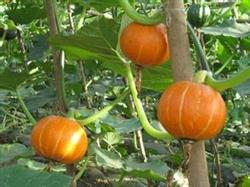
Detailed Key Points of Spring Cultivation Techniques for Mini Pumpkins
I. Timely Sowing: For greenhouse cultivation, sow in spring from mid-January to early February, with a seedling age of 20-25 days; for low-tunnel open-field cultivation, sow in mid-to-late February, with a seedling age of 20-25 days, and transplant into low tunnels in early-to-mid March. II. Seed Treatment and Sowing: Soak pumpkin seeds in clean water for 3-4 hours, then soak in a 500-fold dilution of 50% carbendazim...
条件筛选