-

Morel Mushroom Cultivation Techniques: Planting Methods and Key Management Points
The morel mushroom is a world-renowned gourmet edible fungus and a premium nutritional tonic. It has the functions of tonifying the kidney, strengthening yang, nourishing the brain, and refreshing the mind. It noticeably improves erectile dysfunction and diminished sexual function. Long-term consumption can prevent cancer, fight cancer, prevent colds, and boost human immunity, and it holds important value for medical development. The morel has a unique flavor, delicious taste, and rich nutrition. According to measurements, every 100 grams of morel contains 28.1 grams of crude protein and 4.4 grams of crude fat, as many as 20 amino acids, and extremely rich vitamins and minerals. Some nutritional
-
Key Technical Points and Detailed Methods for Block Cultivation of Nameko Mushroom
Nameko mushroom, also known as Pholiota nameko, is a low-temperature wood-rotting edible fungus. It contains nutrients such as protein, fat, carbohydrates, and amino acids. When eaten fresh, its flesh is tender and its flavor is delicious. At the same time, nameko polysaccharides have a certain inhibitory effect on tumors. Therefore, nameko is a fungus with both edible and medicinal value. The key technical points for nameko cultivation are briefly described as follows. 1 Growth and development conditions 1.1 Temperature The optimum temperature for the mycelial stage is 20-24°C. During the fruiting stage, different temperature-type varieties have different fruiting temperature requirements. Early
-
A Detailed Explanation of the Common Causes of Deformed Mushrooms and Their Prevention and Control Methods
The manifestations of deformed mushrooms are diverse, and the main ones commonly seen in production are: landmine mushrooms, hollow mushrooms, big-butt mushrooms, hard opening and early opening, red roots, and water rust spots. Landmine mushrooms. The main cause of their formation is that the casing soil material is too coarse, the soil texture is somewhat hard, the casing soil is relatively thick, the surface layer of the casing soil contains relatively little water, while the temperature and humidity conditions of its lower part and the substrate are suitable for the occurrence and growth of fruiting bodies, so fruiting bodies are easily differentiated and formed on the surface of the substrate or in the middle and lower layers of the casing soil, and then emerge through the soil surface. Solution: select high-quality humus soil, and according to a certain ratio
-
A Detailed Guide to Post-Harvest Handling and Processing Methods for Wine Cap Mushroom
Wine cap mushroom, also known as King Stropharia, is a domesticated wild mushroom species, and in recent years there has been a trend of gradual expansion. Its mushrooms have a delicate fragrance, crisp and tender flesh, good palatability, high yield, high selling price, and very considerable economic benefits. However, its fresh products have a short storage time and are not easy to preserve. If not sold fresh in time, huge losses will be caused. In order to ensure that economic benefits are not lost, the salting processing and dried product processing techniques for wine cap mushroom are now introduced. 1. Salting processing of wine cap mushroom. 1. Harvesting. The mushroom bodies of wine cap mushroom used for salted export should be at 6-7
-
What to do when sawtooth mushrooms appear? Causes and control methods
The young mushroom fruiting bodies develop normally, but the edges of the caps look like sawteeth, uneven and jagged. The main cause of this disease is stimulation by strong wind. When the wind is strong, humidity drops, and the young tender oyster mushroom fruiting bodies are affected by these adverse environmental conditions, which disrupts their metabolism, damages the tissue cells at the edge of the caps, and produces sawtooth-shaped oyster mushrooms. Control methods: In windy weather, do not open ventilation openings or open fewer of them. If ventilation is urgently needed, when the wind is from the north open only the vents on the south side, and when the wind is from the south open only the vents on the north side. At the same time, increase the amount of water sprayed to raise the humidity in the mushroom shed.
-
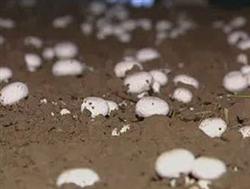
Methods for making organic fertilizer from spent mushroom substrate of button mushrooms, oyster mushrooms, and similar waste
Haidian District in Beijing has more than 80,000 mu of rice paddies. Aside from a portion of the rice straw that is used, most of it is burned, which both pollutes the environment and wastes resources. In light of this situation, we studied 9 mushroom species and ultimately determined that the straw-decomposing fungus button mushroom (Agaricus bisporus) is one of the ways to utilize rice straw. The key cultivation techniques for button mushrooms are as follows. 1. ...
-
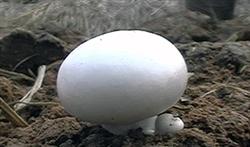
Autumn Fruiting Management Methods and Technical Key Points for Button Mushrooms
Button mushrooms (Agaricus bisporus) are a medium-to-low temperature type of mushroom. Their fresh mushrooms have a protein content of 35%-38%, and their nutritional value is 4-12 times that of vegetables and fruits. They enjoy the reputation of "health food" and "king of vegetarian foods," and are highly favored by domestic and international markets. When button mushrooms are cultivated in the Beijing area, September-November and April-May of the following year are the fruiting periods. Double...
-
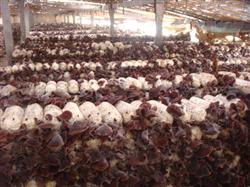
What are the methods for preventing and controlling pests and diseases in wood ear mushrooms?
Symptoms of green mold disease in wood ear mushrooms: After the spawn bags, spawn bottles, the area around the inoculation holes in log wood, and the fruiting bodies are infected by green mold, white slender hyphae first grow on the culture material, log wood, or fruiting bodies. After a few days, conidia can form. Once the conidia form in large numbers or mature, the colony turns green and powdery....
-
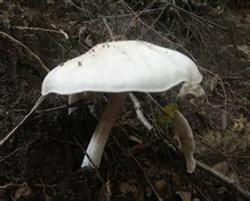
Chemical control methods for weed molds and pests in straw mushroom cultivation
Control measures for Coprinus (ink cap) weed molds: (1) Use fresh compost material as much as possible; sun-dry it for 2 days before use, or soak the raw material in lime water. (2) Control the nitrogen content of the compost; when using fermented material or fermented cultivation, the amount of wheat bran or rice bran added should not exceed 5%, and poultry and livestock manure should be kept at 3%. Regardless of the material used for cultivation, double fermentation is best...
-
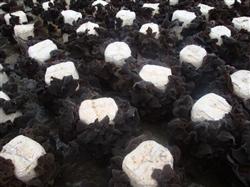
A Detailed Guide to Black Fungus Planting Methods and Cultivation Techniques
I. Overview Black fungus is also called wood ear, smooth wood ear, or cloud ear. Taxonomically it belongs to the class Basidiomycetes, order Tremellales, family Auriculariaceae, genus Auricularia. There are about a dozen or more species in this genus, such as black fungus, hairy wood ear, wrinkled wood ear, felt-cap wood ear, horny wood ear, shield-shaped wood ear, and so on. Among these wood ears, only the smooth wood ear has a plump, tender texture and a delicious flavor...
条件筛选