-
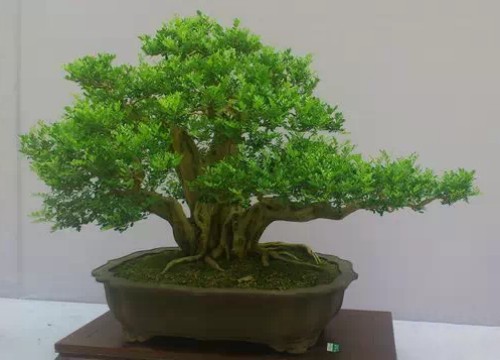
How to prune a Murraya paniculata bonsai? Detailed pruning methods
After the Murraya paniculata (orange jasmine) has taken shape, it continues to grow. If it is allowed to grow naturally without restraint, it will inevitably affect the tree's form and cause it to lose its artistic value. Therefore, it must be pruned in time: long branches cut short, dense branches thinned, to maintain a graceful tree form and appropriate proportions. This is especially true because Murraya paniculata has strong sprouting ability; to maintain a certain tree shape
-
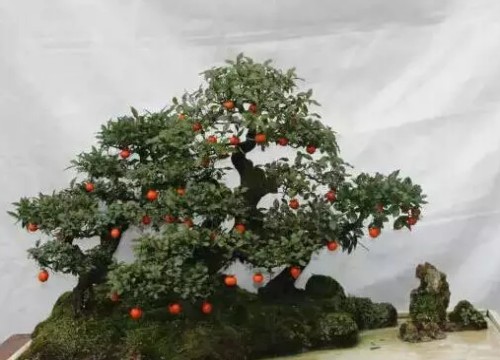
How to water a Golden Bullet (Diospyros cathayensis) bonsai? Master the correct watering method
In spring, before the Golden Bullet bonsai buds, control watering and keep the soil on the dry side, so that the leaves do not grow too large and the branches and buds do not stretch out. During the water-control process, the Golden Bullet, as a bonsai tree species, is cherished by bonsai enthusiasts everywhere, not just by local people. The Golden Bullet is widely admired not only for its small, glossy dark-green leaves, fragrant flowers, fine fruit, and black bark with a good trunk
-
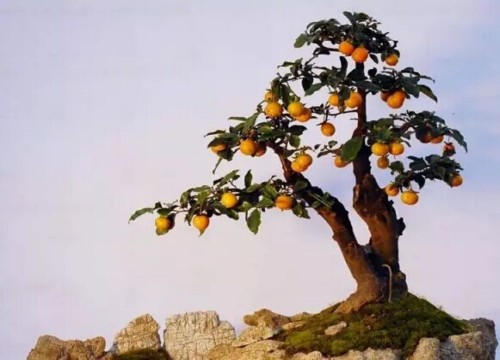
Detailed Explanation of Modeling Methods and Techniques for Diospyros cathayensis Bonsai
Diospyros cathayensis, also known as Heitazi, is also called "bottle orchid" because its flowers are shaped like bottles and its fragrance resembles orchids. It is an evergreen shrub or small tree of the genus Diospyros in the family Ebenaceae, with black branches, thorns, and elliptical, dark green, glossy leaves. The stems of Diospyros cathayensis are sturdy and upright, naturally twisted, and iron-colored, making it suitable for making stump bonsai.
-
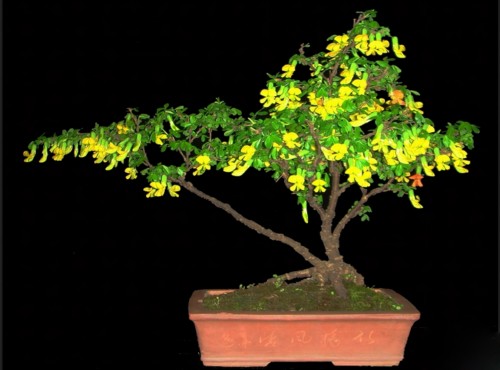
What are the propagation methods for Caragana arborescens?
Caragana arborescens is generally propagated by sowing. Its seeds mostly mature in early August; when the pods turn dark yellow they should be picked promptly, for if picked too late the seeds will burst from the pods and scatter, making them hard to collect. Spread the collected seed pods in the sun to dry so the seeds shed naturally from the pods
-
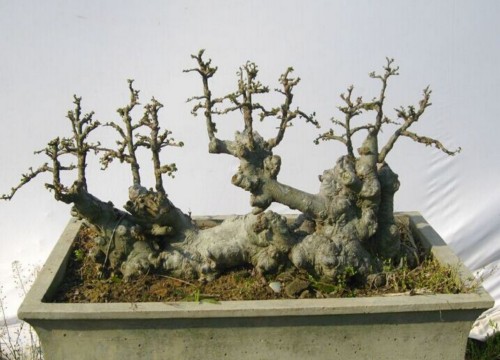
How to Shape a Chinese Elm Bonsai? Detailed Methods and Techniques
When shaping a Chinese elm bonsai, you should base the work on the basic form of the old trunk and, through wiring, pruning and other techniques, create different bonsai styles such as the formal upright style, curved trunk style, slanting style, waterside style, cascade style, wind-swept style, forest style, and root-on-rock style. Shaping can be done either during the dormant period after leaf fall or during the growing season
-
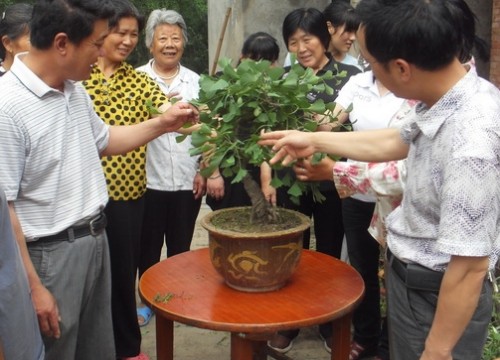
What are the pruning methods for ginkgo bonsai?
Pruning is one of the main techniques in creating ginkgo bonsai. Its purpose is to highlight the trunk, fill out the ornamental branches, express various different artistic conceptions, and enhance artistic value, making it naturally quaint, elegant and understated. The principle is to cut away surplus side branches, parallel branches, crossing branches, overly dense branches, leggy branches and diseased or dead branches
-
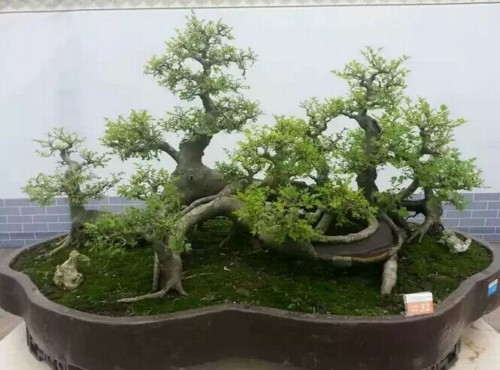
What are the layout methods for forest bonsai? A detailed guide
The layout of forest bonsai is extremely important; it is the key to the success or failure of creating a forest-style bonsai. Several trees that have undergone soil removal are arranged in the pot on a trial basis, and through observation, deliberation, and adjustment of the trees' positions, you achieve a clear distinction between primary and secondary, appropriate spacing and density, and varying heights.
-
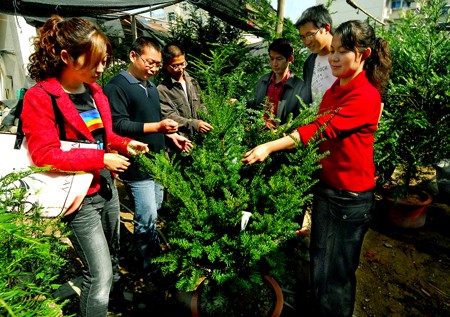
What are the fertilization methods for yew bonsai?
The yew (Taxus) is a tree species with a very wide range of uses, and it is also known as the "living fossil of the plant kingdom," which shows just how long it has survived. The high-grade bonsai made from yew trees uses the Northeast yew (Taxus cuspidata) treated with dwarfing techniques; the resulting bonsai has a simple and elegant form, with compact but not crowded branches and leaves
-
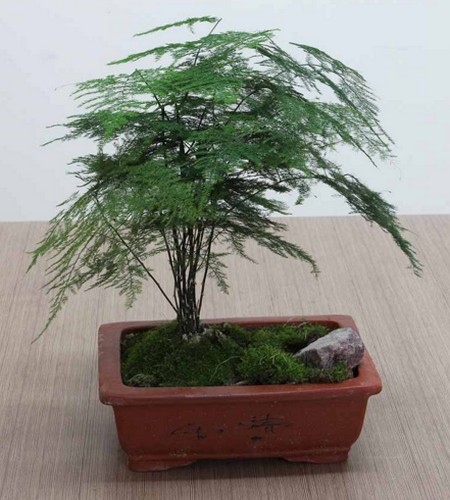
How do you prune and shape an asparagus fern bonsai? A detailed guide to practical methods
Asparagus ferns are kept small, not large; once they grow large, they lose that graceful, elegant feel. As for pruning methods for asparagus fern, everyone has their own opinion, and different forms naturally call for different pruning methods. This article introduces several pruning methods for everyone's reference only! How to improve the ornamental value of asparagus fern
-
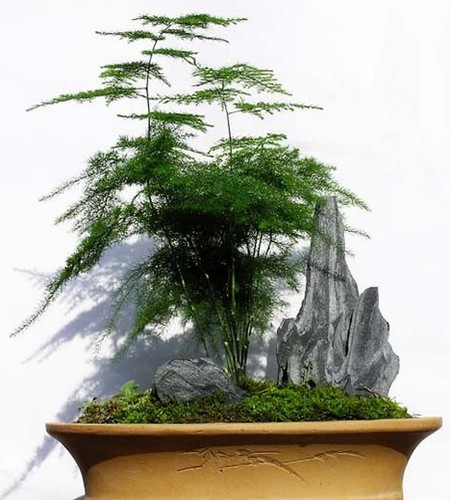
How to prune and shape a potted asparagus fern bonsai? A detailed guide to the methods
The potted asparagus fern (Asparagus setaceus) is deeply favored by the general public for being easy to grow, elegant and attractive, and for absorbing toxic gases. The whole asparagus fern is verdant; although its stems and branches are slender, they stand upright, and its leaf-like branches spread out horizontally in a shape close to a triangle, with leaves reduced to membranous scales attached to the branches like down feathers. Because its stems grow in clusters from the base
条件筛选