Why is it hard to raise finishing pigs in winter yet still profitable, and how can management be done well?
Winter is a critical period for pig finishing, because pork prices are high, yet it is also the period with the worst environmental conditions, the greatest risks and the most difficulties. If feeding and management cannot keep up, the pigs will not only fail to gain fat, but will instead lose fat. Therefore, in winter, efforts should be made to improve the rearing environment of finishing pigs and carry out scientific feeding.
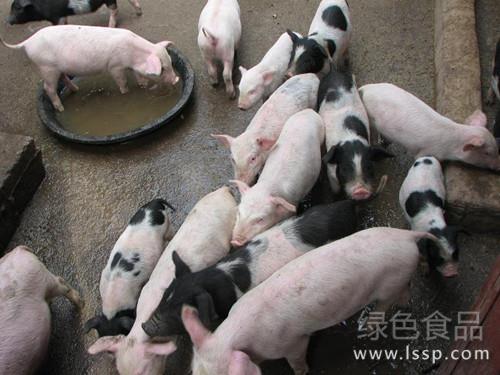
Finishing pigs
Select improved-breed crossbred pigs:
Use improved-breed boars and local sows for two-way or three-way crossing to produce excellent crossbred piglets. Improved-breed pigs grow fast and have good meat quality; they reach market 7~10 days earlier than native-breed pigs, with a high feed conversion rate and considerable economic returns. Choosing improved-breed piglets is the key to raising finishing pigs. If the breed is poor, not only will growth be slow, but meat quality will be poor and feed utilization low.
Enough living space:
Good growth of pigs requires enough living space; the stocking density and pen space should be determined according to the individual pigs and their purpose. Stocking density must be appropriate and not too crowded, otherwise it is bad for pig growth, while too much space is wasteful. Usually a pen has a feeding area, a resting area and a living area. The feeding area must be large enough for all pigs to eat at the same time, and the resting area must be large enough for all pigs to lie down on their sides at the same time.
Pens must be disinfected regularly:
Before finishing pigs are put into the pen, the pig house, feeding utensils and so on should be thoroughly cleaned, washed and disinfected. After the walls are whitewashed, spray-disinfect with a 2% caustic soda solution to comprehensively kill pathogenic microorganisms and prevent pigs from contracting epidemic diseases. During the rearing period, the pens and the surrounding environment should be disinfected regularly, using broad-spectrum, inexpensive, easy-to-use disinfectants that are odorless and non-irritating and non-corrosive. Disinfectants should be changed often so as to achieve the goal of thoroughly eliminating pathogens.
Deworm the pigs:
Pigs are most susceptible to parasitic diseases. Deworming can use levamisole, ivermectin and so on, given on an empty stomach in the morning. During deworming, pig manure and its contaminated materials should be collected promptly and piled for fermentation to prevent reinfection.
Feed nutrition must be comprehensive:
Winter weather is cold. To improve the cold resistance of finishing pigs and speed up weight gain, the energy level of the daily ration can be gradually increased. The protein level can be correspondingly raised to 17.5%, high early and low later. In addition, the actual needs of finishing pigs for minerals and vitamins must be met. Adopt the straight-line fattening method, feeding nutrient-rich feed continuously from weaning to market, giving full play to the pigs' growth potential so they reach market as soon as possible and the fattening time is shortened. In management, use dimmer light and appropriately reduce the pigs' amount of exercise. Feeding must follow proper methods; especially in the late fattening stage, mostly use unlimited feeding, preferably small amounts many times, to prevent feed waste while also favoring fat deposition and weight gain. When pigs eat more, they gain weight faster, which can shorten the fattening period. If finishing pigs are found to have increased feed intake and a relatively high dressing percentage, do not keep raising them; they should be sent to market at the right time.
Supply sufficient drinking water:
Winter weather is cold, and pigs' water intake is relatively lower than in summer, but it cannot be ignored. Farms with the conditions should preferably provide pigs with sufficient warm water, which can reduce the irritation caused by cold water.
Do a good job of heat preservation:
Winters in the north are cold and long, which is unfavorable for raising pigs, so doing a good job of heat preservation is crucial. Insulated pens should be repaired well, roofs thickened, north walls blocked up, doors and windows sealed, and straw curtains hung at night; where conditions permit, a heat-preserving stove can be installed, and every effort should be made to reduce the temperature difference between day and night, promote rapid weight gain in pigs, and improve the winter rearing results of finishing pigs.