A Detailed Guide to Soilless Cultivation Methods and Key Techniques for Azaleas
How do you grow azaleas without soil? Please give guidance. The soilless cultivation method for azaleas can refer to the following methods: 1. Preparation of the substrate. Azalea roots are very fine and require a loose substrate to facilitate aeration and drainage. Use 1 part vermiculite, 1 part perlite sand, 1 part river sand, and 1 part coal cinder, mixed in proportion. After mixing, the substrate...
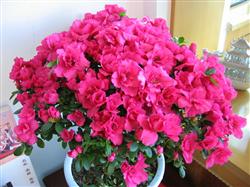
How do you grow azaleas without soil? Please give guidance.
The soilless cultivation method for azaleas can refer to the following methods:
1. Preparation of the substrate
Azalea roots are very fine and require a loose substrate to facilitate aeration and drainage. Use 1 part vermiculite, 1 part perlite sand, 1 part river sand, and 1 part coal cinder, mixed in proportion. After mixing, sterilize the substrate with 0.1% carbendazim solution, stir it evenly into the substrate, and cover with plastic film for 1 day. Then rinse it several times with clean water. After it dries, mix it evenly with 0.4% agricultural compound fertilizer solution, cover again with plastic film for one month, and then it can be used for potting.
2. Preparation of the nutrient solution
Azaleas have relatively strict fertilizer requirements. During the growing period, apply light fertilizer frequently. According to experiments, using agricultural compound fertilizer as the main component, supplemented with trace elements, keeping the pH value at around 5, and spraying a low-concentration foliar fertilizer can achieve good results.
Preparation of macronutrients: add 2 g of agricultural compound fertilizer and 0.5 g of magnesium sulfate to 1 L of water as the standard solution.
Preparation of trace elements: add 20 g of disodium edetate, 15 g of ferrous sulfate, 4 g of manganese sulfate, 6 g of boric acid, 0.2 g of zinc sulfate, 0.1 g of copper sulfate, and 0.2 g of ammonium molybdate to 1 L of water as the mother solution. When using, add 1 mL of trace element mother solution to 1 L of standard solution to make the complete element solution.
Preparation of foliar fertilizer: add 1 g of urea, 1 g of monopotassium phosphate, 0.02 g of boric acid, and 0.1 g of V.B1 to 1 L of water.
3. Water and fertilizer management
Because the substrate has good drainage and aeration but poor water retention, the amount of watering is generally somewhat more than for soil cultivation, just enough to keep the substrate moist. At this time, the plant is exactly at the stage of flower bud formation and leaf bud sprouting, and its fertilizer demand is relatively high, so water with the complete nutrient solution about once every 10 days. From March until the flower buds open, spray foliar fertilizer about once every 15 days. After flowering, the water demand is high, so in addition to daily watering, spray water on the leaves in the evening. At this time, the fertilizer demand is also high, so it can be changed to watering with nutrient solution once a week and spraying foliar fertilizer once, to promote sturdy new branches and benefit flower bud differentiation. After the dog days begin, pay attention to keeping the substrate moist and spray water on the leaves; the fertilization amount can be reduced to watering with nutrient solution about once every 20 days. After the autumn cools, gradually increase the fertilizer amount, apply the complete nutrient solution about once every half month, and spray foliar fertilizer 1-2 times to promote robust growth of flower buds. After winter begins, the physiological activity of azaleas is weak, so it is not suitable to fertilize; just water appropriately according to the degree of dryness or moisture of the substrate. During the cultivation process, basically no pests or diseases occurred.
Click to get more azalea cultivation techniques
Click to get more flower cultivation techniques