-

To raise the per-unit yield of double-season rice in Jiangxi, the key lies in changing the "six mores and six lesses" phenomenon
Rice is the most important food crop in Jiangxi, and increasing the per-unit yield of double-season rice is an important way to ensure Jiangxi's position as a major grain-producing region and to ensure that Jiangxi makes a greater contribution to the country's food security. In recent years, although the per-unit yield of double-season rice in Jiangxi has risen steadily, the phenomenon of a relatively low per-unit yield level has still not improved much. Compared with neighbouring Hunan, it is 50-60 kg lower per 667 sq m. Analysis shows that the "six mores and six lesses" phenomenon is the main reason for Jiangxi's low rice per-unit yield. 1. More seeding rate, less seed used. Cultivating
-
Detailed Explanation of the Production Method and Key Technical Points for Odorless Allicin
Garlic is a rather unique vegetable and seasoning, and in particular the allicin it contains can break down the proteins in fish, meat and eggs, making those proteins that are difficult for the human body to absorb become easy for the human body to absorb and utilize, helping digestion and promoting nutrient absorption. However, the odor of allicin is unpleasant. A method for producing odorless allicin stock solution is described below: I. Room-temperature method 1. Process flow: fresh garlic → sorting → crushing → drying → grinding into powder → soaking for deodorization → separation → finished product. 2. Operating method: (1) Material selection. Select mature
-
Introduction to the Polyploid Giant Odorless Garlic Variety
This variety is a polyploid transgenic giant garlic developed by transferring genes from Welsh onion and bitter melon into ordinary garlic. Its bulbs weigh 250-600 g each, with the largest reaching 900 g. Its garlic sprouts grow 60-160 cm tall, with leaves 35 cm long and 8 cm wide, and 8 leaves. Per mu (1 mu = 667 sq m, the same below), it yields more than 2,000 kg of bulbs and more than 300 kg of garlic scapes, with a single scape weighing 50 g. It can be grown as seed for many consecutive years without degeneration, and it has also successfully eliminated the unpleasant bad breath that ordinary garlic causes after eating.
-
Detailed Explanation of High-Yield Cultivation Techniques for American Boltless Garlic
In 1998, Dawangzhuang Village, Yaogezhuang Town, Gaomi City, together with Weifang Changjiang Agricultural Products Development Co., Ltd., jointly introduced American boltless garlic and conducted high-yield, high-quality cultivation trials. Through 4a of production practice, they developed a set of high-yield, high-quality cultivation techniques suited to this variety. I. Characteristics: American boltless garlic does not bolt, or the bolt is extremely thin and weak. Plant height is 68.4cm, stem diameter 1.8cm, leaf length 47.2cm, leaf width 3.9cm, with a total of 11 leaves. The bulb has a total of 15 cloves and belongs to
-
How is the TP stainless steel garlic peeling machine?
Before using the machine, the garlic roots must first be removed (if the roots are not removed, the time will be longer), and the de-rooted garlic should be soaked in water. When peeling, pour about 30 kg of garlic into the machine at one time; after it runs for about 5 minutes, open the discharge outlet and the garlic cloves will come out on their own. After the garlic cloves have been fully discharged, close the discharge outlet, then repeat the above process and pour the garlic into the machine. The feature of this machine is that it has the function of breaking apart garlic bulbs and can be used continuously without stopping. If it is not peeled clean the first time, it can be put through the machine a second time to peel it clean.
-
Introduction and Cultivation Techniques of Thornless Large-Grain Sichuan Pepper in Linqu
Sichuan pepper is a high-quality seasoning and also has health benefits. However, for many years the local thorny Sichuan pepper planted here has had small fruits, low yield, and required much labor for harvesting. It also frequently pricked people's fingers, which affected its development. For this reason, in the spring of 2004 we introduced it from Japan. 1. Introduction process: On April 17, 2004, Japanese experts came to our county to give lectures and brought some thornless Sichuan pepper scions and seeds. The county foreign affairs office arranged for a trial in Guoquan Village, Sitou Town. The town government arranged for Comrade He Changfu of that village to carry out the specific work. The first time, 2 plants were top-grafted onto local three-year-old Sichuan pepper trees, with a total of 58 buds top-grafted, and 36 survived. The second time, grafting was done onto local one-year-old seedling Sichuan pepper plants, with a total of 2,200 plants grafted and 2,015 surviving. The top-grafted trees flowered and bore a small amount of fruit in the same year. The trees grafted onto one-year-old seedling plants flowered in 2005 and bore fruit in 2006. In 2006, the top-grafted trees had already borne fruit in large quantities, and the seedling plants raised from the introduced seeds and the trees grafted onto one-year-old seedling plants had all borne fruit. 2. Grafting time and methods: The grafting method taught by the Japanese experts was cleft grafting, with tape binding after grafting, and the survival rate was very low, less than 10%. Through experiments by Comrade He Changfu using methods such as patch budding, plug grafting, cleft grafting, and wood-attached budding, wood-attached budding had the highest survival rate, reaching more than 85%. The best grafting time was the bud-break stage. The survival rate of summer grafting was also very high, but the plants easily froze to death in winter. For autumn grafting of semi-finished plants, after surviving through one winter, the freeze-death rate of semi-finished seedlings reached more than 70%, so it was also not suitable. 3. Comparison of phenological periods: According to observations over three years, compared with local thorny Sichuan pepper, thornless Sichuan pepper sprouts and flowers about one week earlier. In our area, thornless Sichuan pepper buds in the latter half of late March, and the flowering period is from the end of mid-April to the beginning of late April. Thorny Sichuan pepper buds in early April, around Qingming; its flowering period is late April, before May 1. As for fruit ripening time, thornless Sichuan pepper ripens in mid-September, while thorny Sichuan pepper ripens in mid-to-late August. The ripening period of thornless Sichuan pepper is about 25 days earlier than that of thorny Sichuan pepper. 4. Comparison of fruit traits and yield: Thornless Sichuan pepper fruits are large, so the Japanese call it "thornless large-grain Sichuan pepper." According to measurement, the 1,000-grain weight of thornless Sichuan pepper is 100 g, while the 1,000-grain weight of thorny Sichuan pepper is 50 g, exactly a 1-fold difference. The fruit grains of thornless Sichuan pepper taste better than those of thorny Sichuan pepper. The degree of numbing and spiciness of the two is basically similar, but thornless Sichuan pepper has a stronger aroma. Under the same management conditions, compared with thorny Sichuan pepper in the same plot, the 2004 top-grafted trees had a 1-fold increase in per-plant yield in 2006. The yield of Sichuan pepper peel increased by 1.2-fold. This is because thornless Sichuan pepper fruits are large and the peel is thick. 5. Comparison of branches and leaves: Through observation, compared with thorny Sichuan pepper, thornless Sichuan pepper has slightly lighter leaf color, thicker veins, and slightly narrower and longer leaves, with shorter internodes. The branches are thick and short, with short-branch-type traits of fruit trees. Seedlings have thorns, but the thorns are thinner and shorter than those of thorny Sichuan pepper. 6. Comparison of picking efficiency: Through experiments, each person could pick about 10 kg of Sichuan pepper fruits per day from local thorny Sichuan pepper, and fingers were often pricked, while each person could pick 30 kg of Sichuan pepper fruits per day from thornless Sichuan pepper, increasing work efficiency by 2-fold, and fingers were not pricked. 7. Summary: Thornless Sichuan pepper has large fruits, thick peel, high yield, easy harvesting, and high harvesting efficiency. Its adaptability to soil, climate, and other conditions is no different from that of local thorny Sichuan pepper, and it is worth vigorous promotion.
-

Detailed Explanation of the Key Points of Soilless Cultivation Techniques for Cilantro
Soilless Cultivation Techniques for Cilantro
-
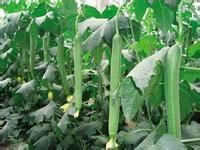
What to Do About Headless Loofah in Deep Winter? Detailed Prevention and Treatment Methods
Growers who cultivate loofah all know that in deep winter, loofah generally grows weakly, and once the headless condition appears, that vine is as good as wasted. Why does a headless vine appear? Because during the process of changing the head of the loofah, all the branches below the growing point are removed, making it very difficult for new ones to appear. If we accidentally damage the upper growing point...
-
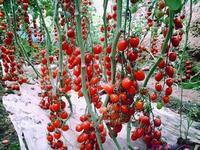
Key Points of Organic Ecological Soilless Cultivation Techniques for Tomatoes
High-yield Cultivation of Small Tomatoes - I. Requirements for Environmental Conditions - Small tomatoes have characteristics such as being warmth-loving, light-loving, fertilizer-tolerant, and semi-drought-tolerant. In spring and autumn, when the climate is warm, the light is relatively strong, and there is little rain, they are easy to cultivate and also produce high yields. - 1. Temperature requirements: The seed germination temperature is 28-30°C, the minimum germination temperature is 12°C, and the suitable daytime temperature for seedlings...
-
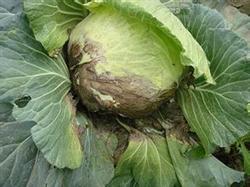
Harmless production technology for early spring potato-stevia-autumn cabbage
This spring has seen more low-temperature and low-light days, which favors the occurrence of cabbage sclerotinia rot. Vegetable growers are urged to take control measures early to reduce the damage. 1. Symptoms and characteristics: After seedlings are infected, water-soaked light brown lesions appear on the leaves, with indistinct edges, and the diseased tissue soft-rots, causing damping-off. When plants are infected during the head-forming stage, on the stem bases near the ground...
条件筛选