-
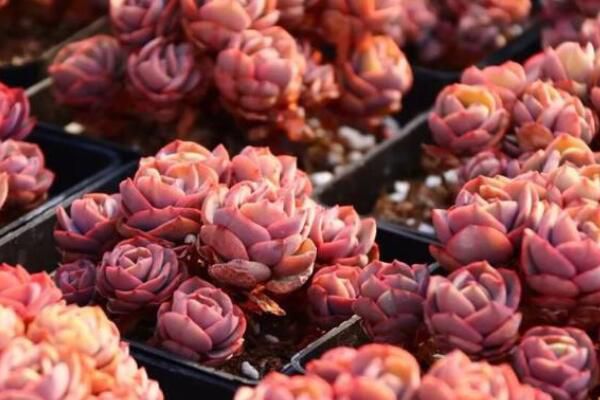
What to do when the large-leaf Xiuyan succulents become leggy? Handle it this way for a quick recovery
What to do when the large-leaf Xiuyan succulents become leggy
-
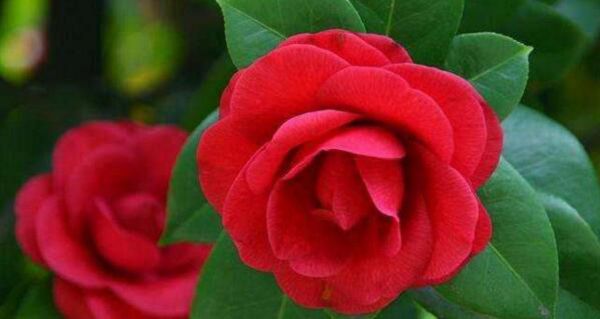
How to grow camellias so they bloom large and colorful? Sharing care tips
Tips to make camellias bloom large and colorful
-
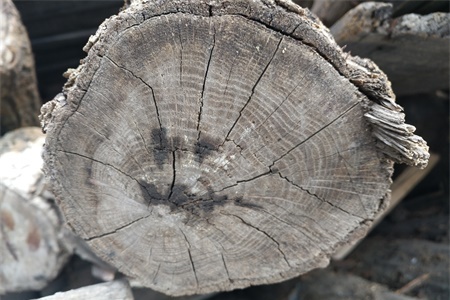
Which direction does the denser side of a large tree's growth rings face, and what can growth rings tell us?
Which side do the denser growth rings of a large tree face, and what can growth rings tell us
-

Detailed Explanation of Key Techniques for Large-Branch Cutting Propagation of Cherry Blossoms
Cherry blossom propagation previously generally used cherry as rootstock in spring for branch grafting. This method is relatively labor- and material-intensive and is not suitable for the large demand for seedlings in rapidly developing landscaping. In recent years, we have carried out large-branch cutting propagation for seedling cultivation and achieved good results. 1. Selection of cuttings: Select young and robust mother trees, cut annual thick branches from the middle-upper outer part of the canopy, retain the top shoot, cut into 30-40 cm long cuttings, and cut the lower end into a slanted opening. Cuttings cut on the same day must be inserted on the same day, so as
-
Cultivation techniques for new large-flowered geranium varieties
The large-flowered geraniums 'Coral', 'Ice Cave' and 'Scene' have a plant height of 30 to 40 cm, with round and large flower heads, good mass planting effect and few pests and diseases, making them excellent material for landscape applications. Geraniums of this type are all award-winning varieties from European flower trials. Their growth habit favours a cool climate, with a suitable growing temperature of 5°C to 25°C. The plants enter a semi-dormant state during the high-temperature period in summer, and in cold winter regions they can overwinter with only slight protection. They prefer a location with ample light, tolerate dryness and dislike waterlogging, and require a loose growing medium that
-
What are the new large-flowered carnation varieties?
1. Variety introduction: In the late period of the "Ninth Five-Year Plan", the Flower Research Institute of the Yunnan Academy of Agricultural Sciences undertook the provincial Science and Technology Department's science and technology tackling project "Breeding of New Large-flowered Carnation Varieties", and has bred a group of new cut-flower carnation varieties (lines). Some of the new varieties, after small-scale trial planting by flower growers, have shown good production suitability and marketability. Four applications for new carnation variety rights were filed with the Plant Variety Protection Office of the Ministry of Agriculture of China. Among them, compared with Master, currently the foreign variety of the same red series with the largest planting area, Yunhong No. 1
-
Detailed Explanation of Large Lily Planting Techniques and Management Methods
I. Planting Range Lily varieties can be planted in soil with a pH value between 5.2-7.8. If the soil is too acidic, apply 50 kg of lime powder per mu before plowing; if too alkaline, use 50 kg of gypsum powder. For clay soil, form ridges after planting; for sandy soil, flat planting in beds is sufficient. II. Base Fertilizer: If not for organic production, the following medicinal fertilizers can be referenced. Pre-plowing fertilization: Formula 1: 50 kg ammonium bicarbonate, 50 kg superphosphate, and 15 kg 50% potassium sulfate: (When spreading fertilizer, spread ammonium bicarbonate separately, then
-
What are the control methods for anthracnose in large-leaf boxwood (Euonymus japonicus)?
Methods for controlling anthracnose in large-leaf boxwood: 1. In autumn and winter, collect diseased branches and fallen leaves and burn them in a centralized manner to reduce the source of the disease. 2. At the early stage of the disease, promptly apply 75% chlorothalonil wettable powder at 500 times dilution, or 50% thiram wettable powder at 500 times dilution, or a 1:1:160 Bordeaux mixture, or 50% Tuzet wettable powder at 800 times dilution.
-
What kind of tree species is the tetraploid large-leaf black locust?
The tetraploid large-leaf black locust is a superior variety selected through years of dedicated research and experimental comparison from among several excellent polyploid black locust clones introduced from abroad. The tetraploid large-leaf black locust is an artificially induced tetraploid plant, characterized by fast growth, large leaves and high biomass. Its leaf width is more than 2 times that of the common black locust, and its compound leaf dry weight, single leaf dry weight and total leaf dry weight are 1.5 times or more those of the common black locust respectively. Compared with the common black locust, the tetraploid large-leaf black locust has a denser crown, thicker branches and a stronger photosynthetic capacity. Tetraploid
-
Rare Large Stand of Endangered Natural Yew Trees Discovered in Zhashui, Shaanxi
A rare large stand of natural yew trees, numbering more than 100,000, has recently been discovered in Zhashui County, Shaanxi, which is located in the Qinling Mountains. Some experts say that the yew is an endangered tree species preserved from the Quaternary glacial period, and that the extensive area and large number of this natural yew forest are rare. It is understood that Zhashui is located on the southern slope of the Qinling Mountains, in the transitional zone between the subtropical and warm temperate zones, with abundant rainfall and a forest coverage rate of 78 percent. It is rich in plant resources and has been known since ancient times as a "natural medicine storehouse." In Dongyuan Gully, Fenghuang Town, a yew was once found with a trunk circumference of 2.18 m, a canopy covering half a mu of land, and an age of more than 1,900 years.
条件筛选