-

Detailed Guide to Large-Leaf Goji Berry Cultivation: Master the Method and Grow Goji Berries Well
I. Large-leaf goji berry (Lycium chinense) has strong adaptability to the environment and can be cultivated in both northern and southern China. The optimal growing temperature is 15-25°C. In South China, cultivation is mainly in autumn and winter; when temperatures rise above 25°C, growth suffers and leaves quickly drop, with new growth only resuming in autumn. However, in North China, it can still grow during the hot, rainy summer season when temperatures exceed 30°C, and it is also very cold-hardy. After the aboveground branches drop their leaves in late autumn and early winter, even though winter temperatures sometimes drop below -10°C, it can still sprout and grow the following spring. Goji berry is also shade-tolerant and grows best in calcareous soil.
-
Introduction to the Large Mao Hua Variety, a Superior Cultivar of Honeysuckle
The scientific name of honeysuckle is Lonicera japonica, a semi-evergreen perennial twining shrub of the vine type. It is a commonly used traditional Chinese medicinal herb and is praised as a natural broad-spectrum antibiotic. In recent years, with the expansion of the application fields of honeysuckle, its cultivation has shifted from extensive management to intensive management, and from one flower crop per year to four flower crops per year, greatly increasing yields and significantly improving cultivation benefits. At present, many places are introducing or expanding planting, but if attention is not paid to variety selection, the results will be contrary to expectations. Among traditional Chinese medicinal herbs, honeysuckle is divided into Mi Yin Hua, Dong Yin Hua and Shan Yin Hua. Mi Yin Hua is mainly produced in Xinmi, Henan,
-
Key Technical Points for Large-Scale Cultivation of Licorice with High Quality and High Yield
Field Management 1. Intertillage and weeding: After the seedlings emerge completely, intertillage and weeding should be carried out promptly so that there are no weeds in the field. For ridge planting, three hoeings and three ridgings can be done; for bed planting, weeds on the bed surface should be pulled out. This is the key to high quality and high yield. Where conditions permit, closed weeding can be carried out after sowing and before seedling emergence, using Douhuanglong (20% chlorimuron-ethyl) wettable powder 2 bags/mu mixed with acetochlor 2-4 bottles/mu and sprayed over the field. After seedling emergence, herbicides killing monocotyledonous plants can be sprayed to eliminate weeds.
-
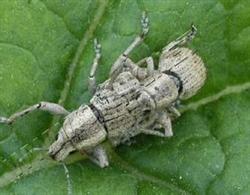
What are the control methods for the ginseng large gray weevil?
The large gray weevil, also known as the snout beetle or "tula lv", has an adult body length of 9-12 mm, grayish-yellow or grayish-black, densely covered with grayish-white scales. The head and rostrum are densely covered with golden shiny scales. The pests occurring this year mainly feed on tender stems and leaves on the soil surface during the seedling emergence period, causing great damage. When disturbed, they feign death and drop to the ground, causing damage in the early morning and evening....
-
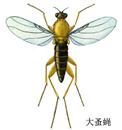
Control Techniques for the Large Phorid Fly in Lingzhi Mushroom Cultivation
How do you control the large phorid fly when cultivating lingzhi mushroom? Please give an introduction. The lingzhi large phorid fly is also known as the common phorid fly and the Walsingham phorid fly. It belongs to the order Diptera, family Phoridae. 1. Morphology and habits: the adults are active, black to dark brown in body color, 2-3 mm in body length, with short antennae bearing an arista. The mesonotum is rather strongly raised. The larvae are maggot-shaped, pale yellow...
条件筛选