-

How to Control Yellowing Disease in Large-Leaf Gardenia
How do you control yellowing disease in large-leaf gardenia? We ask fellow gardeners to share their methods for controlling yellowing disease in large-leaf gardenia. You can refer to the following two methods for control: Use management methods for control: grow it in well-drained, loose, fertile acidic soil, and replace the potting soil once every 1 to 2 years...
-
Detailed Explanation of Large-Scale Rose Planting Techniques
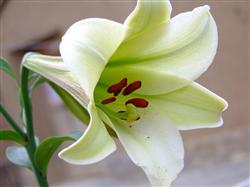
Many netizens have planted lilies or given lilies to family and friends. Today I will introduce the symbolic meaning and characteristics of lilies: The lily is a world-famous flower loved by people from ancient times to the present. Origin and distribution: temperate regions such as China, Japan, North America and Europe. The lily is a perennial herbaceous plant...
-

What varieties of large-flowered roses are there? Detailed introduction to common varieties
What varieties of large-flowered roses are there?
-

What are the control methods for the Euonymus looper (large-leaf Euonymus inchworm)?
Occurrence pattern: The large-leaf Euonymus looper damages plants by the larvae feeding on leaves. It has three generations in Hunan. The overwintering generation adults emerge and lay eggs in mid-April, damage begins in late April, they successively enter the soil to pupate in late May, emerge in mid-June, the second generation causes damage in late June, enters the soil to pupate in early August, emerges in mid-August, and the third generation causes damage in late August. The most severe damage is caused by the first and second generations. Damage is most severe in seasons with mild climate and abundant rainfall. During the peak damage period, 2 to 3 days can strip all the leaves from the whole plant, leaving the plant bare. In
-
Are large-leaf boxwood, Zhengmu, and Fufangshu the same plant?
Aliases: Zhengmu, Fufangshu, Dongqing Weimao. Family: Celastraceae. Category: Shrub. Latin name: Euonymus japonicus. Morphological features: Evergreen shrub or small tree. Height 5-6 m. Branchlets green, slightly 4-angled. Leaves simple, opposite, elliptical or obovate, with blunt teeth on the margins, dark green and glossy on the surface, leathery. Flowers in May, greenish-white, 5-12 in cymes, axillary at the tips of branches. Fruit ripens in October; capsule flattened-spherical, powdery green, splitting into 4 valves when mature, aril orange-red.
-
Technique for Rapidly Cultivating Ball-and-Stem Shaped Nursery Stock of Large-leaf Euonymus through Long-branch Cuttings
Large-leaf euonymus, also known as evergreen euonymus, is an evergreen shrub or small tree of the Celastraceae family. It generally grows 60-90 cm tall, and can reach up to 3 m. Large-leaf euonymus has dense branches and leaves, glossy young foliage, stays green through all four seasons, and is fresh and elegant, making it much loved as a common foliage ornamental plant. Large-leaf euonymus is native to Japan, and is now widely cultivated across the northern and southern provinces of China. It likes light and tolerates shade, and is suited to growing in warm, humid climates and loose, fertile sandy loam; it is also fairly cold-tolerant, and except for non-lignified new shoots sometimes suffering frost damage in winter, it can generally overwinter safely even when planted in the open in northern regions.
-
How to grow a large-leaf boxwood bonsai? Detailed explanation of shaping and care key points
Large-leaf boxwood is an evergreen shrub or small tree of the genus Euonymus in the family Celastraceae, also known as Zhengmu and evergreen euonymus. Because its leaves stay green all year round, it is also called "evergreen" or "large-leaf evergreen". Large-leaf boxwood can be processed into different bonsai forms such as straight-trunk style, slanting-trunk style, curved-trunk style, and double-trunk style according to the shape of the stump. The branches of young seedlings are soft and can be shaped from a young age. First wire the main trunk, then the main branches and side branches, and pay attention to promptly pruning excess branches. Because its leaves are relatively large, the crowns of small and medium-sized bonsai mostly use an elegant natural
-
What tree is the large-leaf red-flowered black locust? An introduction to its cultivar characteristics
The large-leaf red-flowered black locust is a multi-purpose black locust cultivar bred in Germany. In 1999, Professor Yang Minsheng of Hebei Agricultural University introduced it to China from the Institute of Forest Genetics and Forest Tree Breeding in Germany. After nearly 5 years of introduction trials and demonstration planting, it was proven that the large-leaf red-flowered black locust has strong adaptability, can grow normally in the suitable areas for black locust in North China, and has shown very high economic value. The large-leaf red-flowered black locust has a fast growth rate, with a diameter at breast height reaching 9.5 cm at 3 years old; a large leaf yield, with pinnate leaves 45-60 cm long, longer than tetraploid black locust
-
Using the large-plow furrowing method for clear-cut regeneration of black locust
1. Preparatory work. Large-plow furrowing means using a tractor to pull a large plow to furrow in a clear-cut black locust (Robinia pseudoacacia) site. A tractor with relatively high horsepower must be used. An ordinary iron plow for plowing farmland is sufficient, but a single plow is required. First clear branches and large stones from the site. 2. Plot selection. Large-plow furrowing requires concentrated, contiguous plots, a slope of less than 25 degrees, and a soil layer of more than 30 cm. 3. Technical requirements. The black locust root system is relatively shallow, the main root is not obvious, and the lateral roots are well developed. The main lateral roots are mostly distributed in the surface layer at a soil depth of 20-30 cm.
-
Detailed Explanation of Cultivation Management and Shaping Techniques for Large Chrysanthemums
With scientific cultivation management, large potted chrysanthemums can reach a shaped diameter of 2-4 m, with dozens, hundreds, or even over a thousand flowers, large and uniform, making them appear noble and magnificent, standing proudly among other flowers. Large chrysanthemums have very strict requirements for cultivation management techniques; if management is even slightly extensive, flowering will be uneven, flowers will be small, and they may even fail to bloom or die midway. Cultivating large chrysanthemums in Guangdong Province is even more difficult, because Guangdong Province has a tropical and subtropical climate, with many storms, and high temperature and humidity. After each storm
条件筛选