-
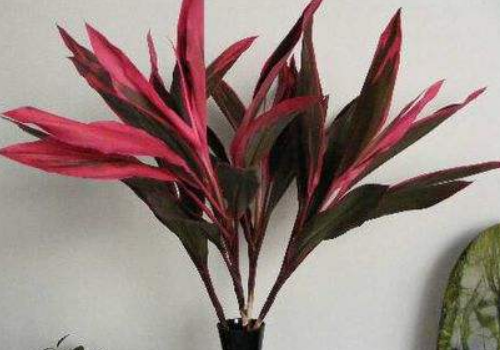
What are the hydroponic methods and precautions for Cordyline fruticosa?
Cordyline fruticosa is suitable for indoor cultivation, but it is not very easy to grow. Does Annie know how to grow Cordyline fruticosa well? What should be noted in hydroponics? How to grow Cordyline fruticosa well: 1. The soil for potting requires looseness. Equal parts of leaf mold or peat soil, garden soil and river sand can be mixed and a small amount of dry livestock manure added as the culture medium.
-

New potato line Wuxuan No. 2 passes field evaluation by provincial and prefectural expert panel
The new potato line "Wuxuan No. 2", jointly bred by the Nanhua County Agriculture Bureau, the Chuxiong Prefectural Plant Protection Station, and the Wujie Town Agricultural Extension Center of Nanhua County, has passed field evaluation by a provincial and prefectural expert panel. The experts attending the meeting listened to introductions from the breeding units on the breeding process, regional trials, and production demonstrations, examined the relevant materials, and conducted on-site inspections in Wujie Town, carrying out actual harvests on two production plots. The expert panel gave full recognition, holding that the breeding process of this line is clear, and that it participated in and completed the 2003-2005 Yunnan Province
-
Brief Introduction to the New Soybean Line 93103-1 with No Beany Flavor
Soybean lipoxygenase LOX catalyzes the oxidation of unsaturated fatty acids to produce aldehydes, ketones and other harmful substances, which gives soybean a beany flavor and affects the development and utilization of soy products. Researchers at the Crop Research Institute of the Shandong Academy of Agricultural Sciences introduced LOX-deficient materials in 1991 and focused on genetic improvement research on LOX deficiency. They developed China's first soybean line with practical value and no beany flavor, 93102-1, with a yield of about 200 kg/mu, more than 60 kg higher than the introduced materials, and a 100-seed weight of 18
-
Introduction to the New Angelica sinensis Line 90-01
I. Variety Introduction: "Breeding and Research of the New Gansu Angelica sinensis Line 90-01," after 15 years, the new Gansu Angelica sinensis line 90-01 was successfully bred using the mass selection method. The yield rates of premium and first-grade products of this line are 24.1% and 29.3% respectively, which are 2.5 and 4.2 percentage points higher than the control respectively; its resistance to root disease is relatively strong, with an average root disease incidence rate of 6% and a disease index of 2.4%, which are 0.7 and 0.4 percentage points lower than the control respectively; its premature bolting rate is relatively low,
-
Detailed Explanation of a Frozen French Fries Production Line
The frozen French fries production line, jointly developed by the Agricultural Products Processing Engineering Technology Center of the Chinese Academy of Agricultural Mechanization Sciences and China National Packaging and Food Machinery Corporation, has a production capacity of 350kg/h, an installed capacity of 450kW, a water consumption of 12m3/h, and a steam consumption of 3t/h. The quality of the French fries produced has reached the advanced international level. (Contact phone: 010-64862459)
-
Medication Methods for Treating Piglet White Scour with Oxytetracycline
Commonly known as piglet milk diarrhea, it can be prevented and treated by adding oxytetracycline to the sow's feed daily, while also paying attention to maintaining stable temperature in the pen. Once a piglet is sick, grind sulfadiazine tablets into powder and mix it into pre-made paste; lift the sick piglet by one ear, and when it squeals, put the medicated paste into its mouth, twice a day, and it can be cured in 3 days; gentamicin can also be used by intramuscular injection.
-
Introduction to the New Angelica sinensis Line 90-02
This line was jointly bred by the Institute of Modern Physics, Chinese Academy of Sciences (Tel: 0931-4969220) and the Dingxi Dryland Agriculture Center of Gansu Province, among other institutions. Its stems are green; during the seed-setting stage, the plant height is 103-125 cm; the main root is well developed, and the root system is pale yellowish-white; during the medicinal-maturity stage, the root length is 25-55 cm, and the diameter of the rhizome head is 2-8 cm. Quality-related indicators are: total ash 3.9%, acid-insoluble ash 0.3%; extractives 68.6%, ferulic acid 0.148%. Under field cultivation conditions
-
Introduction to the High-Yield Characteristics of the New Soybean Line Qiangfeng No. 2
"Qiangfeng No. 2" is a new soybean line bred by the Shanxian County Crop Improved Variety Research Institute of Shandong Province from a variant plant of "Xingnong No. 2". In addition to all the characteristics of "Xingnong No. 2" such as high yield, lodging resistance and good quality, this line has even greater disaster resistance and lodging resistance. Characteristics and traits. Sub-determinate podding habit, plant height 120-130 cm, 3-4 branches ("Xingnong No. 2" has no branches), about 120 pods per plant, maximum 260 pods, podding on the main stem and branches equally important, 3-seed pods account for
-
Introduction to New Soybean Line 90-77-2
New soybean line 90-77-2 was developed by the Dryland Crops Research Institute of the Jiangxi Academy of Agricultural Sciences in 1987 through artificial hybridization and selection using the high-yielding variety Aijiaoqing and Gandou No. 1. It is a summer-autumn dual-purpose soybean with advantages such as a moderate maturity period, high yield and good quality, thick stems, tolerance to heavy fertilization and resistance to lodging, wide adaptability, and temperature tolerance. Grown as a summer soybean, 90-77-2 has a whole growth period of about 140 days, a sub-determinate podding habit, purple flowers, brown pubescence, and medium-sized leaves that are dark and thick. The plant is tall (90
-
Key Techniques for High-Yield Cultivation of Honeysuckle (Lonicera japonica) in Saline-Alkali Soil
The Yellow River Delta is located in a warm temperate semi-humid region with a continental monsoon climate, and the climatic conditions are suitable for the growth of honeysuckle. In recent years, the honeysuckle planting area has gradually expanded, but due to the high degree of soil salinization and insufficient cultivation experience, honeysuckle production has been characterized by small scale, low yield, delayed returns, and severe pests and diseases. Through research on large-scale high-yield cultivation techniques for honeysuckle in saline-alkali soil, the results show that the goals of raising seedlings in the same year, transplanting in the same year, and harvesting flowers the following year can be fully achieved. After 3 years, the yield per mu (667 sq
条件筛选